
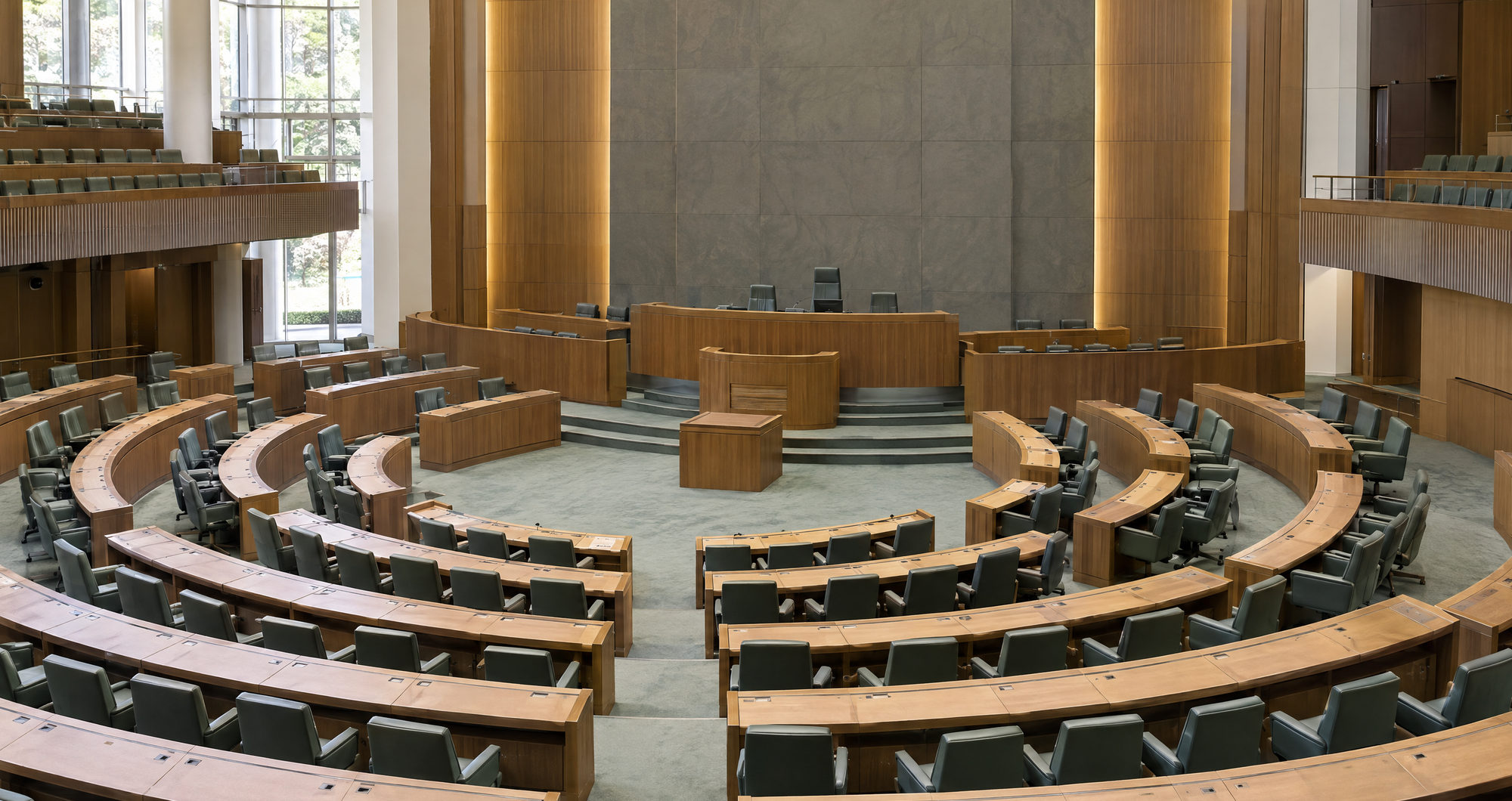

Israel’s newly elected parliament has been sworn in without a new government in place, as parties negotiated over who would lead the country after an inconclusive election.
All 120 members of the 26th Knesset took their oaths at its opening session in Jerusalem on 10 November. President Isaac Herzog used his address to urge political leaders to compromise and avoid another election.
The ceremony marked the start of a new parliament, but it did not settle the separate question of who can assemble a government. Gadi Eisenkot, the opposition leader tasked with that job, had not secured a coalition agreement when lawmakers gathered. Benjamin Netanyahu was serving as caretaker prime minister at the time.
A parliament without a governing majority
The election on 27 October left Netanyahu’s alliance with 53 seats in the 120-member chamber. Eisenkot’s core group of parties holds 48 seats. Neither bloc has the 61 seats needed for an outright parliamentary majority.
Arab-led parties hold a further 19 seats. Together with Eisenkot’s core bloc, they account for a majority of the chamber. But shared opposition to Netanyahu does not by itself provide a governing agreement: the parties have differing views on whether and how they could work together.
Herzog asked Eisenkot to try to form a government on 8 November, after consultations with parties elected to the Knesset. Eisenkot has an initial 28 days to do so and can seek a 14-day extension. He has called for a national emergency government.
Netanyahu, addressing lawmakers after they were sworn in, called for a national unity government. He argued against an administration dependent on Arab-led parties. Eisenkot criticised the caretaker prime minister’s remarks and again urged the formation of a national emergency government.
Negotiations and political differences
One possible route for Eisenkot would be a minority government supported by Arab-led lawmakers. The United Arab List has said it is willing to join an Eisenkot-led coalition, while the Joint List has offered support from outside a government. Some parties in Eisenkot’s own bloc have opposed arrangements involving the Arab parties, making an agreement difficult.
Another possibility would involve persuading ultra-Orthodox parties to leave Netanyahu’s alliance. Military service is a major point of disagreement: the ultra-Orthodox parties have opposed changes to exemptions for religious students, while parties in Eisenkot’s bloc campaigned for changes to the existing arrangements.
A wider unity government is another option, although it would require political opponents to agree on its composition and direction. No such agreement was announced at the opening of parliament.
Inquiry and parliamentary business
In his opening address, Herzog also called for an investigation into the failures surrounding the Hamas attacks of 7 October 2023. He said parliament had a duty to understand what happened and draw lessons from it.
How an inquiry should be established has been a source of political disagreement. Netanyahu has opposed a state commission whose members would be appointed by the president of the Supreme Court, arguing that it would be biased against his government. Eisenkot and his allies have supported an independent inquiry.
After the new parliament opened, Eisenkot and his allies submitted a series of bills, including proposals for a state commission of inquiry and limits on the prime minister’s time in office. Submitting legislation is an early step; it does not mean the proposals have become law.
Opposition parties have also sought to replace Knesset speaker Amir Ohana, a member of Netanyahu’s Likud party. Ohana said he would respect a petition for a vote on his replacement and that the vote would take place on 17 November.
If Eisenkot cannot form a government, the process can pass to another candidate. A further election remains a possibility if efforts to assemble a government ultimately fail. The new Knesset began its work while the question of who will lead the next government remained unresolved.







