
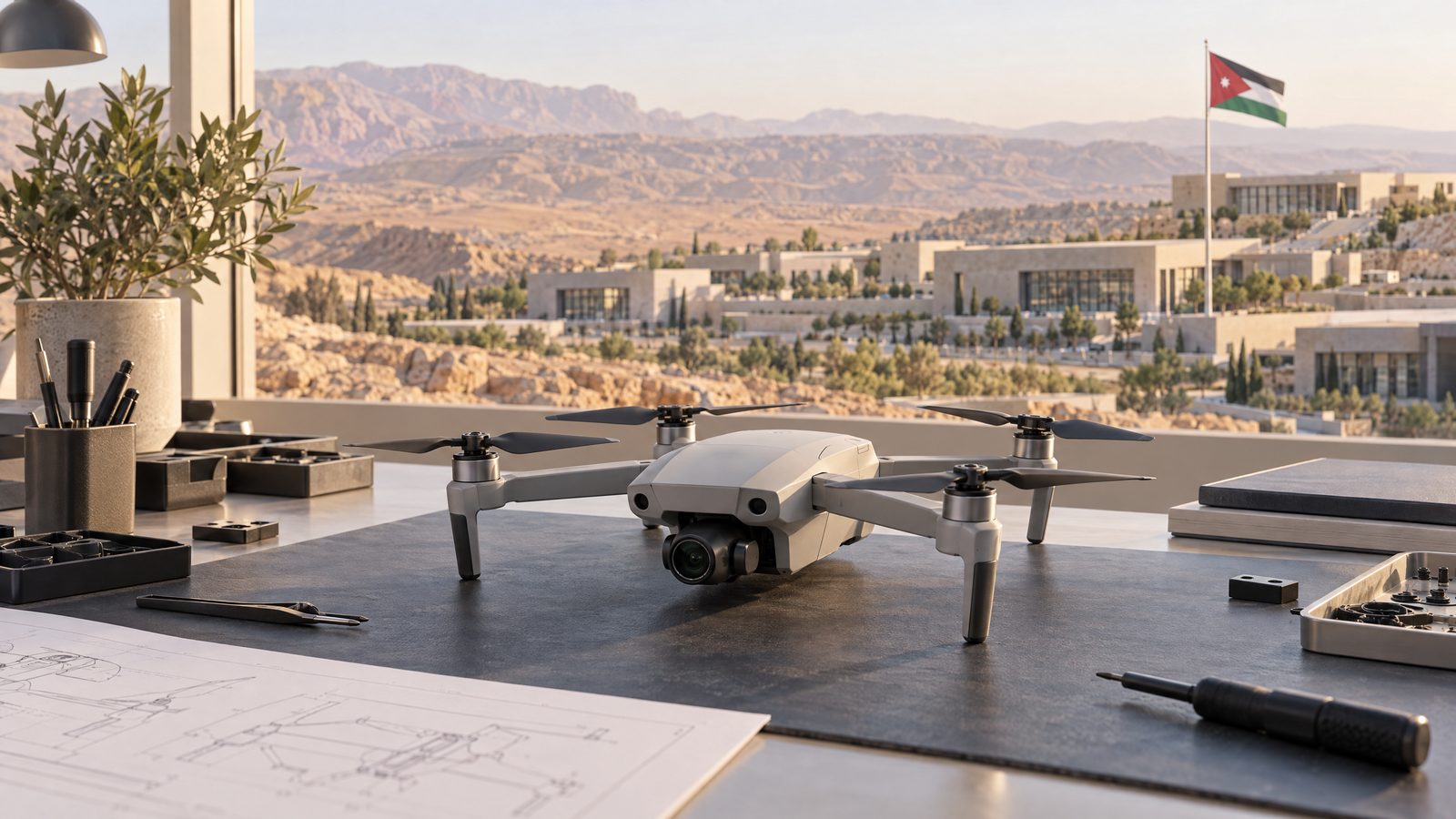

Jordan’s Cabinet has adopted a ten-year strategy intended to build a domestic drone industry, setting out a shift from importing systems towards developing, manufacturing, integrating and testing them locally. The plan covers 2026 to 2036 and is to proceed through timelines and programmes specified under the strategy. Its approval is a policy commitment, not evidence that new factories, products or jobs have already been delivered.
The decision, taken at a Cabinet session on Tuesday 20 October, establishes five connected priorities: creating a domestic manufacturing base; positioning Jordan as a regional centre for systems integration and testing; strengthening higher-value technical capabilities; linking research with industry; and encouraging local demand. No budget, production target or implementation milestone was specified in the published account of the decision.
More than aircraft assembly
The strategy treats the sector as an industrial ecosystem rather than a matter of assembling airframes alone. Its scope includes software, electronics, communications, navigation, control systems, power, structures, integration and testing. That broader definition matters because value and technical expertise can sit in components and systems as well as in the finished aircraft.
Jordan’s stated approach is selective localisation. It will prioritise areas where the country can develop expertise and added value, including software, communications, testing and engineering development. Standard components may still be imported where manufacturing them locally would not be economically viable. The stated aim is therefore not complete self-sufficiency, but a stronger domestic capability in chosen parts of the supply chain.
The plan follows an assessment of existing national capacity involving dozens of Jordanian companies and research capabilities at 15 universities. The next step described by the government is to connect these industrial, engineering and academic resources in a more integrated system for development and production. That assessment indicates a starting base, not a measure of current manufacturing output or proof that the participating organisations have committed to particular projects.
Skills, research and potential uses
Education and training are central to the proposed transition. The strategy calls for updated engineering curricula, more practical training, student and graduation projects tied to industrial challenges, and stronger partnerships among universities, companies and research and development centres. These provisions are intended to turn academic work into solutions that can be applied in industry. The decision announcement does not set out named courses, enrolment numbers or a timetable for curriculum changes.
Potential civilian uses identified in the plan include agriculture and resource management, infrastructure and power-line inspections, mining, municipal services, logistics, surveying, monitoring and emergency response. These are possible application areas, not deployments announced as part of the Cabinet decision. Any practical use would still depend on project development and the relevant operational requirements.
Encouraging domestic demand is one of the five pillars, alongside building industrial capacity and connecting research to production. Demand could give local developers and suppliers a reason to improve products, but the published decision does not identify government procurement commitments or customers. Nor does it set out how the strategy will measure whether local demand translates into sustained commercial activity.
A long implementation horizon
The ten-year period gives the policy a long horizon, while leaving important delivery questions open in the public account: financing, annual targets, responsible bodies and how progress will be assessed. Those details will determine whether the broad ambitions become durable technical capability and commercially viable production. For now, the Cabinet has approved the framework and its priorities; implementation remains ahead.
The strategy’s balance between local capability and imported standard components is a pragmatic feature of its design. It directs effort towards activities where Jordan believes it can build value, rather than treating every stage of production as an immediate domestic objective. The stated ambition is to expand opportunities for Jordanian talent and businesses and improve the contribution of the sector to the national economy. Whether that ambition is realised will depend on the programmes, investment and partnerships developed over the strategy period.







