

Jordan Cabinet approves social-security changes and $68m water works
Jordan’s Cabinet has approved a package of decisions spanning social-security coverage, administrative courts, public safety in Aqaba and wastewater infrastructure. The decisions were taken at a meeting chaired by Prime Minister Jafar Hassan on Sunday, 1 November.
The package combines measures at different stages. The Cabinet approved a 2026 amendment to the social-security coverage bylaw and a public-safety regulation for the Aqaba Special Economic Zone. For the Administrative Judiciary Law and the Associations Law, it approved the justifications for draft amendments, which are to proceed through further legislative review. Those proposals should not be mistaken for laws already in force.
More routes into social-security cover
The amended coverage bylaw is intended to address several types of work and changes in earnings. A person who has been voluntarily insured and then takes a covered job at a lower wage can continue voluntary contributions on the difference between the previous insured wage and the new salary. The stated purpose is to preserve the earlier wage basis for insurance and help protect future pension entitlements when someone moves into lower-paid employment.
Two partial old-age insurance brackets, set at 10 per cent and 25 per cent, are also being introduced for self-employed people in freelance professions. The arrangement is intended to offer a lower-cost route to basic insurance cover, including work-injury protection. The Cabinet also approved a mandatory framework for social-security coverage of workers operating through digital platforms and smart applications. Registration and contributions are to reflect the amount of work performed and payments made on a worker’s behalf.
These changes concern the coverage bylaw, rather than a wholesale amendment to the Social Security Law. The Cabinet’s announcement also describes new criteria for setting the maximum annual increase in voluntarily insured wages, linking the ceiling to the preceding year’s growth in average wages among subscribers.
Administrative justice and associations
The proposed Administrative Judiciary Law changes would make automation a general legislative basis for court procedures rather than an alternative used in limited circumstances. They would allow administrative court hearings by audio-visual link and support a unified electronic case file. The draft also provides for requests to reconsider decisions of the Higher Administrative Court and allows a court to seek evidence it considers necessary when deciding an urgent application.
The Cabinet approved the rationale for the draft and sent it towards the Legislation and Opinion Bureau for the next stage of review. The proposal therefore sets out a direction for future legislation; it does not establish that remote hearings are already available under the amended law.
Draft Associations Law amendments would provide for digital administration, stronger governance and a system to classify associations by performance. Among the stated proposals are a restriction on serving on the boards of multiple associations under the same ministry, new minimum founder numbers, and a change to the threshold for mandatory external audit. The proposed threshold would rise from 2,000 to 5,000 Jordanian dinars, with smaller associations audited by the Ministry of Social Development. The bill would also allow temporary registration of volunteer initiatives and establish rules for association coalitions. These remain proposals pending the legislative process.
Aqaba safety framework and water capacity
The new public-safety regulation applies across the Aqaba Special Economic Zone, including economic establishments, public facilities, parks, schools, events, beaches and tourist camps. It establishes a framework covering awareness, prevention, response and rehabilitation, and recording lessons learned. Businesses and facilities must assess risks, document precautions and keep emergency and evacuation plans current. The rules also call for regular drills with Civil Defence and warning systems that can be used by people with disabilities.
Requirements extend to crowd management and capacity limits at events, fire and first-aid provision, and inspections and maintenance of amusement rides. The regulation sets out four preparedness levels, from green for ordinary conditions to red when an incident requires full activation of an emergency plan. Enforcement can progress from warnings to partial or full suspension or closure until safety requirements are met.
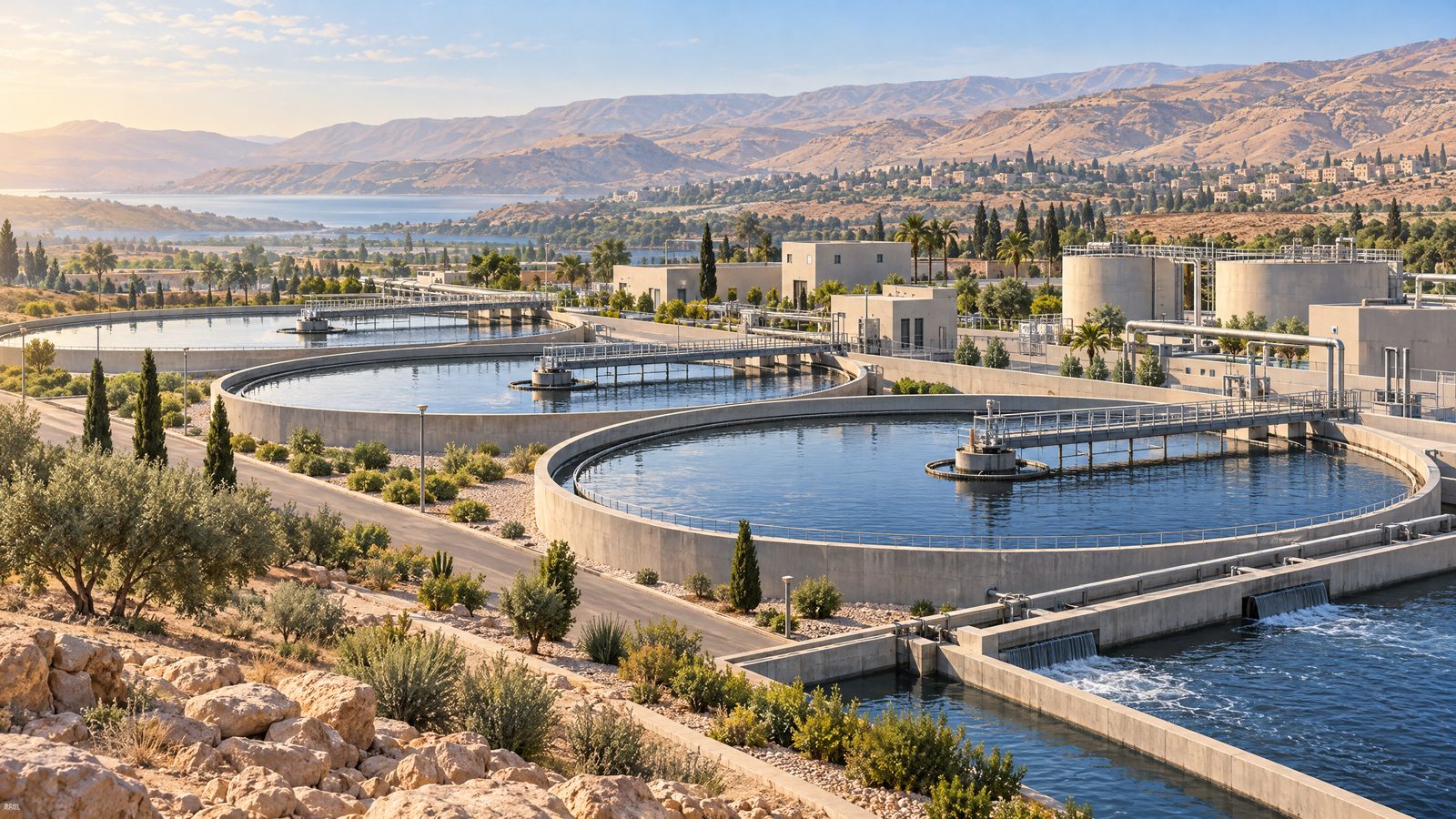
Separately, the Cabinet approved a $68 million agreement to expand and rehabilitate the Wadi Al Shallala wastewater-treatment plant. Its planned daily capacity would rise from about 13,700 cubic metres to 30,500 cubic metres. The expansion is intended to increase treated-water volumes and improve treatment efficiency, supporting wider use of non-conventional water for irrigation and potentially releasing freshwater for other uses.
The agreement is scheduled to be signed during the Jordanian-European Investment Conference. Procurement preparations have begun, including prequalification documents for contractors and a tender for consultancy services to supervise the work. The planned construction is to remain within the existing plant site, without acquiring additional land, while retaining the core treatment technology. Cabinet approval and procurement preparation are important steps, but the project has not yet been described as completed or operating at its expanded capacity.







