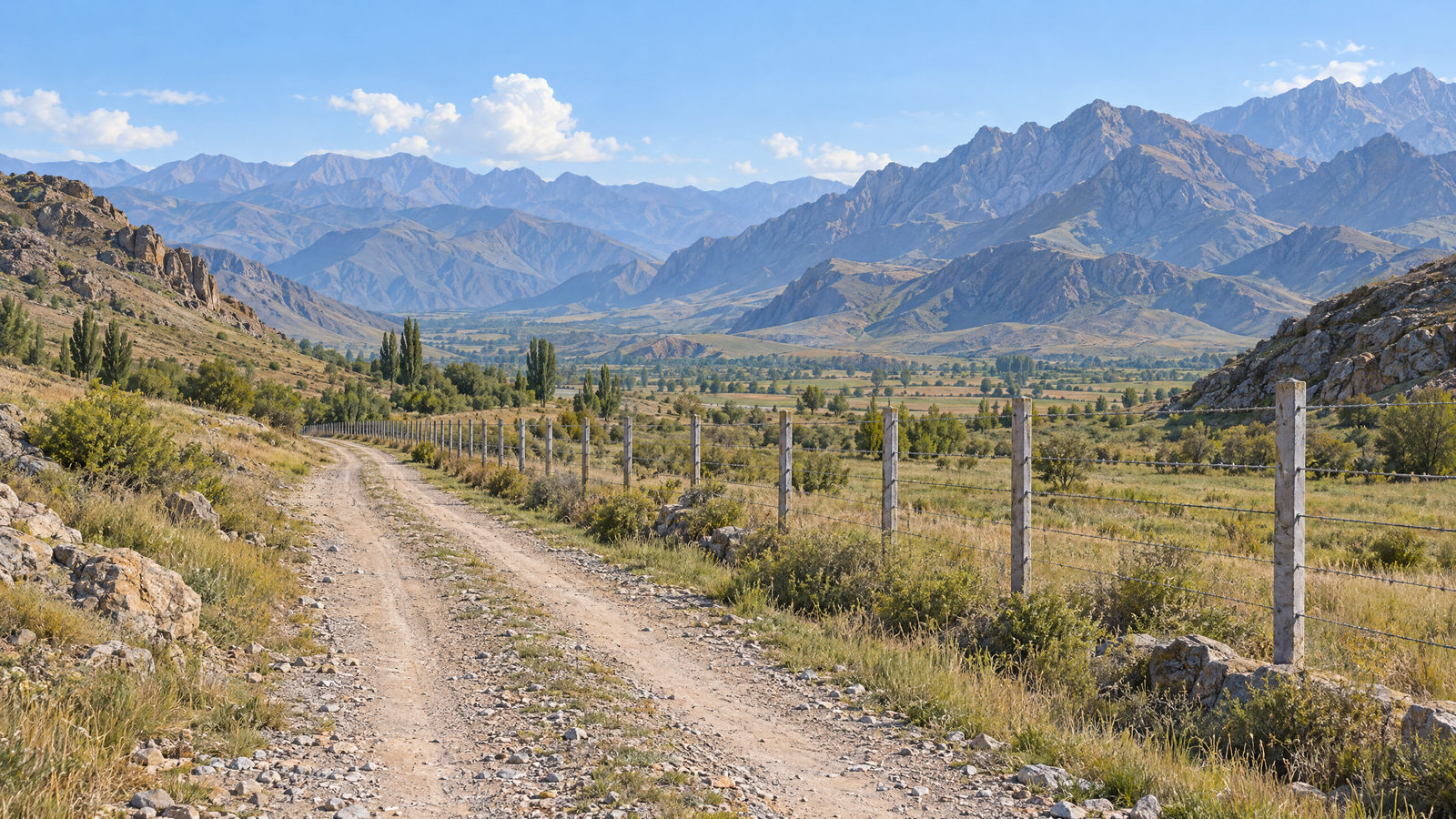

Kyrgyzstan says it has completed a major programme of engineering work along its border with Tajikistan in the Batken Region, installing 327.7 kilometres of fencing and building 338.5 kilometres of field roads in Batken and Leilek districts. The State Border Service reported the completion on 16 October. The work is a physical infrastructure milestone, but it does not mean that the legal demarcation of the border is finished.
Two years of construction
The fencing was installed in two main periods. A total of 149.6 kilometres was built during 2025. A further 178.1 kilometres were added between 2 March and 16 September 2026, bringing the reported two-year total to 327.7 kilometres.
The field-road programme was also divided across the two years. The reported figures are 171.2 kilometres built in 2025 and 167.4 kilometres in 2026. Those components add to 338.6 kilometres, while the published overall total is 338.5 kilometres. The small difference may reflect rounding; its cause is not specified. The overall and annual figures are stated as reported.
The construction crossed varied terrain, from flat land to mountainous and high-altitude sections, including places described as difficult to reach. The agencies involved said the work had to take account of landscape and conditions along the state border. Border Service personnel were joined by units from the defence, emergency, interior and customs services.
Fencing is not the same as demarcation
The distinction between engineering works and demarcation is central to understanding what has—and has not—been completed. Fences and field roads provide physical infrastructure. Demarcation is the separate process of marking the agreed boundary on the ground. Boundary posts were still being installed, and the formal interstate documents are to be finalised after that process is complete.
The two countries signed an agreement on their state border on 13 March 2025, following years of negotiations over disputed sections. The border is reported to extend for 1,006.84 kilometres. Of that length, 519.9 kilometres had been defined by 2011, while a further 486.94 kilometres was agreed through more recent negotiations. The 2026 engineering milestone concerns construction in Batken Region; it should not be read as a new agreement on the border line.
The infrastructure programme also began before the latest completion report. In April 2025, Kyrgyzstan announced the launch of fencing work in Batken, initially describing a first-stage plan covering 420 kilometres. The final reported fencing total of 327.7 kilometres measures work completed over the two years; it does not establish that every part of the earlier planned stage was built. The reason for the difference between the plan and completed total was not specified.
A physical milestone, with legal work continuing
For border personnel, field roads can provide routes through terrain where access is difficult, while fencing marks sections of the frontier physically. No quantified effect on patrol times, security incidents, local travel or trade is established by the construction totals.
Nor does the completion announcement establish that all border-related work across Kyrgyzstan has ended. The reported project covers the Batken and Leilek districts in Batken Region. Boundary-marker installation and the remaining demarcation process continue. The status of those processes is distinct from the completed fencing and field-road works.
The next formal step described by the Border Service is completion of demarcation, followed by finalisation of the relevant interstate documentation. Until then, the October announcement marks completion of a substantial engineering programme rather than the end of the broader border settlement process.