
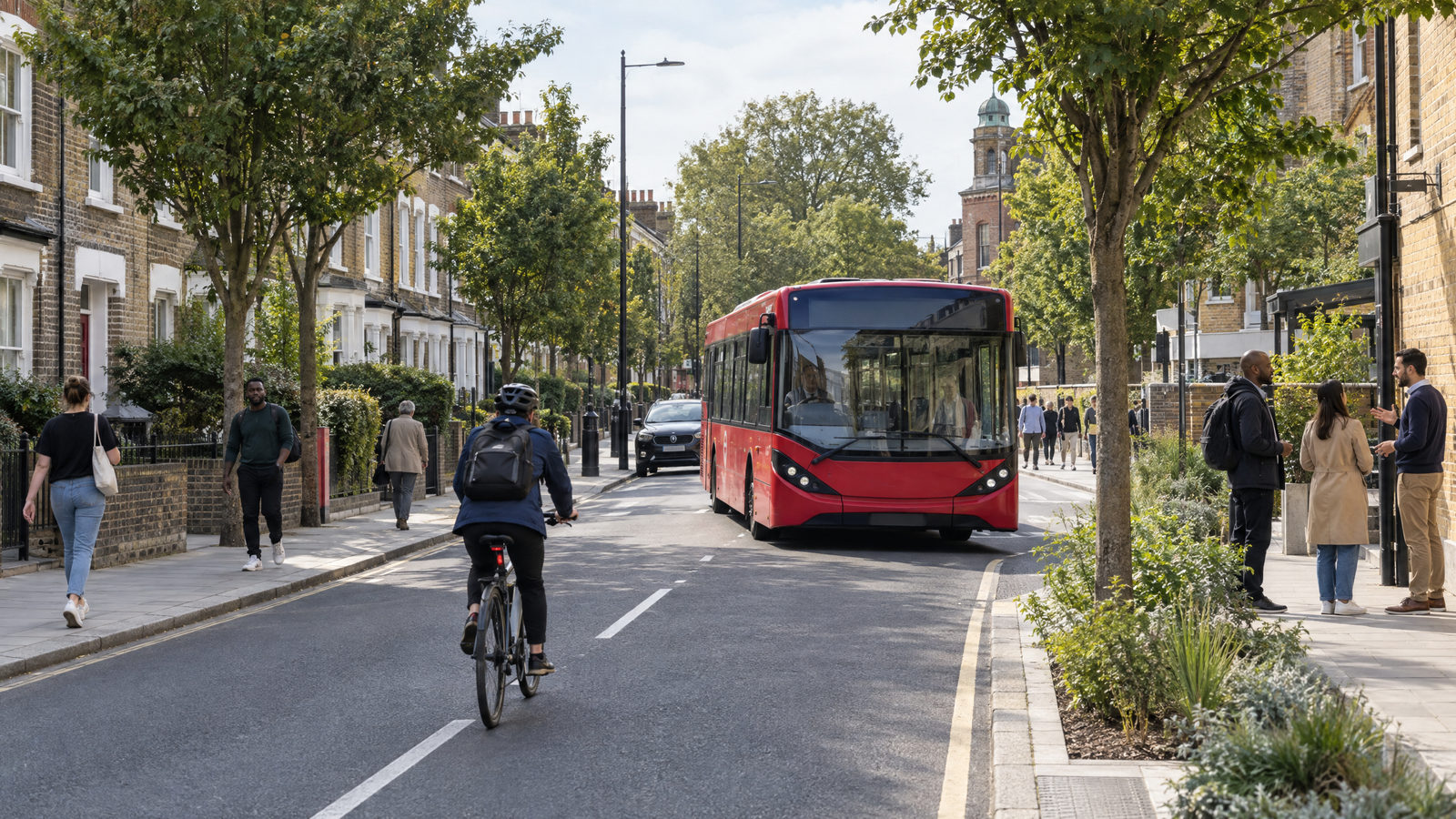

Lambeth residents have until 18 October to comment on proposed changes intended to make bus journeys more dependable on four borough roads: Acre Lane, Norwood Road, Streatham Common North and Croxted Road. The design engagement is the next step in a programme that has moved from asking what is wrong on the corridors to seeking views on proposed layouts.
The surveys opened on 21 September. They are part of the Transport for London-funded Bus Priority Programme, which focuses on roads where buses typically fall below the Mayor of London’s average-speed targets. The proposals are still designs for feedback, not a notice that construction is approved or about to begin. No start date for building work has been set out.
From identifying problems to reviewing designs
The distinction matters because the four corridors have already been through earlier engagement. On Norwood Road and Croxted Road, the initial stage ran in January and February. Residents were asked to identify obstacles to bus journeys and suggest other changes that should be considered. That feedback, alongside information such as bus speeds and traffic counts, was intended to inform concept designs. The current survey asks people to respond to proposals rather than to an open-ended list of possible improvements.
Norwood Road forms part of the A215 corridor, running from south of the Tulse Hill gyratory towards the West Norwood gyratory. Croxted Road is the A2199 route between Norwood Road and Thurlow Park Road. These links connect neighbourhood streets and local centres, so design choices can affect more than buses: they may shape how people reach stops, cross roads, cycle and get to nearby shops and services.
For Norwood Road, residents are being asked whether the designs would make journeys easier, what other measures could improve the scheme and how the areas around bus stops could work better. For Croxted Road, the engagement material includes simplified drawings, a design rationale, supporting data and answers to common questions. Those materials provide a basis for scrutiny, but the consultation remains a chance to point out local access needs or problems that the drawings may not resolve.
Reliability alongside access and street use
Lambeth’s stated aims go beyond increasing bus speeds. The programme is intended to improve reliability, reduce congestion and support cleaner air, while making it safer and easier to walk, wheel, cycle and use public transport. It also lists access to local shops and businesses as a consideration. That combination makes the design choices significant for people who use the bus and for those who live, work or trade along the roads.
Bus priority can involve difficult choices over limited road space. Measures designed to help buses move more consistently must be considered alongside access to bus stops, crossing opportunities, cycling conditions and the needs of deliveries and customers. The current material does not establish that every objective will be achieved, nor does it guarantee a particular travel-time or air-quality improvement. Those outcomes depend on the final design and how any approved measures work in practice.
The wider policy context is the Mayor’s Bus Action Plan, which seeks a network of key corridors with reliable average speeds of 10 to 13 miles per hour. That is a target for the network, not a promise that each of these four roads will reach a particular speed. The borough’s task is to develop corridor proposals that respond to local street conditions while contributing to more reliable public transport.
What happens next
Residents can review the designs and complete the relevant online survey through 18 October. The four schemes have separate engagement pages, allowing feedback to address each road rather than treating the borough-wide programme as a single uniform plan. Norwood Road respondents can comment on journey ease, additional measures and bus-stop surroundings; Croxted Road residents can examine the accompanying design and evidence documents before responding.
After the engagement closes, feedback is due to be incorporated into the designs. That leaves a further decision process before any street changes can be treated as final. For people who rely on the corridors, this is the point to identify practical concerns: whether a stop remains convenient, whether a crossing is usable, or whether access to a home or business is affected. The next public milestone will be the council’s response to the feedback and the resulting design proposals; the timetable for that stage has not been specified.







