
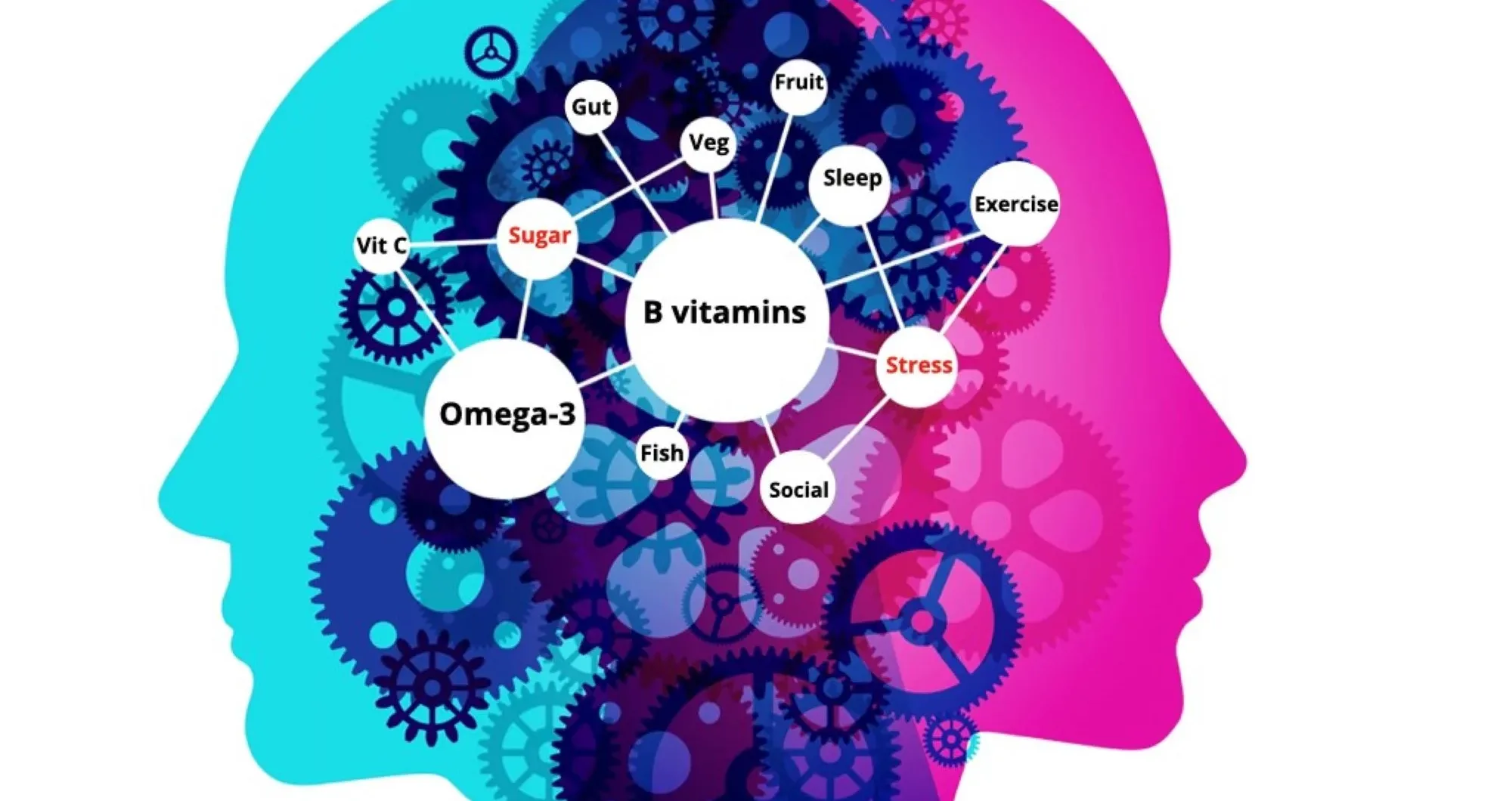

The Alzheimer’s Prevention Expert Group has accused the Lancet Commission of bad science for knowingly ignoring two highly effective and firmly evidence-based ways to reduce risk factors for dementia – high dose supplements of B vitamins and omega-3 fish oils as well as the impact of a low sugar diet.
The group of eleven leading scientists has called on the Lancet to revise its report. The report hit the headlines last month and minimised the effectiveness of nutrition and lifestyle interventions.
Beneficial nutrients
Scientific evidence clearly shows that high-dose B vitamins and omega-3 fish oils, reduce the risk factors for dementia, as does a low sugar diet.
The major benefit of B vitamins is their ability to lower levels of the damaging amino acid homocysteine, found in the brain of Alzheimer’s patients. A comprehensive Chinese review of Alzheimer’s prevention in 2020, described homocysteine lowering as ‘the most promising intervention for Alzheimer’s disease prevention’.[i]
Last month a review in the Journal of Prevention of Alzheimer’s Disease listed reducing homocysteine among the top five evidence-based actions.[ii] A US National Institutes of Health review attributes almost a quarter (22%) of the risk of Alzheimer’s to raised homocysteine and a further 22% to lack of seafood and omega-3 fish oils.[iii]
The combination of high homocysteine, low omega-3 and vitamin D is present in the majority of those over 50 and quadruples dementia risk, according to research in Holland earlier this year (2024), led by Professor Annick van Soest at Wageningen University.[iv]
“Remarkably, a suboptimal status of all three nutrients was associated with a four-fold increased risk of dementia,” she says. These common combined deficiencies, so easily corrected, could have a bigger impact on dementia risk than any of the 14 risk factors listed in the Lancet Commission’s report.
Ignoring the evidence
Yet, for the third time since the first Lancet Commission report in 2017, and despite being sent all the evidence, the report’s scientists, headed by Professor Gill Livingston, have ignored it.
Instead, two far less significant risk factors have been added – cholesterol and cataracts. The report claims cataract surgery would eliminate a very modest 2% of overall risk. In stark contrast, reducing high homocysteine (above 11mcmol/l), which affects about one in two of over 65‘s could potentially eliminate a quarter of all risk, “saving the UK economy approximately £60 million per year,” says Oxford University health economist, Professor Apostolos Tsiachristas.
Asked why she continued to deny any benefit from homocysteine lowering Professor Gill Livingston commented:
“high homocysteine only affects a small number or people and there are no trials that show that lowering it has any benefit.” This is simply not true.
Studies in Holland[v], Norway[vi], the UK[vii] and China[viii], have additionally reported a synergistic effect between B vitamins and omega-3, with several times better clinical benefit than any dementia drug. A study at Oxford University showed two thirds less brain shrinkage in those with mild cognitive impairment when given B vitamins with sufficient omega-3, compared to placebo. And one third of trial participants were clinically dementia-free at the end of one year.[ix] These studies were sent to Professor Gill Livingston in 2023.
The commission has also ignored studies showing a benefit from improving omega-3 status by eating fish or taking supplements. The Lancet Report cited only one study linking higher blood levels of omega-3 fatty acids with risk for dementia which concluded that this study provided “compelling evidence for a relationship between long-chain omega-3 fatty acids levels and lower risks for dementia and related outcomes.”
Essentially the same conclusions were reached by at least eight other similar studies.
“Why were these studies ignored?” asked Professor William Harris of the Fatty Acid Research Institute, a leading omega-3 expert in the US. “The vast majority of adults in the western world have suboptimal blood omega-3 fatty acid levels. Increased consumption of marine omega-3 is safe, simple, cheap and effective.”
By ignoring these well established, easy to change risk factors the Lancet Commission was able to reduce the claimed preventable risk to just 45%, something that China’s leading prevention expert Professor Jin-Tai Yu of Fudan University in Shanghai strongly disputes.
“It may be possible to prevent up to 80% of dementia cases if all known risk factors, including homocysteine lowering B vitamins and omega-3, found in oily fish, were targeted.” he says.
Reducing dementia risk
Professor Jin-Tai Yu was co-author of a study in the journal Nature, together with Oxford University’s leading prevention expert Professor David Smith, analysing data from the UK Bio Bank which concluded that ‘up to 73% of dementia cases can be prevented.”[x] However, even this may be an under-estimate as this study excluded blood test measures, says Professor Smith (University of Oxford),
“This figure could be higher if a person’s omega-3 and B vitamin status, measured, by a blood test for homocysteine were taken into account.”
The dementia prevention charity foodforthebrain.org, which tests homocysteine, omega-3 and vitamin D blood levels, attributes 35% of modifiable risk to a deficiency of B vitamins and brain fats. It offers a free on-line Cognitive Function Test, which is then used to assess your future risk of dementia and suggest how to reduce it. Find it at www.foodforthebrain.org .
This is ‘citizen science’ project is building a database of test results to explore the effectiveness of diet, supplements and lifestyle change. Anyone can join.
“The cultural bias against nutrition demonstrated by the Lancet Commission’s omissions, isn’t science based,” says foodforthebrain.org’s founder, Patrick Holford. “And it certainly isn’t helping those people who are at risk to take easy, positive actions to reduce that risk.”
[i] Yu JT, et al. J Neurol Neurosurg Psychiatry. 2020 Nov;91(11):1201-1209
[ii] He S.-Y, et al. Prev Alzheimers Dis. 2024 Aug;11:917–927
[iii] Beydoun MA, et al. BMC Public Health. 2014 Jun 24;14:643
[iv] van Soest APM, et al. Am J Clin Nutr. 2021 Apr 6;113(4):801-809
[v] van Soest APM, et al. Eur J Nutr. 2022 Jun;15:61 3731–3739
[vi] Jernerén F, et al. J Azheimers Dis. 2019;69(1):189-197
[vii] Oulhaj A, et al. J Alzheimers Dis. 2016;50(2):547-57
[viii] Li M, et al. Eur J Nutr. 2021 Jun;60(4):1795-1808
[ix] Jernerén F, et al. Am J Clin Nutr. 2015 Jul;102(1):215-21
[x] Zhang Y, et al. Nature Human Behaviour. 2023;7:1185–1195







