
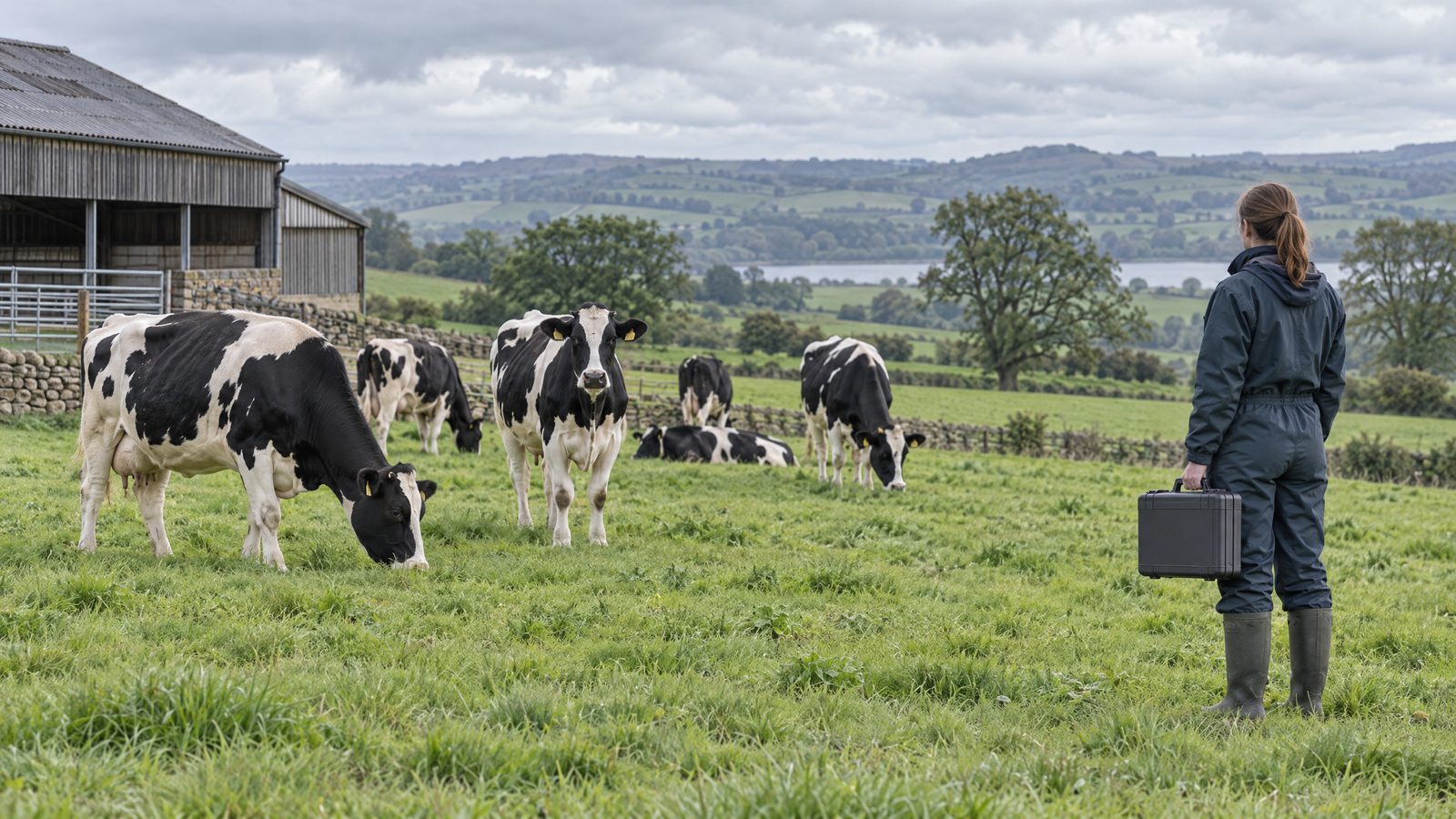

Shamonda virus has been detected in cattle at two dairy farms in Great Britain, one in Powys, Wales, and the other in Shropshire, England. Samples collected in October were tested by the Animal and Plant Health Agency (APHA) at its Weybridge laboratories. The detections are the first reported in livestock in Great Britain.
The Department for Environment, Food and Rural Affairs (Defra) confirmed the findings on 2 November. The announcement places the detections in a wider European picture: the virus had already been identified in animals in several European countries during 2026, including more recently in cattle in Jersey and the Republic of Ireland. The two farm findings therefore add Great Britain to the areas where animal detections have been recorded; they do not, by themselves, establish how widely the virus may be present here.
What is known about the detections
APHA testing found the virus in cattle samples from two dairy holdings. The public announcement does not state how many individual animals tested positive, whether the animals showed clinical signs, or whether production at either farm was affected. It also does not provide a detailed account of the farms’ circumstances. Those details should not be inferred from the fact that testing identified the virus.
Shamonda virus is an emerging animal virus thought to be spread primarily by Culicoides biting midges. “Thought to be” matters: this describes the suspected main route of spread, not proof that every detection resulted from a particular insect or that transmission has occurred between the two farms. The notice says surveillance and diagnostic testing identified the findings, but gives no evidence that they represent a larger outbreak.
Defra describes the detections as not unexpected in light of reports elsewhere in Europe. That assessment reflects the regional context and does not mean that further cases in Britain have been confirmed. Authorities say they will continue to monitor the epidemiological situation and review their response as more evidence becomes available.
Advice for livestock keepers
Shamonda virus is not currently a notifiable or reportable disease in the UK. Defra says there is presently no evidence that additional disease-control measures are required. This is the government’s stated position at the time of the announcement; it is not a guarantee that the assessment could not change if new evidence emerges.
Livestock keepers are advised to keep monitoring animals for clinical signs and to contact their private veterinarian if they have concerns. Veterinary advice is also the appropriate route for decisions about assessment and treatment. The government notice does not direct farmers to take extraordinary control steps, and it says any response will be kept under review by Defra, the devolved administrations and APHA.
The agency’s laboratory role is relevant because animal-health surveillance depends on samples being investigated and results assessed. In this instance, the detection came from samples collected in October and tested at Weybridge. Identifying a virus through testing is not the same as establishing its prevalence across farms, its effects on each animal, or the future course of infection. The published information does not quantify any of those matters.
Human and food-safety context
The announcement says one human case has been identified in France, in a severely immunosuppressed person. It also says there is no evidence of wider transmission among people and that the risk to the general population is considered very low. This reported human case is separate from the British livestock findings; the available information does not establish any human infection connected with either farm.
The Food Standards Agency has confirmed that there is currently no evidence of a food-safety risk from Shamonda virus. That statement addresses the evidence available at the time of the announcement. It should not be recast as a claim that the virus has spread to people through food, nor as a reason to draw conclusions beyond the agency’s assessment.
For now, the confirmed development is limited and specific: APHA identified Shamonda virus in cattle samples from two dairy farms in Wales and England. Monitoring will continue, while the current official position is that no extra disease-control measures are indicated. Further findings or revised advice would depend on evidence gathered through ongoing surveillance.







