
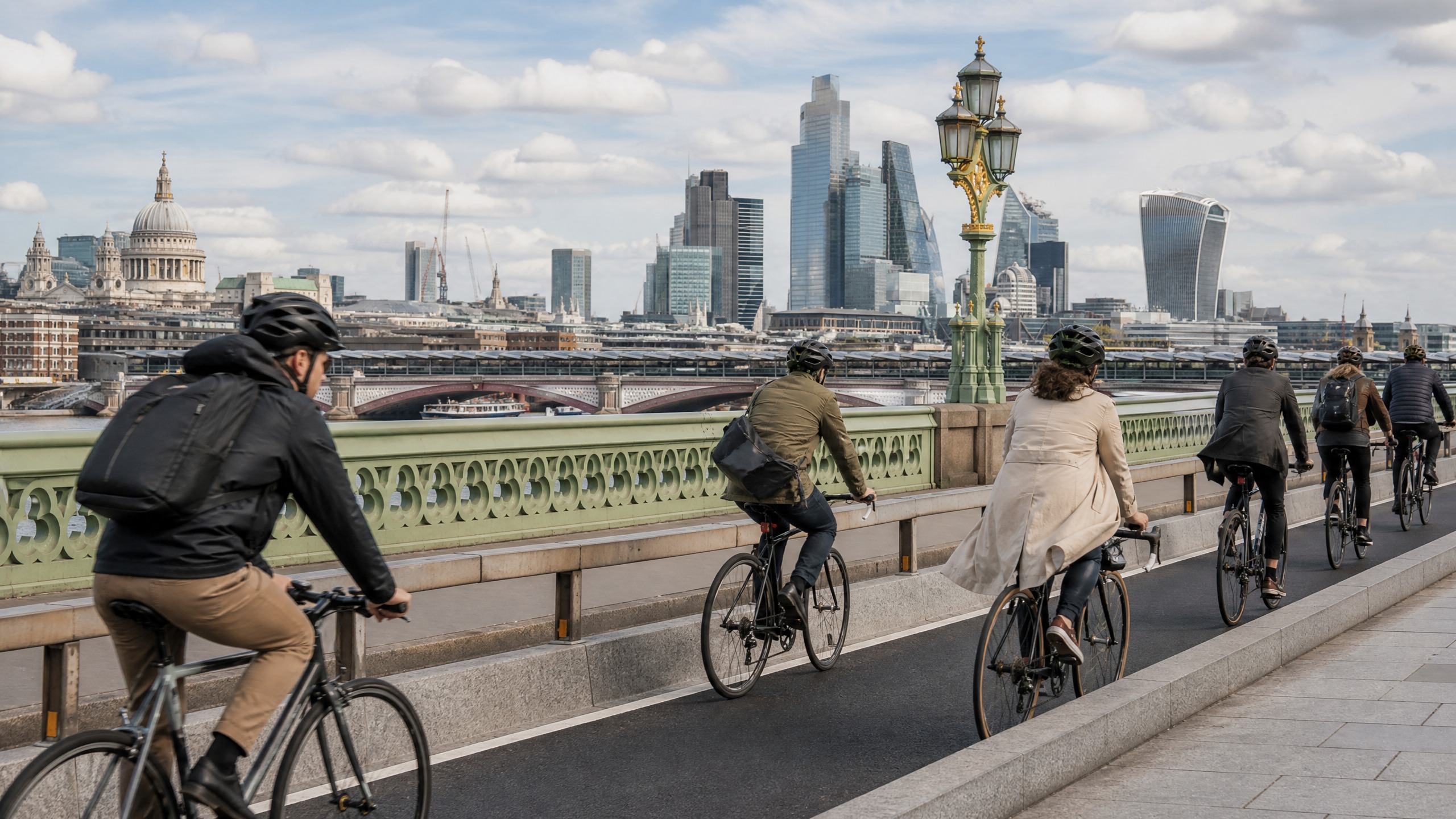

Fivefold expansion to 450 kilometres
TfL states that London’s Cycleway network is now five times larger than it was a decade ago, growing from 90 kilometres in 2016 to 450 kilometres in total. The increase provides a markedly different scale of designated routes compared with the 2016 baseline, with the total length of Cycleways reported as 450 kilometres across the capital. This represents a significant expansion in the length of marked Cycleway routes available within the city compared with a decade earlier.
According to TfL, new and extended Cycleway sections in areas including Islington, Wandsworth and Kingston, together with the completion of Cycleway 62 across Lambeth Bridge, have contributed to this expansion. The result, as set out by TfL, is a network whose component sections have been built out and linked to create interconnected routes between multiple London boroughs and local hubs.
As the network has grown to 450 kilometres, TfL positions the change as supporting safer, greener and more sustainable travel, and says the expansion contributes to Vision Zero and reduced road danger. Those stated aims accompany the network’s increase in length and the linking-up of routes across the city, setting out how TfL characterises the role of Cycleways within London’s transport network.
Interconnected links across London boroughs
New and extended Cycleway sections in Islington, Wandsworth and Kingston, together with the completion of Cycleway 62 across Lambeth Bridge, create interconnected routes linking multiple London boroughs and local hubs. This interconnection is presented by TfL as a defining characteristic of the current network, following the growth from 90 kilometres in 2016 to today’s 450 kilometres. The emphasis is on connectivity across different parts of London through designated Cycleway alignments.
The network links boroughs and local hubs along designated Cycleway routes, providing connections across multiple areas of London. In this configuration, sections are not isolated; instead, they interconnect to establish recognisable alignments that traverse borough boundaries and join up with places described as local hubs. TfL’s description highlights how the addition of new and extended links supports the overall continuity of the network.
The completion of Cycleway 62 across Lambeth Bridge sits within this broader pattern of connected sections contributing to a network reported as 450 kilometres long. Alongside the new and extended links in Islington, Wandsworth and Kingston, the Lambeth Bridge connection forms part of the set of changes underpinning the present scale and structure of the Cycleway network.
Safety, sustainability and Vision Zero contributions
TfL says the expansion supports safer, greener and more sustainable travel. This is presented as a core outcome of growing the network from 90 kilometres in 2016 to 450 kilometres today. The organisation positions the presence of more interconnected Cycleway sections as consistent with these aims, framing the enlarged network as part of London’s approach to enabling safer and greener journeys.
In addition, TfL states that the expansion contributes to Vision Zero and reduced road danger. The organisation links the increase in Cycleway length and the interconnection of routes across boroughs and local hubs to these aims. This positions the network’s growth as an element of wider work described by TfL on reducing harm on London’s roads.
These stated objectives accompany the physical build-out of the network to 450 kilometres and the completion and extension of sections such as those in Islington, Wandsworth and Kingston, and Cycleway 62 across Lambeth Bridge. The linkages between boroughs and local hubs are therefore positioned by TfL as part of a safer, greener and more sustainable travel offer within London, aligned with Vision Zero and reduced road danger.
Practical relevance for London commuters
For Londoners planning to use designated Cycleway routes, the headline facts are clear: a total network length of 450 kilometres, a fivefold increase compared with 2016, and interconnected sections that link multiple boroughs and local hubs, including new and extended routes in Islington, Wandsworth and Kingston and a completed connection across Lambeth Bridge. Together, these features describe how the Cycleway network has been expanded and linked across parts of the capital.
The growth in length from 90 to 450 kilometres summarises the scale of change in the availability of designated Cycleway routes within London over the past decade. In practical terms, this indicates a broader presence of Cycleways across the city than was recorded in 2016. The total reported length of 450 kilometres and the emphasis on interconnection form the core of how the network is now described.
With TfL attributing the expansion to aims around safer, greener and more sustainable travel, and to Vision Zero and reduced road danger, the increased interconnection of sections between boroughs and hubs becomes central to how the network is characterised today. The 450-kilometre extent and the links across locations such as Islington, Wandsworth, Kingston and Lambeth Bridge define the current shape of London’s Cycleway network as communicated by TfL.







