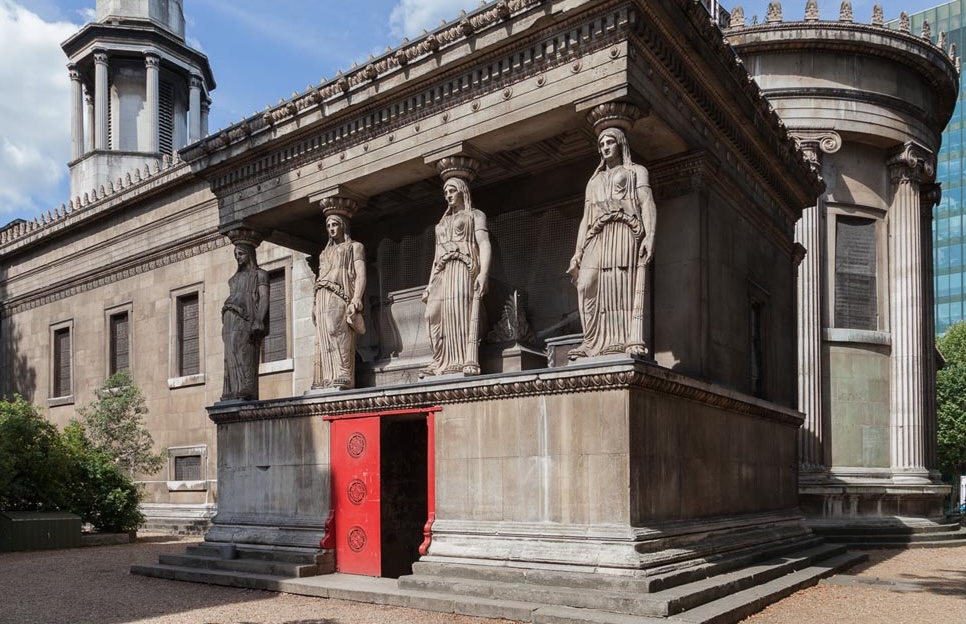

Meeting artist and director Kan Muftic at one of London’s most atmospheric exhibition spaces, the perfect venue to showcase future art exhibitions, networking, and fashion shows.
By Stephen Camilleri
Yesterday, I had another reminder of just how much London, our capital city, has to offer.
I visited The Crypt Gallery beneath St Pancras Parish Church on Euston Road to see SOMA, an exhibition of drawings by Sarajevo-born artist and director Kan Muftic.
I also had the pleasure of meeting Kan personally and spending some time surrounded by his work.
But before I had even begun properly studying the drawings, the venue itself had captured my imagination.
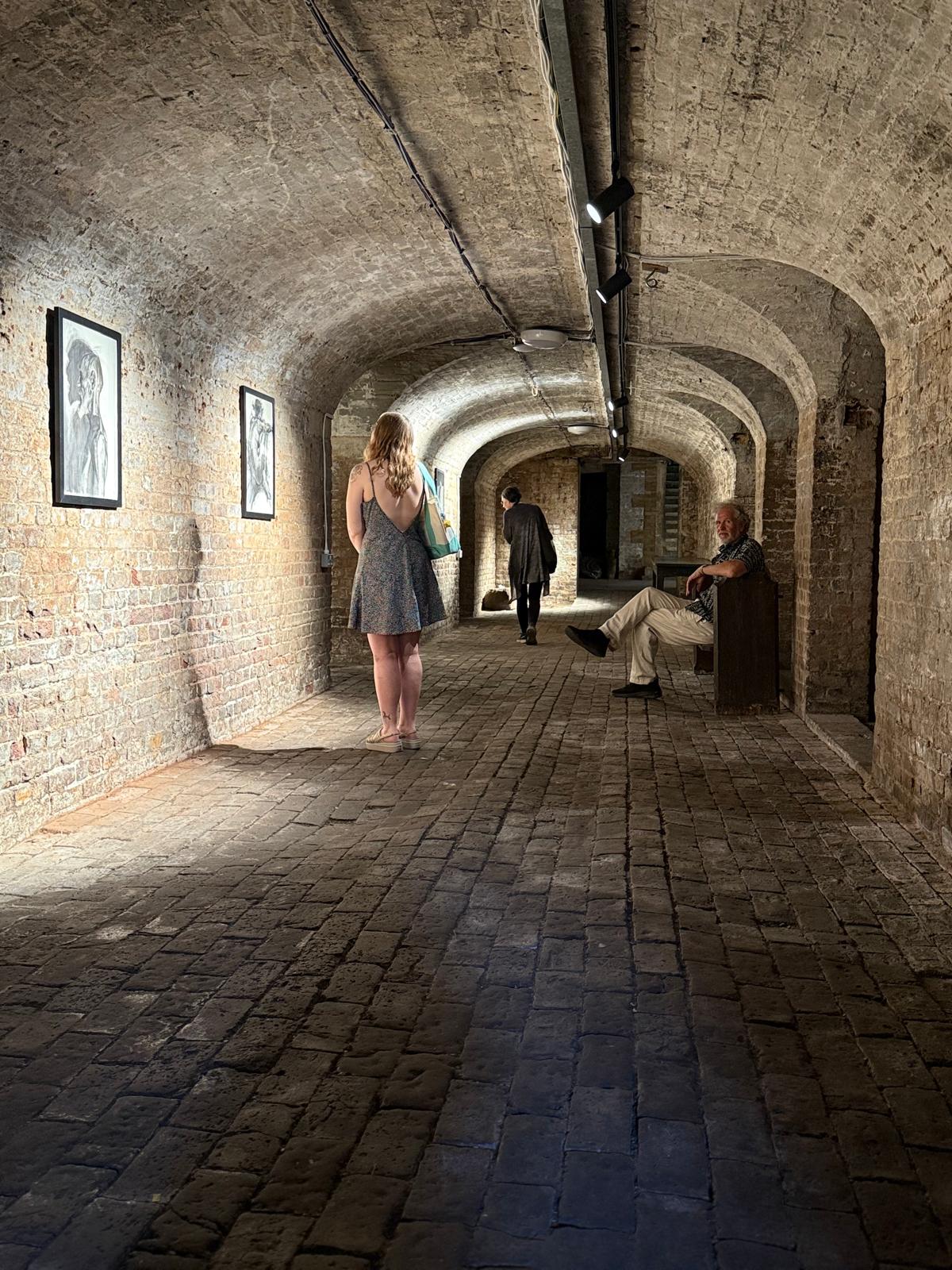
Walking through the corridors and chambers of The Crypt Gallery, I found myself surrounded by more than 200 years of London history.
The crypt dates back to 1822, when St Pancras Parish Church opened. Originally designed for coffin burials, it continued to be used for that purpose until 1854, when crypt burials in London’s churches were closed. Almost two centuries later, in 2002, the space began a new chapter as a gallery, welcoming contemporary artists and visitors from around the world.
There was something quite extraordinary about walking through those historic underground spaces while viewing contemporary art.
The exposed brickwork, passageways and original architectural features constantly remind you that generations of Londoners came before us. Yet hanging on those historic walls are works created by artists responding to the experiences and challenges of our own time.
And perhaps there could have been no more appropriate setting for SOMA.
The exhibition explores the ways our bodies absorb, store and structurally adapt to grief and trauma. It ran at the gallery from 6–9 August 2026.
Kan’s own life story gives those themes another level of meaning.
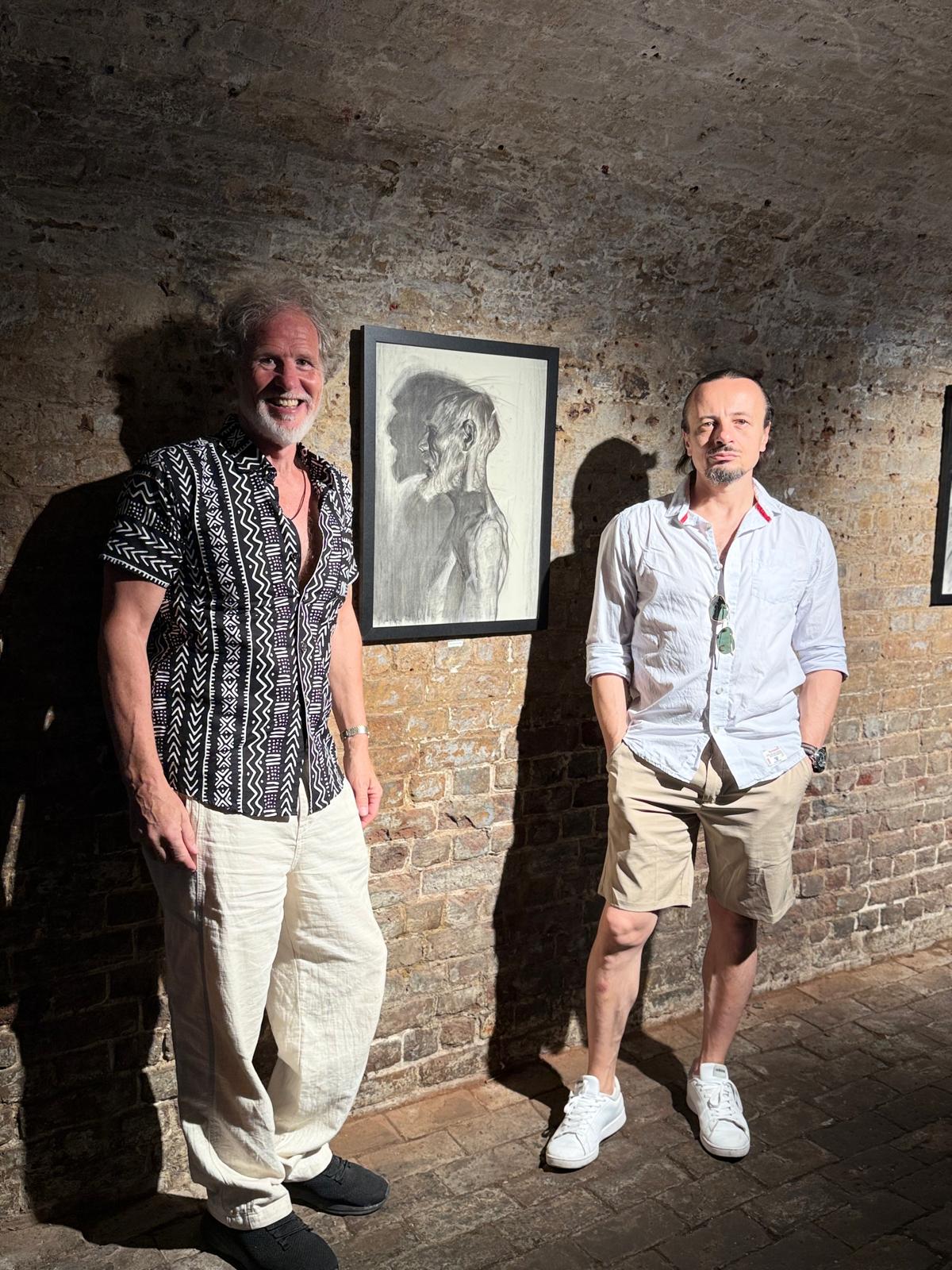
Born in Sarajevo, Bosnia and Herzegovina, in 1976, Kan attended the Academy of Fine Arts before leaving Sarajevo in April 1992 during the violent political conflict in his country. During his time as a refugee, he helped his father create anti-war illustrations and posters.
His journey eventually took him to Zurich, Switzerland, where he studied painting at the F+F School for Art and Media Design.
From there came an international creative career spanning fine art, film, television and games.
Standing beside Kan in that historic London crypt and hearing more about the person behind the work made me reflect on something I’ve increasingly come to appreciate.
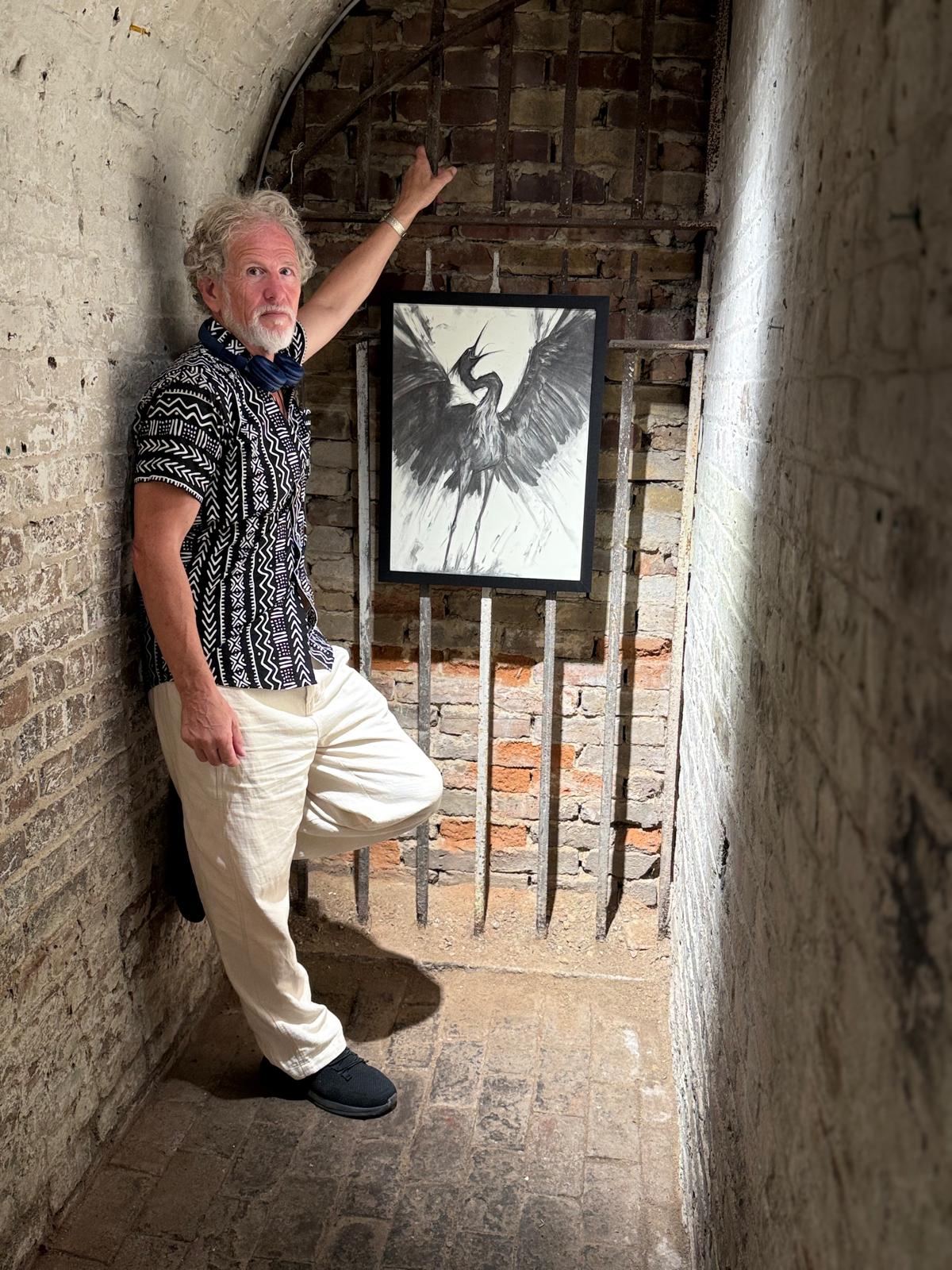
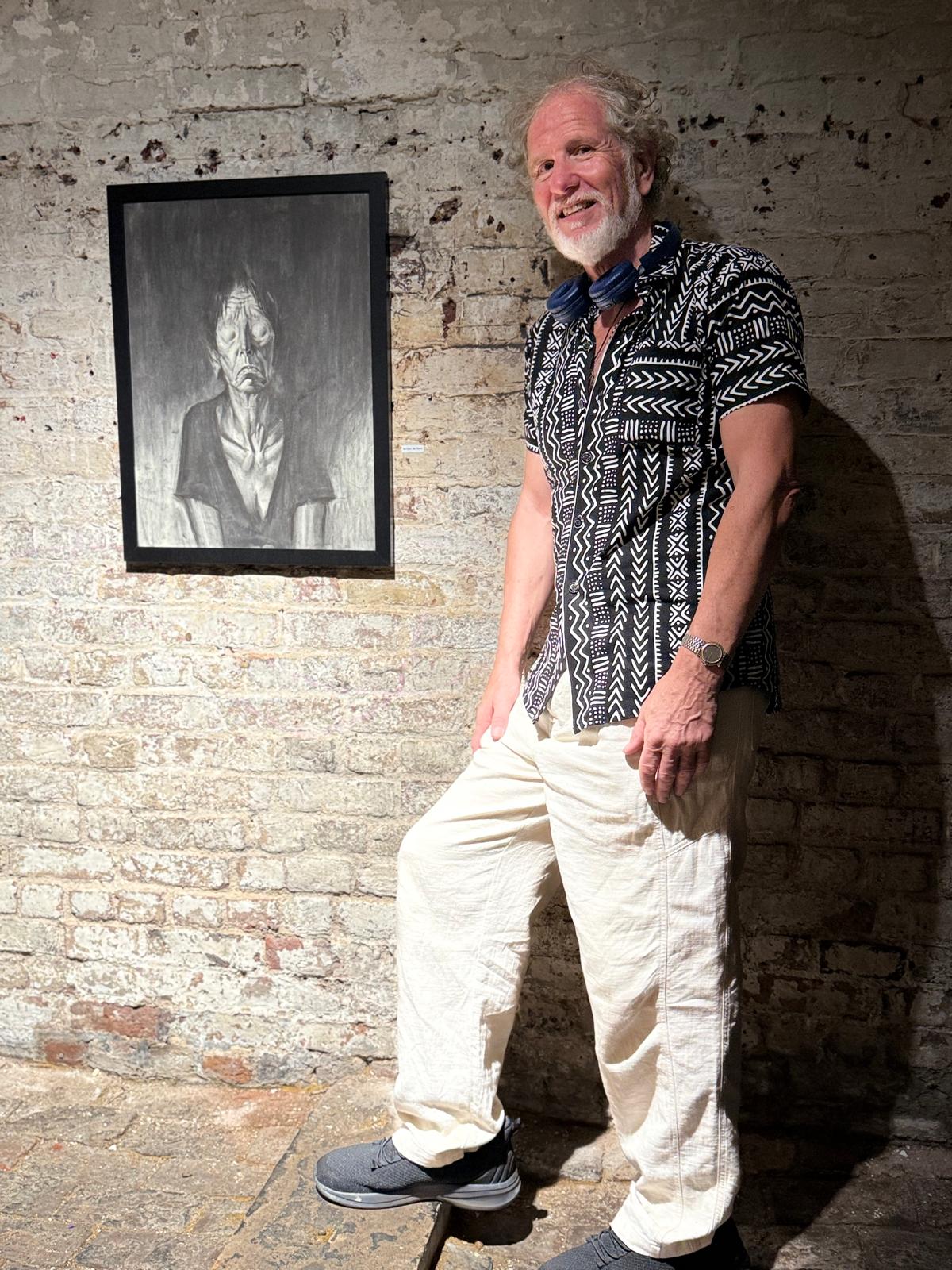
London has so much to offer
We understandably think of the famous landmarks – the Houses of Parliament, Buckingham Palace, Tower Bridge, the London Eye and the great museums.
But sometimes London’s most memorable experiences are hidden beneath our feet.
You can walk down Euston Road, only minutes from some of the busiest railway stations in Britain, step through a doorway and suddenly find yourself walking through hundreds of years of history while experiencing the work of a contemporary international artist.
That’s one of the things I love about London, our capital city.
History and the present don’t exist separately here.
They live alongside each other.
And on this particular visit, an historic burial crypt had become a place for creativity, conversation and reflection on some of the most profound aspects of human experience.