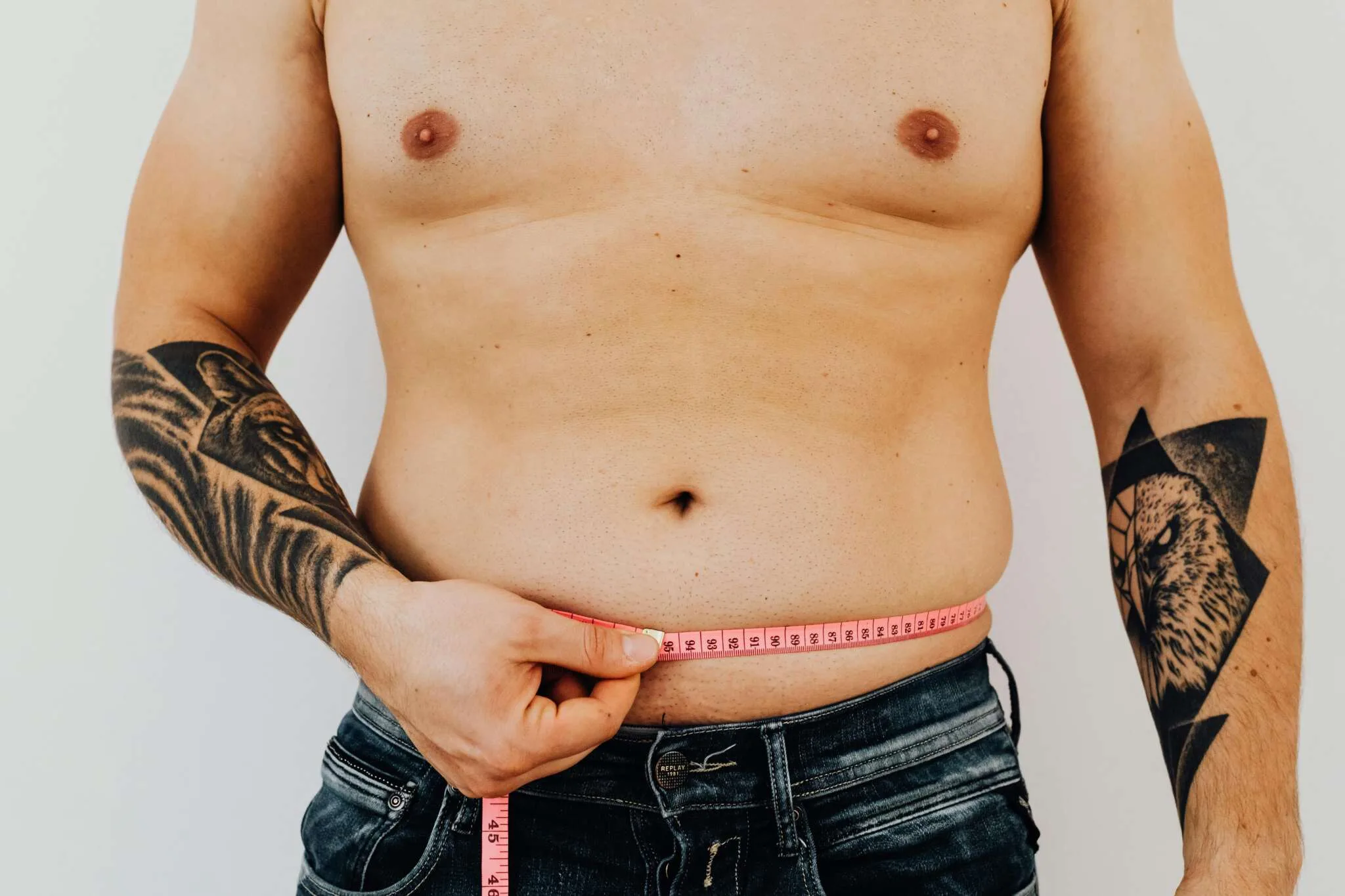

LONDON men who have a so-called ‘dad bod’ are putting themselves in danger of developing serious metabolic health risks, a new study has revealed.
Whilst the concept of the ‘dad bod’ may be a light-hearted stereotype to many people, new analysis by global personal training company Ultimate Performance (U.P.) has revealed the stark crisis facing overweight London fathers, who are putting their lives, and their health, at risk, by carrying extra weight around their waist.
Ultimate Performance, which has nine private gyms across London and train thousands of Londoners every year, has found that more than 60% of men aged 35 and over are entering fatherhood with waistlines that put them in the ‘at-risk’ or ‘high-risk’ category for metabolic syndrome – a cluster of life-shortening conditions including heart disease, stroke, and Type 2 diabetes.
Behind the statistics are the stresses of modern London life: long hours at a desk, poor sleep, high-pressure jobs, and a fast-paced lifestyle built around Pret breakfasts, Deliveroo dinners, and back-to-back meetings.
Add in the physical and emotional demands of fatherhood and paying attention to their health and fitness is the first thing men sacrifice.
Mark Bohannon, body transformation specialist at Ultimate Performance, based in London, said: “The ‘dad bod’ isn’t just a harmless stereotype. It’s a warning sign – a combination of rising belly fat, shrinking muscle, and declining energy that creeps in when fatherhood pushes fitness to the bottom of the list.
“This isn’t solely about how you look. It’s about how you feel, how you perform, and how long you stay healthy for your family members who rely on you. Extra weight means less energy, lower confidence, and a higher risk of serious health issues, like heart disease and diabetes.
“But the good news is that it’s completely avoidable.”
The Tipping Point: London’s Waistlines Are Expanding — and So Are the Risks
U.P. analysed data from thousands of male clients the company has worked with over the past decade and found the average London dad passes the danger threshold – a 94cm waist – by his mid-30s. When that waistline exceeds 102cm, life expectancy can drop by up to FIVE YEARS.
Visceral belly fat, which refers to excess fat which builds around your organs, is directly linked to higher risks of cardiovascular diseases, chronic illness and early death. And even men with a ‘normal’ BMI aren’t safe – if you’re carrying fat around the middle, your risk of dying early doubles.
But, with a focused programme of lifting weights, a simplified approach to nutrition, and smart lifestyle changes, the London dads that Ultimate Performance analysed lost an average of 8.5-9.4cm from their waist in just 12 weeks, with 4 in 10 moving down at least one risk category.
Mark added: “This is not a ‘get a six-pack campaign’. This is about a life-saving intervention for dads who are struggling with their weight. The myth that the ‘dad bod’ is an unavoidable part of fatherhood is exactly that – a myth.
“We’ve worked with thousands of fathers who have proven that it’s possible to reclaim their fitness, their energy, and their health – not by chasing perfection, but by following a simple, sustainable plan built around strength training, nutrition, and lifestyle habits that work alongside family life.”
The 10-Second Test Every London Dad Should Try
If you want to do a very quick, 10-second test to see if the ‘dad bod’ is a problem for you, then you don’t necessarily need a fancy scan or smart scales – just a tape measure. Wrap it around your waist at the belly button (not your trousers) and check the number:
- Under 94cm: Healthy
- 94–102cm: At risk
- Over 102cm: High risk of metabolic syndrome
Every 10cm of waistline lost adds up to two extra years of life. And in a city where time is tight, many Londoners are seeing those results with just three strength training-based gym sessions a week.
In order to combat the ‘dad bod’, Ultimate Performance recommends a three-pillar approach to reversing the dangers they face. This involves between three and four strength training-based sessions per week, lasting between 45-60 minutes; better nutrition based around protein-led meals that work for busy households; and smart recovery strategies that involve prioritizing good quality sleep, alcohol moderation, and mitigating stress.
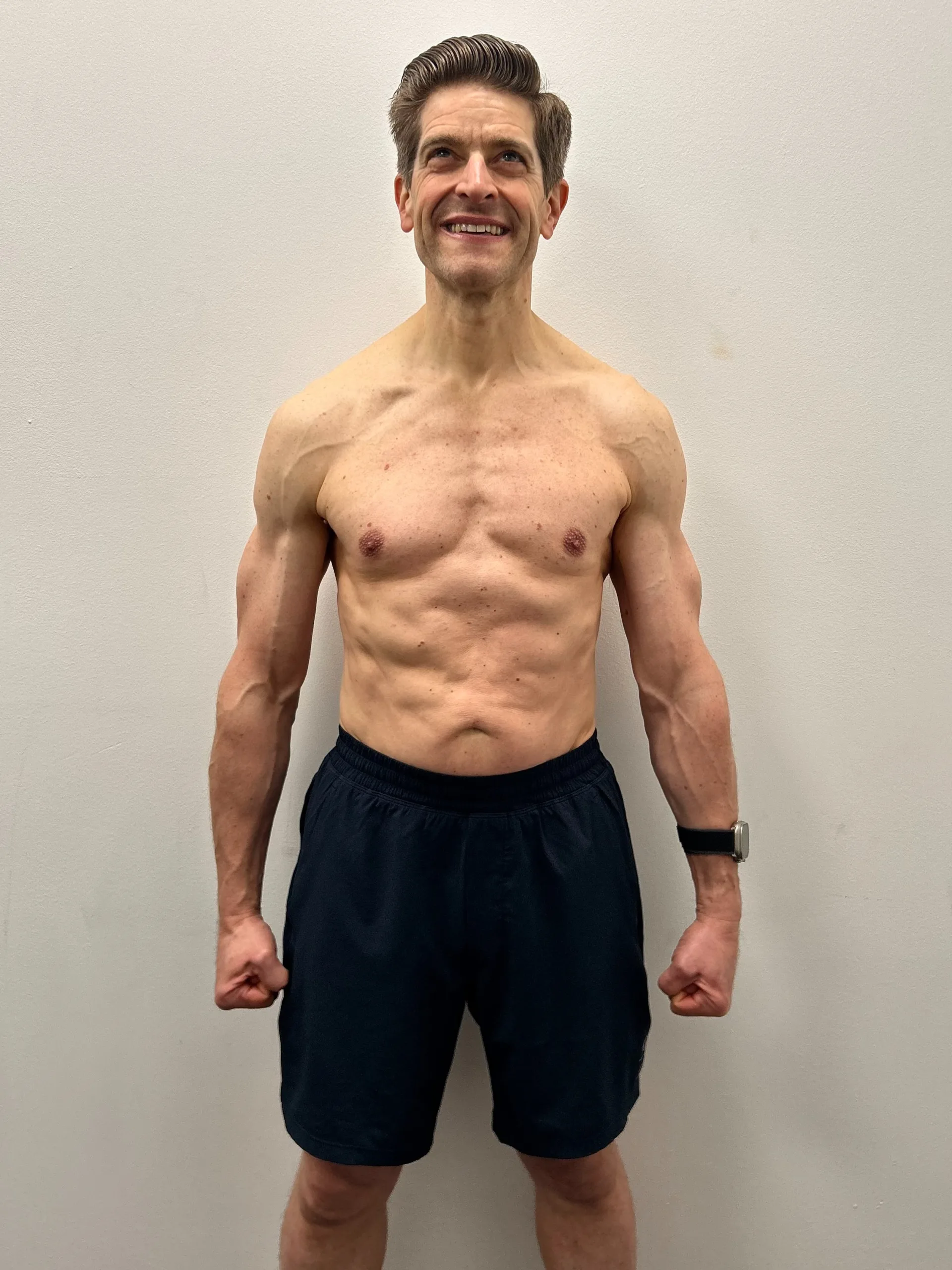
One Ultimate Performance client who stands as testament to the power of strength training when it comes to reversing the risks of the ‘dad bod’, is global marketing specialist and father-of-two Mark Jenkins, who trained at U.P.’s St Paul’s gym.
At 55, Mark felt like his body was working against him. Despite years of trying to stay active, the weight wouldn’t budge, especially around his waist, and he’d given up hope of ever feeling athletic again. But a family holiday became the turning point. “I was finally pushed over the edge,” he said. “So, I made the decision to commit and go at it 100%, and I don’t regret a single moment of it.” He joined Ultimate Performance, embraced structured strength training, dialled in his nutrition, and dropped 24kg (53lbs) in just 25 weeks, a transformation that’s helped him look and feel years younger.
For Mark, the shift wasn’t just physical – it was mental and emotional, too. With expert coaching and accountability, he pushed past old limits, mastered proper lifting technique, and rebuilt confidence. “I certainly feel much more self-confident,” he said. “I used to feel slightly ashamed showing up to meetings or family events. Now I feel more like the person I imagined I was.”
And it’s had a ripple effect. Mark’s teenage children have been inspired by his transformation, not through lectures but by watching him walk the walk. “I was hoping I’d be able to influence my children through actions rather than words,” he said. “My son is now much more mindful of what he eats and is talking about weightlifting. My daughter’s become curious about nutrition and exercise, too.”
Mark Bohannon added: “Fathers often act as the physical activity role models in a household. Studies show that kids mimic their parents’ eating, movement, and lifestyle habits from a young age.
“It’s a startling fact that research has shown that children with an obese father are 14 times more likely to become obese in their teens.
“So, a father that leads by example by eating well, staying strong, managing stress and living an active life, gives his kids the best foundation for long-term health. You’re not just training for yourself. You’re setting the standard for the next generation.”
To read more, visit: https://blog.ultimateperformance.com/avoid-dad-bod/