
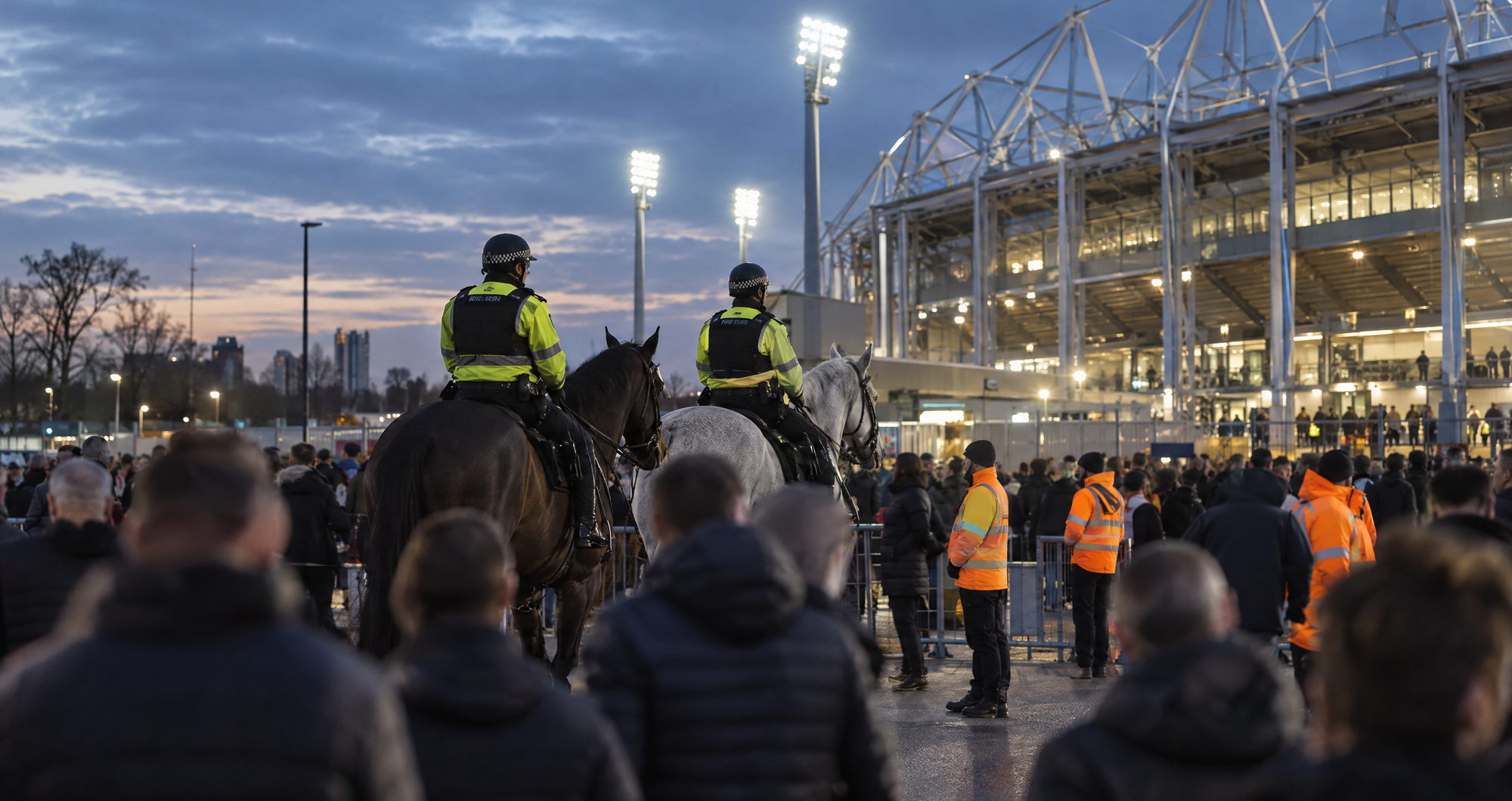

Sir Mark Rowley has called on the Government to change the law so football clubs reimburse police forces for the cost of policing matches, putting responsibility for London’s football policing bill at the centre of a funding dispute.
The Metropolitan Police commissioner told a City Hall session that clubs currently do not pay for most of the police resources deployed. He argued that the polluter pays principle should apply, with clubs meeting the public policing costs associated with their matches.
The Met puts the annual cost of policing London’s six Premier League clubs and eight lower-tier clubs at around £20m. The demand comes as the force faces financial pressure and cuts back on event policing, raising questions about how much of the match-day bill should fall on police budgets.
Clubs point to their existing payments for police services and their wider spending on safety and security. The dispute therefore involves both the amount recovered by police and the separate investment clubs make to keep football events safe.
The match-day bill
City Hall figures show that £23.4m was spent policing matches in the 2024-25 season, while £2.1m was recovered from clubs. The stated recovery rate was 8 per cent, leaving most of that policing expenditure unrecovered from the clubs themselves.
About 40,000 officers were deployed across each of the 2023-24 and 2024-25 seasons. Those figures describe deployments across the seasons, rather than the number of officers assigned to any particular match.
Football policing is not confined to the stadium. Match days can require officers in surrounding streets and other public spaces, where crowds arrive, leave and move between transport services and grounds. The distinction between work inside and outside stadiums matters because different legal rules govern the provision of policing in those settings.
Rowley’s request is for legislation, rather than simply a voluntary increase in club payments. His argument is that the current arrangements leave police forces carrying most of the cost of resources deployed for matches, and that the Government should change who is responsible for meeting that bill.
Support at City Hall
Sadiq Khan said he had supported the commissioner on changes that could bring additional resources to London. His comments placed the potential benefit to the capital alongside the question of how policing costs are divided between clubs and the public.
The mayor also noted the work football clubs do in their communities and the different legal rules applying inside and outside stadiums. That distinction is central to understanding why the overall cost of policing a fixture is not necessarily the amount a club is required to pay.
Assembly member Joanne McCartney said clubs should pay a fairer share. Her intervention added support at City Hall for a change in the balance of contributions, while the commissioner’s proposal would require action by the Government.
For London, the practical issue is the pressure match-day operations place on police resources. Recovering more of their cost could bring additional funding to the force, but the proposal does not itself establish what any individual club would be charged.
Clubs point to security spending
Clubs already pay more than £8m a season in Special Police Services and say their total investment in safety and security exceeded £100m last season. They argue that their contribution should be considered beyond the sums recovered through match-policing charges alone.
Those figures describe different categories of spending from the City Hall figures for policing London’s matches. Wider safety and security investment is not the same measure as reimbursement of police expenditure, so the totals cannot simply be treated as competing accounts of an identical bill.
The next question is whether the Government will take forward the legislative change Rowley wants, and how any new arrangements would distinguish between policing inside grounds and in public spaces. Until that is settled, the proposed increase in club contributions remains a call for reform rather than an agreed funding arrangement.







