
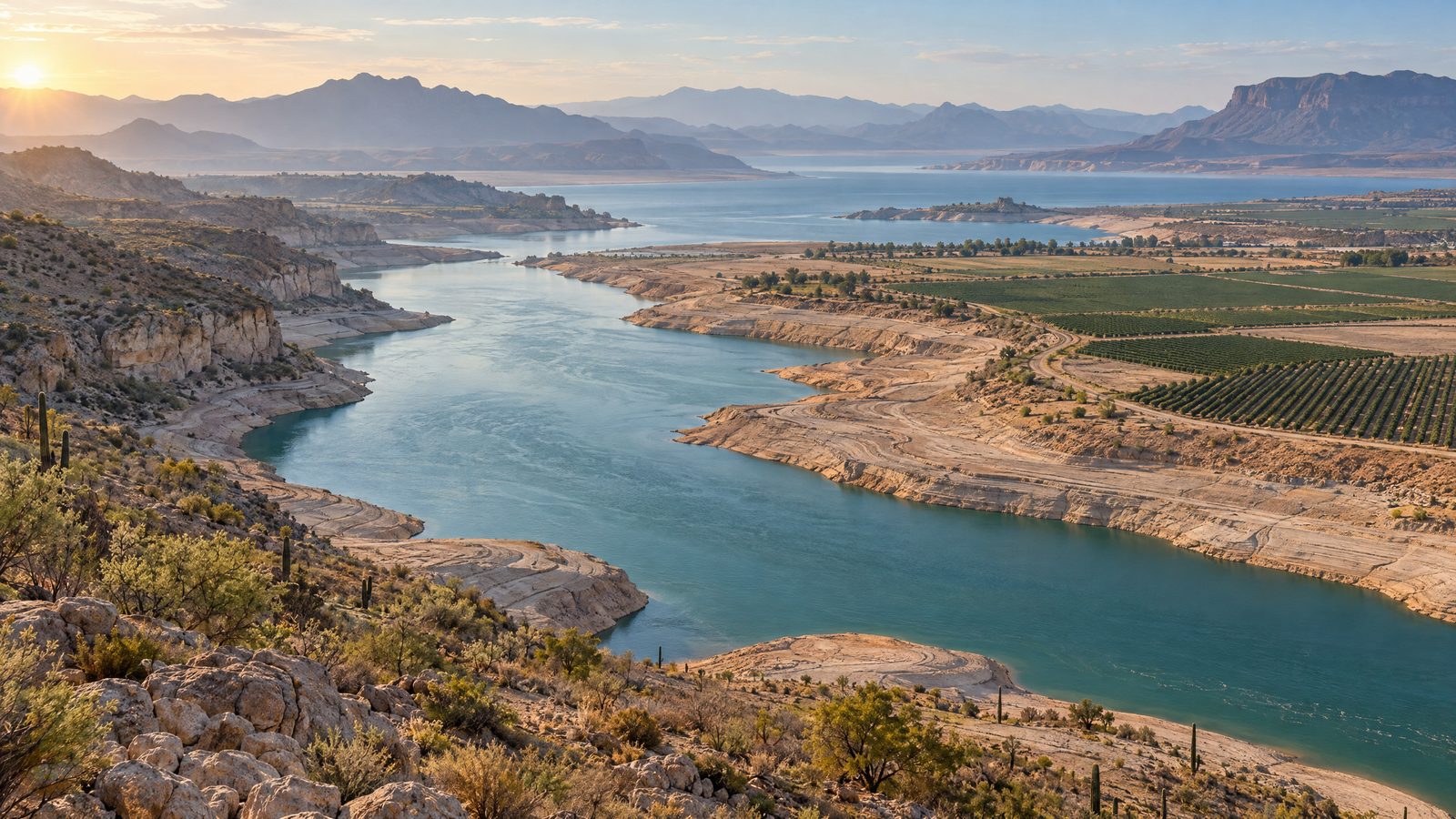

Mexico has completed the first year of water deliveries in cycle 37 of the 1944 treaty governing shared Rio Bravo flows with the United States. The milestone was reached on 24 October, during a period of severe drought affecting water availability in the basin. It marks progress against an annual commitment made earlier this year, but it does not settle every issue connected with the treaty or previous delivery shortfalls.
The annual delivery benchmark for the current cycle is at least 350,000 acre-feet. That is the amount Mexico committed to deliver each year under a bilateral understanding reached in February. It also matches the annual average embedded in the treaty’s wider five-year structure: Mexico’s deliveries from specified tributaries must total at least 1.75 million acre-feet across a five-year cycle. Reaching the first-year benchmark is therefore a significant early test, rather than a final measure of the whole cycle.
The arrangement applies to waters entering the Rio Grande below Fort Quitman in Texas, known as the Río Bravo in Mexico. The treaty allocates flows in a river system on which communities, farms and ecosystems on both sides of the border depend. Its five-year accounting period matters because river flows can vary sharply between wet and dry years. The treaty requirement is framed as an average over the cycle, while the newer bilateral commitment introduces a minimum annual pace intended to make supplies more predictable.
That distinction is particularly important in the current drought. Low rainfall and reduced inflows make each release or transfer harder to balance against local needs. Mexico has treated drinking water for communities and continuity of food production, especially in the border region, as priorities alongside treaty compliance. The public information on the year’s completion does not provide a detailed operational breakdown of where the water came from or a full assessment of local effects. Completion of the annual volume should not therefore be read as proof that drought pressures on households or agriculture have eased.
The first-year result also sits alongside an unresolved issue from the preceding cycle. Mexico has agreed to develop a detailed plan to address the outstanding deficit from that period. Delivering the new annual minimum is separate from eliminating the earlier shortfall. The 24 October milestone confirms delivery against the current year’s commitment, but it does not establish how much progress has been made on the previous-cycle plan or when that work will be complete.
Both countries are expected to hold regular monthly meetings intended to support timely and consistent deliveries. Those discussions will remain important as hydrological conditions change and as officials assess whether the annual pace can be maintained. Water is stored in international reservoirs in the lower river system, so the practical effect of the commitment depends not only on the final annual figure but also on the timing and reliability of releases.
For now, the completed first year gives cycle 37 a clearer starting point than a simple five-year target alone. It demonstrates that the annual minimum has been met despite severe drought conditions. The larger test lies ahead: sustaining deliveries through the rest of the cycle, pursuing the separate plan for the earlier deficit, and doing so while protecting essential water needs in a stressed cross-border basin.







