
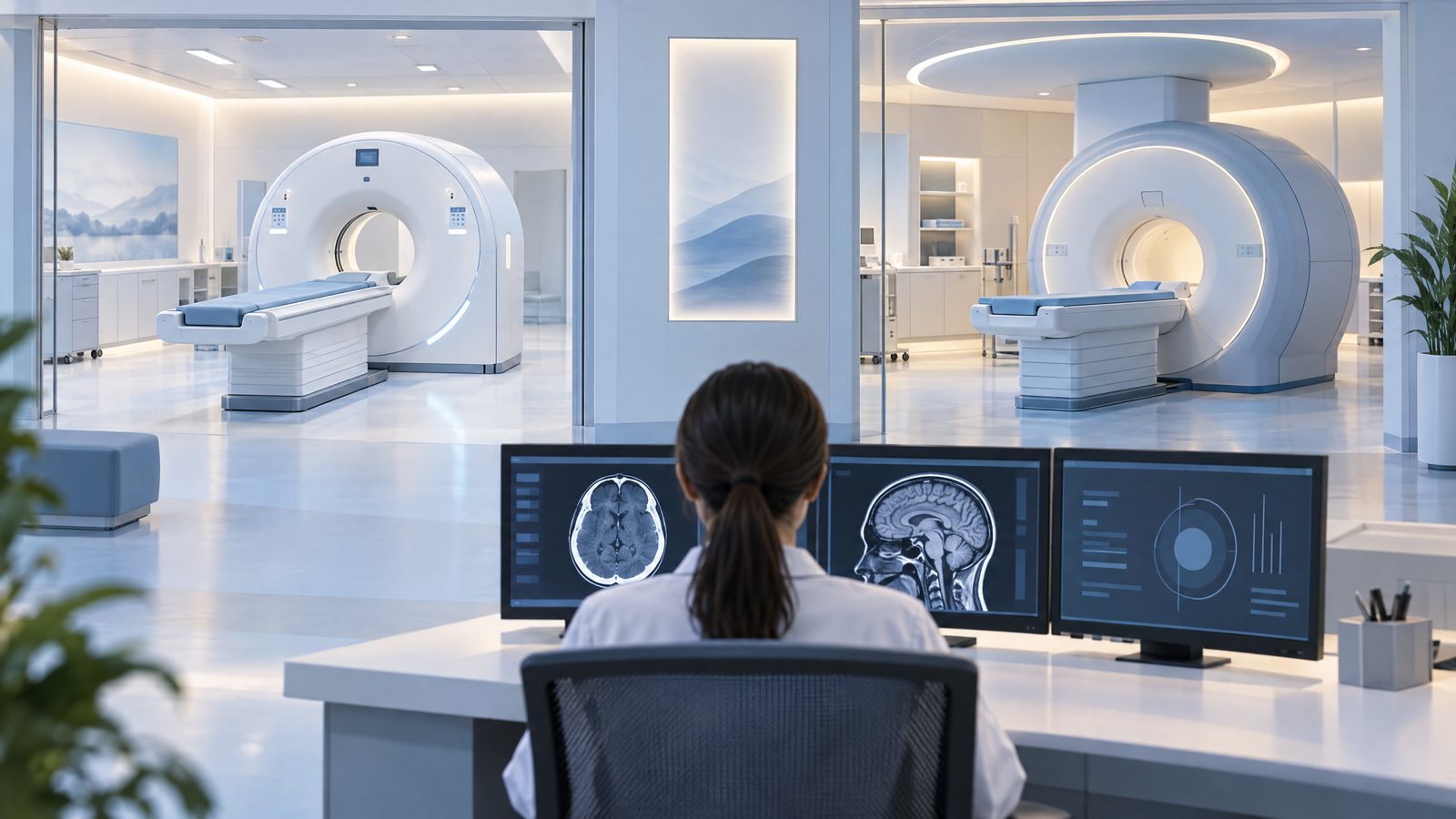

The number of computed tomography (CT) and magnetic resonance imaging (MRI) scanners in England’s NHS increased by 125 between March 2024 and March 2026. The extra equipment, together with faster MRI workflows using artificial intelligence, is helping services carry out around one million additional scans a year.
The figures describe added capacity, not a guarantee that every patient will be scanned sooner. A scanner is only one part of a diagnostic service: appointments also depend on trained staff, opening hours, reporting capacity and the way referrals are prioritised. The extra scans can support earlier diagnosis, including for cancer, but not every additional appointment is a cancer test, and the expansion does not mean waiting pressures have been removed.
More testing in community settings
Of the 125 machines added over the two-year period, 107 were placed in community diagnostic centres. These centres carried out nearly 2.2 million CT and MRI scans in the 12 months to March 2026, around one million more than in the 12 months to March 2024.
Locating diagnostic services in community settings is intended to make tests available closer to where people live, rather than relying solely on hospital departments. The national figures do not identify the distribution of the new scanners by region, however, so they cannot show how much capacity has been added in any particular town or how access has changed for individual patients.
The £19.2 million Manchester and Trafford Community Diagnostic Centre officially opened on 29 October 2026. It is one example of investment in local diagnostic facilities. The scanner expansion covers England; the national totals do not show how much of that increase occurred in London.
How MRI acceleration is intended to work
The MRI acceleration software uses artificial intelligence to reduce the amount of data needed to produce a high-quality image. The time saved can allow a scanner to be used for more appointments. The average increase in throughput is 14 per cent while maintaining image quality. The software had been installed in 54 per cent of NHS MRI scanners that are compatible with it.
Compatibility matters: the technology is not suitable for every machine. Each NHS trust is to have the opportunity to upgrade compatible scanners by 2029. A full rollout could enable up to 162,000 more checks each year. That is a potential future increase, not a count of appointments already delivered.
The figures also do not mean that AI is interpreting scans or deciding diagnoses. This use of the software accelerates image acquisition; clinicians still rely on images and professional assessment to investigate a patient’s condition. More appointment slots may help services use equipment more efficiently, but workforce and reporting capacity remain important to turning an image into a timely result.
Capacity is not the same as shorter waits for everyone
Each month of 2026 covered by the diagnostic activity figures set an NHS monthly record. The diagnostic waiting list fell in three of the five months from April covered by the waiting-list figures, while the overall elective-care waiting list was down by more than 250,000 compared with July 2024. These are broader service indicators; they do not establish that new scanners alone caused those changes.
The expansion in equipment and scanning activity sits alongside a programme to speed up some compatible MRI examinations. The numbers indicate greater national capacity, while the extent to which that translates into faster appointments will depend on local demand, staffing and implementation.







