
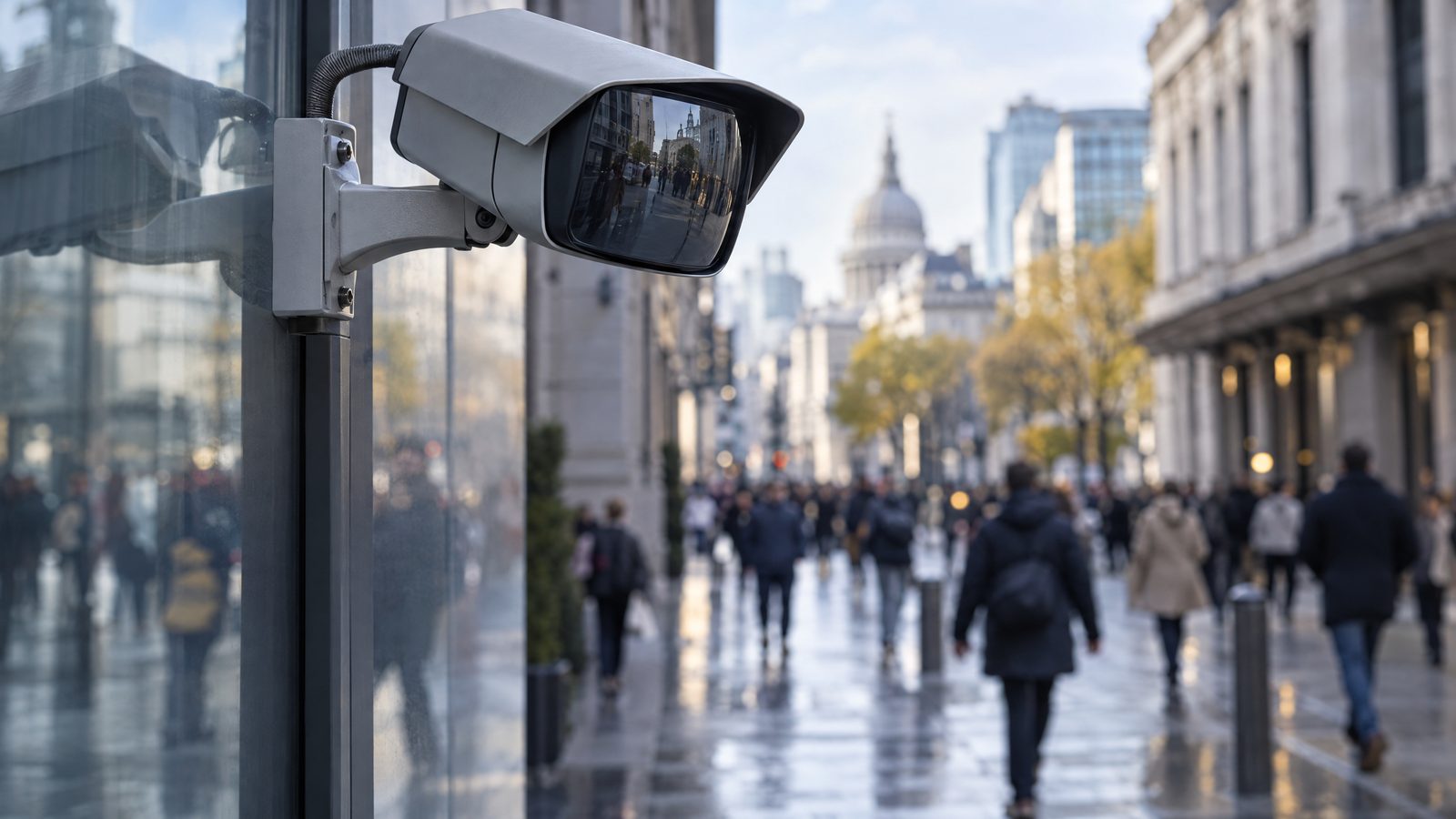

Police use of facial recognition would face new legal limits and independent oversight under government plans to regulate a technology already being used on streets in England and Wales.
The Home Office says it intends to introduce a specific law requiring police deployments to be intelligence-led and proportionate. It says the technology should be used where officers believe wanted people could be present, rather than without a reason linked to the operation.
An independent watchdog would oversee police use of facial recognition and other technologies. In extreme cases of non-compliance, the government says the body could pursue enforcement action leading to a court injunction preventing a force from using the technology.
The measures are proposals, not new laws already in force. Police use is currently subject to existing legal requirements, including data protection and human rights law. Ministers say those rules are spread across several areas of law and need a clearer, more consistent framework.
How the checks work
Live facial recognition compares images of people passing a camera with a watchlist prepared for a particular deployment. If the system suggests a match, an officer can check it before deciding whether to engage with the person. A match is not itself proof of identity or wrongdoing.
The Metropolitan Police says images that do not match its watchlist are immediately deleted. A separate use, known as retrospective facial recognition, involves comparing previously captured images or footage against a database after an event.
The government says technologies used by law enforcement should be independently tested for bias or discrimination relating to age, gender and race. It also plans a statutory code of practice for police, developed in consultation with the proposed regulator, and a separate code for private-sector use in preventing and detecting crime.
The government says the oversight body would monitor compliance with the new rules and have enforcement powers. It also says the legislation would specify the minimum rank of officer, or equivalent, able to authorise operational use.
Debate over safety and privacy
Ministers argue that the technology can help officers find wanted people. The Home Office says a trial of fixed live facial recognition cameras in Croydon between October 2025 and March 2026 resulted in 173 arrests, including people wanted in connection with serious offences. An arrest does not establish guilt.
The Metropolitan Police says it has made more than 3,000 arrests using live facial recognition over the past two years. The force is planning to expand fixed cameras to the West End and Soho in December, following the Croydon pilot, although the precise locations were still being discussed.
Privacy campaigners dispute whether scanning people in public is an acceptable way to find those on a watchlist. Big Brother Watch argues that the technology checks people who have done nothing to arouse suspicion and risks treating passers-by as suspects by default.
The government has acknowledged that facial recognition can interfere with rights including privacy, freedom of expression and peaceful assembly. It said some consultation respondents wanted its use prohibited at protests, while others supported limited use with strong safeguards.
Concerns were also raised during the consultation about access to databases held by other public authorities. The government says such searches can involve greater interference with privacy and should remain limited to defined purposes, with clear thresholds and safeguards.
Questions about accuracy
The Information Commissioner’s Office has warned that an incorrect match can have serious consequences, including wrongful intervention, accusation or arrest. In August, the regulator found inconsistencies in data protection compliance across five police forces it had audited, alongside examples of good practice.
The regulator also said testing had identified bias in an algorithm used for retrospective searches of the Police National Database. It said this increased the likelihood of incorrect matches for people in some demographic groups. The regulator said the Home Office and policing leaders had put mitigations in place and planned to replace the algorithm.
The Home Office says a new retrospective recognition algorithm has been independently tested and is expected to be available for police forces to use from next year. The proposed framework and codes will still need to be developed and put into effect before their eventual requirements can be assessed.
Featured image: AI-generated illustration.







