
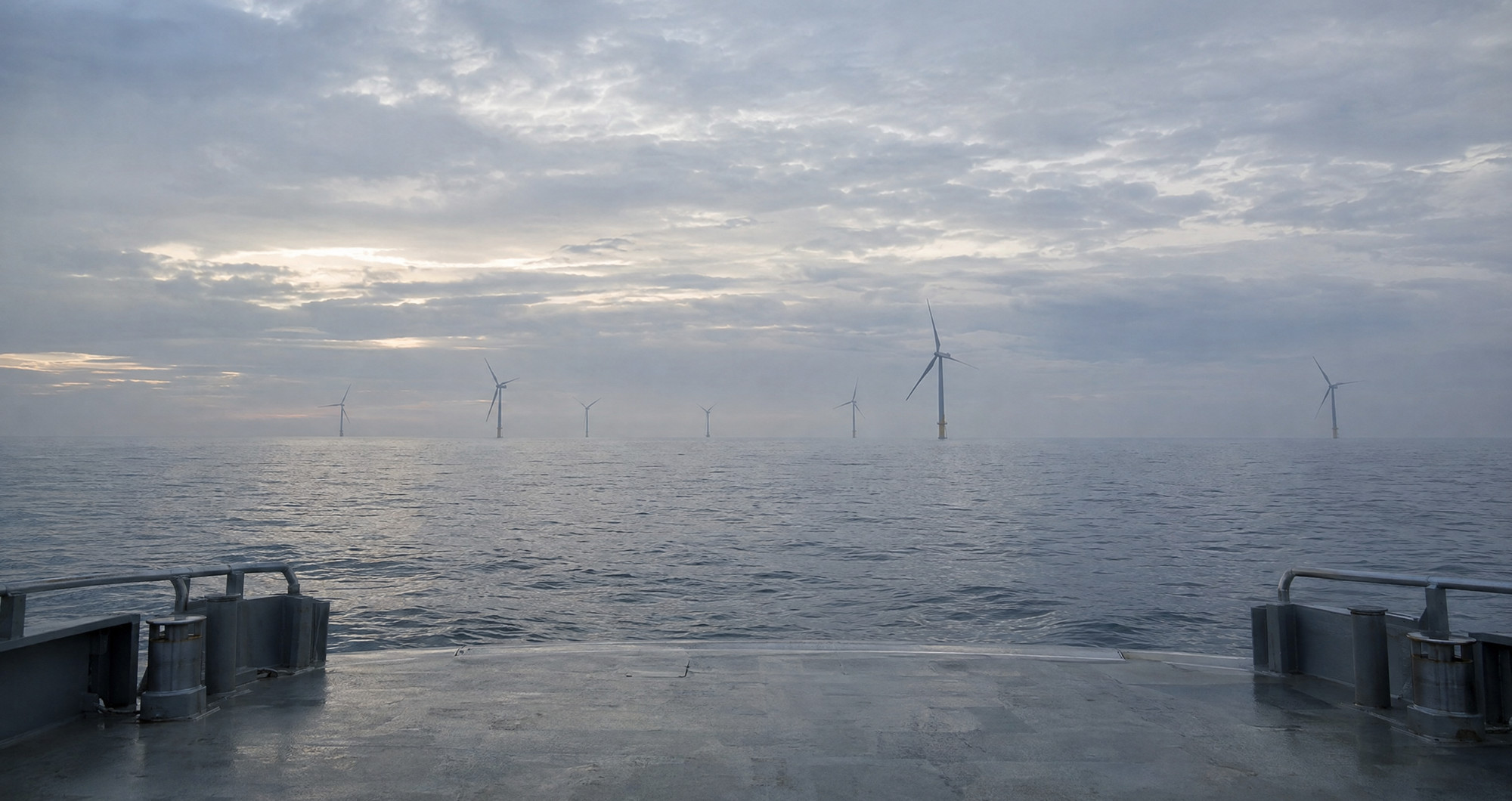

RWE and KKR have reached financial close on two offshore wind farms planned off the Norfolk coast, bringing together a roughly £12 billion investment in the projects and their transmission infrastructure.
The developers say the Vanguard West and Vanguard East schemes will each have an installed capacity of 1.4 gigawatts. Both are expected to be fully commissioned in 2030, with offshore construction scheduled to begin in early 2027.
The announcement marks a financing milestone rather than the start of electricity generation. RWE says onshore cable work and substation construction are already well advanced, but the offshore turbines and supporting infrastructure still have to be built.
How the funding is structured
KKR has completed the acquisition of a 50% equity stake in each project, establishing an equal partnership with RWE. The companies announced their proposed partnership in January; the latest step completes that transaction and secures financing for both farms. RWE will lead delivery on behalf of the joint venture.
The projects have secured non-recourse financing comprising £11.1 billion in cash facilities and a further £1.7 billion in ancillary facilities. The financing comes from a consortium of international lenders and includes a £1 billion commitment from the National Wealth Fund. The fund says its lending is split into two £500 million commitments, one for each wind farm.
Non-recourse project financing is structured around the projects and their assets and cash flows, rather than simply treating the borrowing as an ordinary loan to the owners. The funding commitments are not the same as money already spent, and the fund’s lending should not be described as a grant.
The £12 billion investment estimate covers construction of the farms and the associated transmission infrastructure. The headline investment figure and the £12.8 billion in financing facilities measure different things: the latter includes ancillary facilities and should not be added to the investment estimate as though it were a separate construction bill.
From shore to sea
The two sites will be between 50 and 80 kilometres off Norfolk in the North Sea. RWE says the first foundation installation at Vanguard West is planned for the first half of 2027, followed by work at Vanguard East. Both projects are intended to share coordinated grid infrastructure, alongside the onshore cables and substations needed to connect them.
The developers estimate that the wind farms’ planned 2.8 gigawatts of installed capacity would generate electricity equivalent to the needs of around three million UK homes. That is an estimate of equivalent demand, not a promise that three million particular households will receive electricity directly from the farms or that output will be constant.
Installed capacity describes the maximum rated output of the equipment, not the amount generated every hour. Offshore wind production varies with conditions, and getting the electricity to consumers also depends on the connecting network.
The National Wealth Fund estimates that construction will create and support around 2,300 jobs a year, directly and through the supply chain, with more than 100 permanent jobs during operation. These are projections rather than a count of jobs already in place, and the construction estimate includes activity beyond the sites themselves.
The earlier power contracts
Both Vanguard projects received 20-year, inflation-indexed contracts for difference in the government’s seventh allocation round in January. Each was awarded a strike price of £91.20 per megawatt hour, expressed in 2024 prices. That price is a contract benchmark, not a prediction of an individual household’s future electricity bill.
Under this type of contract, a generator sells electricity into the market. If the relevant reference price is below the agreed strike price, the contract counterparty pays the difference; if it is above the strike price, the generator pays the difference back. The arrangement is intended to reduce exposure to wholesale price swings and make long-term revenue easier to assess.
The contracts and the newly secured financing address different parts of the project. The former set out a mechanism for future electricity revenues; the latter provides funding facilities for construction. Neither means that the farms are already generating. The immediate test is delivery of the remaining offshore and onshore work before the planned 2030 commissioning.







