
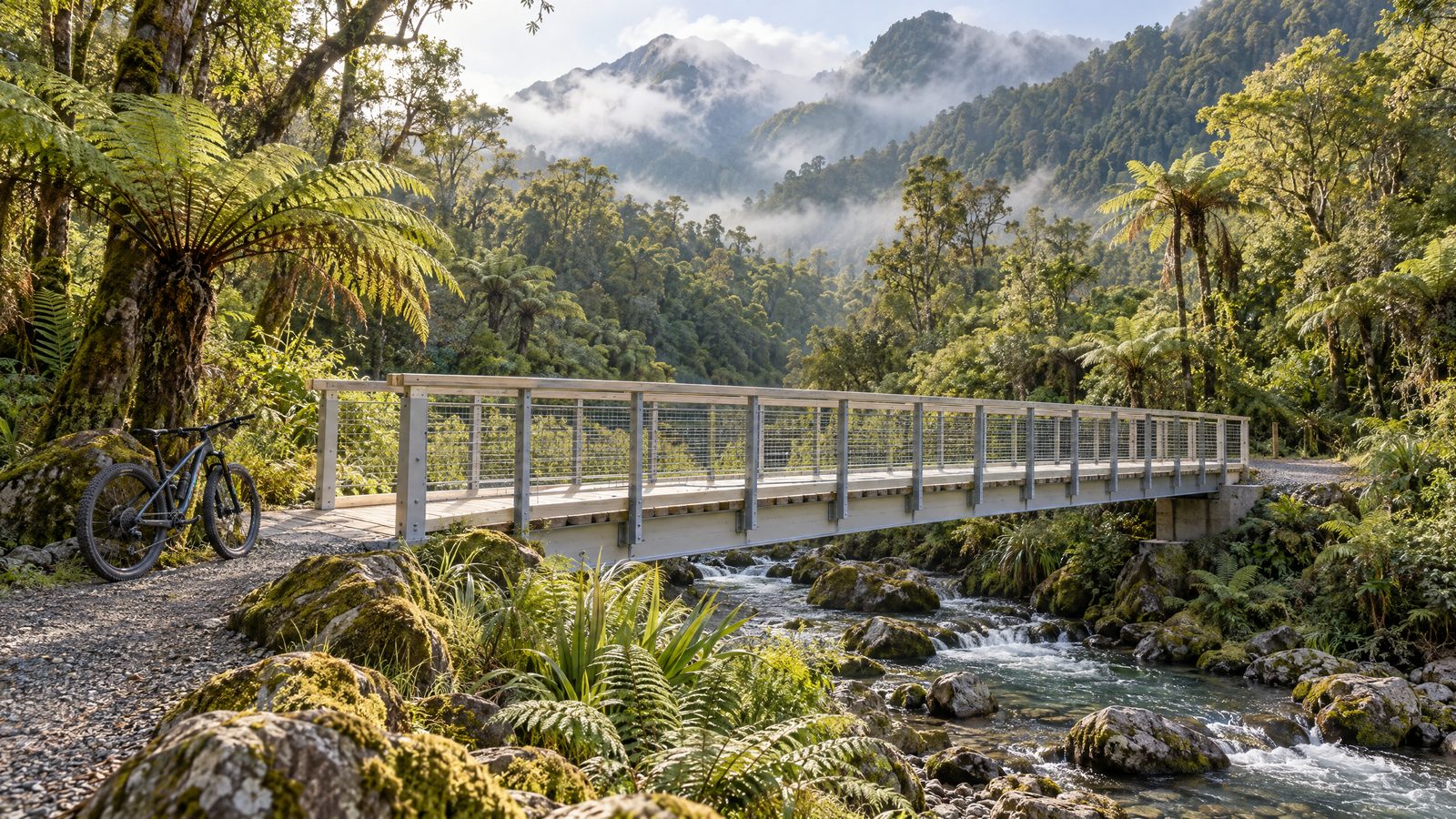

The Mangapurua Track has reopened for the summer riding season after seven older bridges were replaced on the remote route through Whanganui National Park.
Walkers and cyclists can return to the track from Saturday 24 October following its winter closure to cyclists. The completed work combines wider crossings with seasonal maintenance, aimed at making the route more manageable before the busier summer period.
The replacements address a practical pinch point on a route where riders may need to handle their bikes at crossings. The earlier bridges were narrow and were no longer serviceable. Their successors are wider structures designed to give walkers and cyclists easier passage while maintaining the character of a backcountry track. All seven were brought into the area already assembled, an approach suited to a location with limited road access.
The reopening is significant for a route within the regional Great Ride network. It passes through forest and the former settlements of the Mangapurua Valley before reaching the historic Bridge to Nowhere and Mangapurua Landing on the Whanganui River. The track can be travelled on foot or by bike, and river transport is part of the journey planning for many visitors.
Route planning is therefore a logistical question as well as a test of fitness and riding ability. The route can be approached from road ends and includes stretches through farmland as well as the national park. At the river-side landing, many itineraries continue with a pre-arranged jetboat journey. Visitors combining the track with river transport need to allow enough time for the ride, respect gates and private-land sections, and make arrangements before setting out rather than relying on an unplanned collection at the end of the day.
Better bridges do not turn the Mangapurua into an easy ride. It remains a remote Grade 3, or intermediate, mountain-bike trail. Some sections are exposed, there are steep drop-offs, and papa surfaces can become slippery and difficult after wet weather. Conditions can also change quickly after heavy rain or severe weather. Riders still need suitable equipment, sound mountain-biking skills and a plan for food, water, repairs and emergency communication.
Visitors should also allow for the different users of the track. The route is used by walkers as well as cyclists, and the section between the Bridge to Nowhere and the landing can be particularly busy in warmer months. On narrow stretches and at crossings, care and patience remain as important as the physical improvements.
The completed seven-bridge scheme belongs to a larger programme covering the Mangapurua and Kaiwhakauka tracks. That programme provides for 15 bridge and boardwalk installations in all. A separate Kaiwhakauka phase is planned across November and December, with bypasses intended to keep people moving while construction takes place. Temporary delays or closures may nevertheless be needed, so a planned upgrade should not be read as a guarantee of uninterrupted access.
For the Mangapurua itself, the immediate change is a reopened route with renewed crossings and maintenance completed for the season. It gives visitors access to a distinctive valley journey, but does not remove the preparation required by a long, changeable backcountry outing. Checking current conditions before setting out, following signs on the ground and adjusting plans when weather changes will remain essential parts of a safe visit.







