
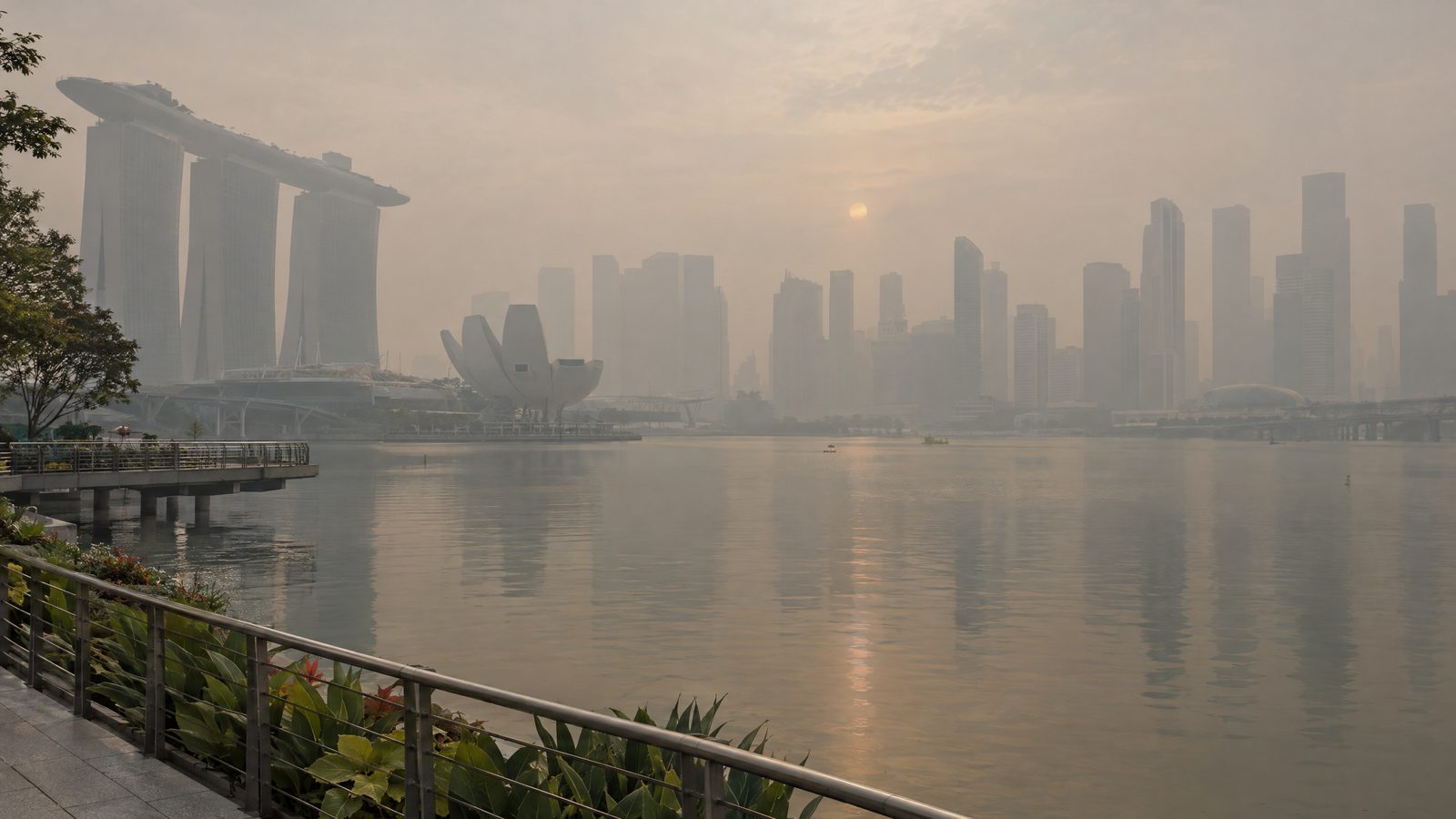

Singapore’s parliament has passed a bill to strengthen the country’s transboundary haze law, increasing the maximum fine for its main offence from S$2 million to S$20 million and providing new ways to investigate business links to fires overseas.
The amendments were passed unanimously on 4 November after a debate lasting about six hours. They follow what the government described as Singapore’s most severe haze episode since 2015, when smoke affected air quality and disrupted daily life.
The bill expands the circumstances in which authorities can act, including where a land or forest fire outside Singapore poses a risk of haze pollution in the city-state, even if the haze has not reached it. It also sets out powers to require assessments and restrict dealings with designated entities.
Parliamentary passage is not the same as commencement. A bill becomes an Act after presidential assent, and the bill as introduced provides for the amendments to take effect on a date appointed by the minister. The commencement date has not been confirmed.
Higher penalties and earlier action
The existing Transboundary Haze Pollution Act dates from 2014. Under the amendments, the maximum daily fine for the main offence would rise from S$100,000 to S$1 million, with the aggregate maximum increasing tenfold to S$20 million. The actual penalty in a case would be decided by the court; the maximum would not automatically apply.
The bill also provides for a court to impose an additional penalty reflecting profits gained or losses avoided through an offence. A separate civil penalty route, subject to the public prosecutor’s consent, would have a maximum of S$10 million. The government says the civil route and criminal prosecution cannot be used together in the same case.
Environment Minister Grace Fu told parliament that extending the law to cover a risk of haze would allow preventive action before pollution reaches Singapore. She said the National Environment Agency would consider evidence such as the extent and duration of fires, their distance from Singapore and prevailing weather conditions.
Fu said a certificate assessing haze risk would not itself establish that an offence had been committed. The government would still need to satisfy the court that the elements of an offence were made out.
Assessments and business links
The changes would allow the director-general of environmental protection to direct certain entities to appoint private-sector assessors at their own expense. Their reports would go to the environment agency to help establish facts and inform any further action.
Being directed to appoint an assessor would not necessarily mean an entity had committed, or was suspected of committing, an offence. Fu said assessors would not determine guilt: enforcement decisions would remain with the authorities, and liability would be decided by the courts.
The bill also provides for the designation of entities or individuals on specified grounds, including where there is reason to suspect conduct amounting to an offence. Orders could restrict dealings with those designated, such as the supply or purchase of goods and services or the provision of financial support. Designation does not require a criminal conviction.
Another power would let authorities put certain entities on notice to take appropriate steps to ensure their supply chains and business arrangements do not involve entities causing or contributing to fires that pose a haze risk to Singapore. The minister said this was intended to encourage due diligence, not to demand an impossible guarantee that no risk could arise.
Fu said businesses would not be penalised for dealing with a designated entity if they did not know, and had no reason to believe, that it was designated. She also said the government would seek to minimise compliance costs for smaller businesses and provide reasonable transition arrangements where appropriate.
Limits on enforcement
The amendments include new ways to serve documents, arrest powers exercisable in Singapore and provisions for cases to proceed in an accused person’s absence in specified circumstances. Fu said difficulties in gathering and verifying evidence abroad would remain, and the changes could not guarantee successful prosecutions.
She told parliament that the new offences, defences and penalties would not apply retrospectively to conduct before the amendments come into force. Past conduct could, however, be considered in decisions under the new assessment, designation and notice regimes.
Fu said all 10 Singapore-based companies contacted in connection with the current haze investigations had responded to information notices and agreed to appoint assessors. Their participation does not establish wrongdoing, and the investigations remain ongoing.
The minister said Singapore’s enforcement powers do not extend into other countries’ territory and that regional cooperation remains essential. Singapore and Indonesia have agreed to establish a joint task force to strengthen information sharing and coordination. The legislation is intended to add domestic tools to that work, not to resolve the cross-border problem on its own.
Featured image: AI-generated illustration.







