
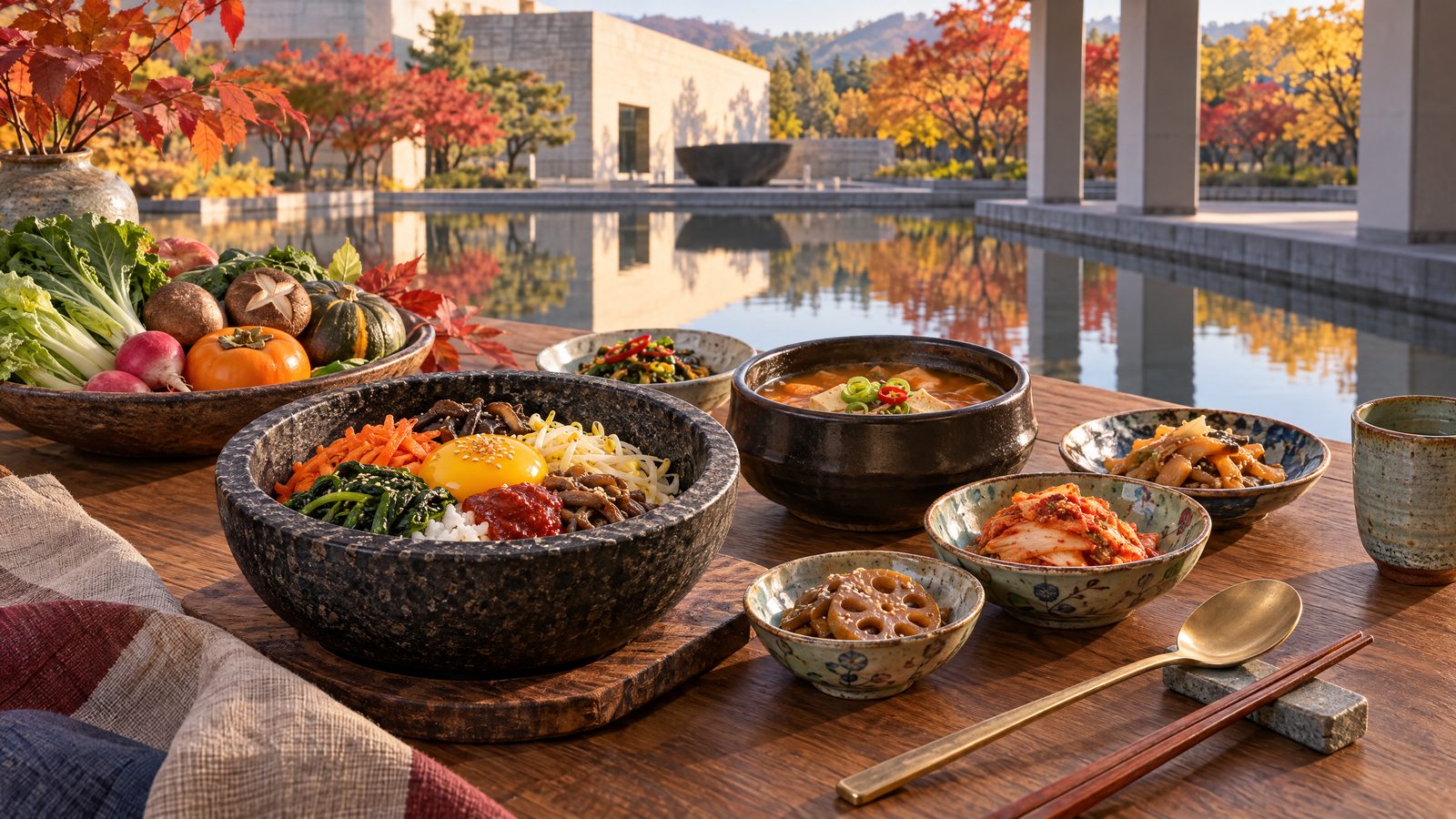

South Korea has marked its first officially designated Hansik Day with a three-day public festival at the National Museum of Korea in Seoul. The programme opened on 23 October and is scheduled to run until 25 October, while the new commemorative day itself falls on 24 October.
The opening ceremony took place in the museum’s Grand Auditorium, with the wider festival arranged around Mirror Pond. The occasion brings together food, culture and public diplomacy, but it is also a practical attempt to give Korean cuisine a fixed place in the national calendar. The ministries responsible for agriculture and foreign affairs jointly host the event.
A new date on the calendar
Hansik is the Korean term for Korean cuisine. This is the first year that 24 October has been officially designated to mark it. The chosen date combines the symbolism attached to the tenth month, described as completeness and harmony, with the 24 seasonal divisions traditionally used in East Asian calendars. Organisers present that combination as reflecting the relationship between food, nature and seasonal change.
The ceremony was designed to recognise people who have contributed to Korean cuisine and to set out a wider vision for its future. Representatives from the diplomatic community, the food sector, academia and related institutions were invited to take part. Its setting at the national museum places culinary practice alongside other forms of cultural heritage, rather than treating the event simply as a food fair.
Demonstrations, discussion and public participation
The festival programme mixes professional discussion with activities intended for general visitors. A conference examines Korean cuisine’s cultural and industrial role, including questions about how traditional food is presented, developed and carried to new audiences. Separate cooking demonstrations pair culinary specialists with food creators, while classes allow participants to try aspects of Korean cookery for themselves.
Other scheduled elements include a film-and-food discussion, a public quiz, cultural performances, company displays, restaurant pop-ups and a market for ingredients, desserts and tableware. The combination gives the event a broad scope: it can introduce visitors to established techniques and dishes while also making space for contemporary presentations and products. It does not, however, turn every product or restaurant appearing at the festival into an official endorsement.
The choice of venue follows an agreement made in February between the museum and the Korean Food Promotion Institute. That agreement was intended to encourage cultural-heritage exchange and wider understanding of Korean cuisine. Holding the festival at the museum gives that earlier arrangement a public expression during the new commemorative observance.
Vision rather than a completed policy outcome
At the opening event, the policy discussion covered preservation of fermented foods, use of food technology, links between regional food culture and tourism, and support for Korean restaurants and professional training beyond the country. These are directions being set out for future work, not evidence that every proposed measure has been completed or that the festival itself will deliver a particular economic result.
That distinction matters because the occasion has two separate purposes. It celebrates a newly designated day with public activities over a long weekend, while also giving officials and specialists a platform to discuss how Korean cuisine might be supported at home and abroad. The programme makes no claim that the ceremony alone settles those questions.
For visitors, the immediate focus is more tangible: food demonstrations, cooking experiences and opportunities to encounter ingredients, tableware and modern takes on familiar dishes. For the organisers, the first observance establishes the framework for a national occasion centred on Korean cuisine. The festival’s conclusion on 25 October will end this year’s programme, while the status of Hansik Day remains the lasting institutional change.







