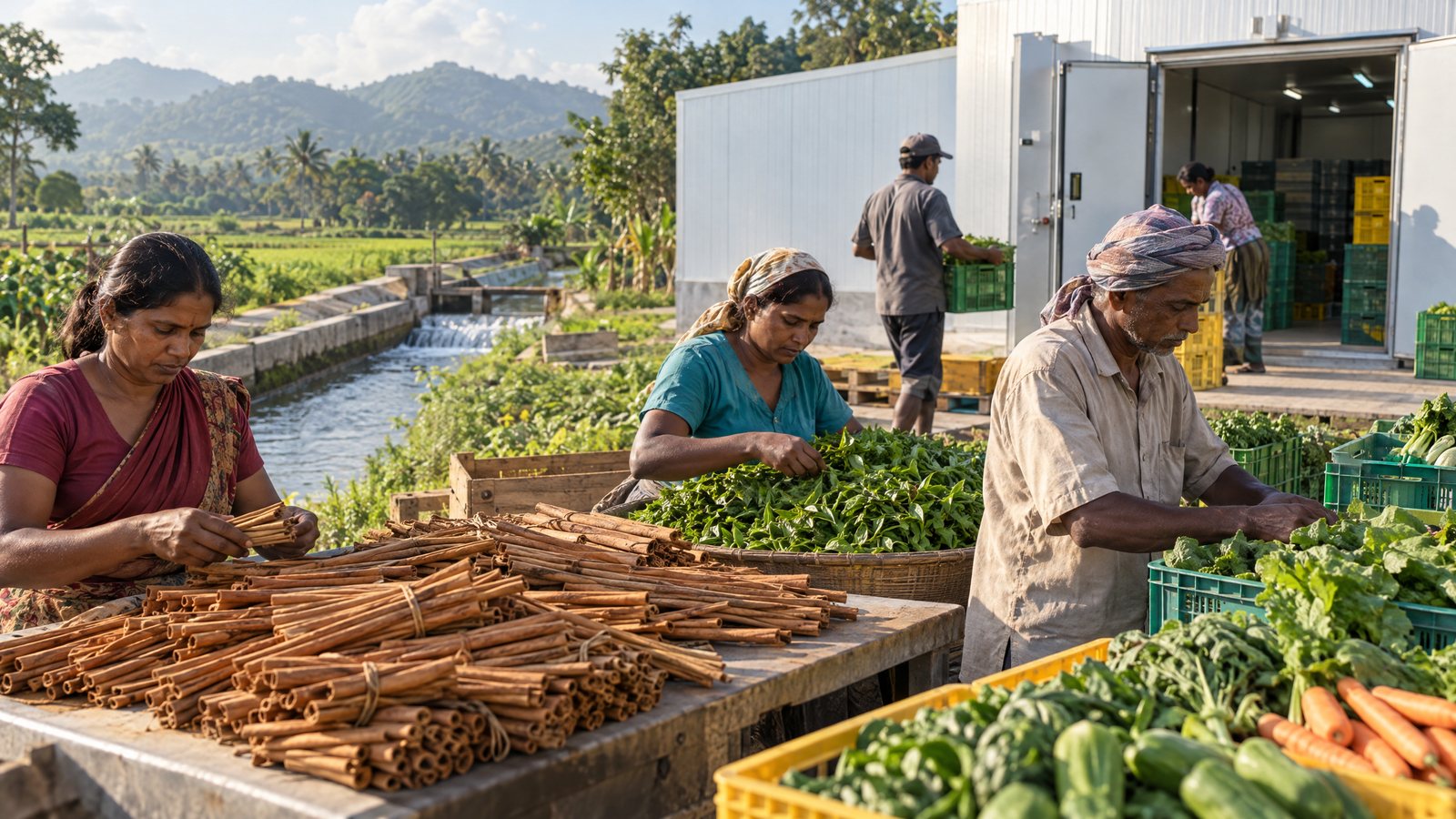

Sri Lanka has launched a farm-to-market plan aimed at connecting 900,000 farmers to agricultural value chains by 2030, with planned investment focused on modernising agriculture, strengthening climate resilience and creating rural employment. The AgriConnect joint implementation plan was launched in Colombo on 30 October 2026 as a three-party partnership between the government and two international development partners.
The plan brings together ambitions for agricultural production, market connections, jobs and food security. Its focus extends beyond farms to the infrastructure, finance, technology and skills needed along value chains. These cover the links between producers and markets, making the programme broader than an initiative concerned only with how crops are grown or animals are reared.
Officials set out planned investments of US$550 million from one development partner and US$115 million from the other. They also said the partnership could mobilise up to US$170 million in private capital over five years. Those figures describe planned investment and potential additional finance: they do not establish that the money has all been disbursed or that private capital has already been secured.
Finance, technology and infrastructure
Agricultural finance is among the priorities, alongside digital agriculture and agricultural technology, or AgTech. The plan also prioritises cold chains, connectivity and climate-resilient irrigation. Together, these areas place attention on both farm operations and the systems linking agricultural production with markets. Skills and research are included, giving the programme a knowledge and training component as well as an investment focus.
Digitalisation forms part of the intended modernisation of agriculture. It sits within a wider package rather than being presented as the sole route to change. Finance, physical infrastructure, irrigation, skills and research are all identified as priorities, reflecting the plan’s stated aim to improve agricultural value chains while also addressing climate resilience and opportunities for rural work.
The target value chains span coconut, cinnamon and tea, as well as fisheries, dairy, poultry, aquaculture and horticulture. That range gives the programme a remit across crop production, livestock and aquatic food production. The 900,000-farmer figure is an overall target for connections to value chains by 2030, not a statement that this number of producers has already been reached.
Opportunities in rural areas
The Northern and Eastern Provinces have been identified as areas for increased opportunity under the plan. The wider focus is rural Sri Lanka, with the launch linking agricultural modernisation to employment and food security. The prime minister participated in the Colombo event, which marked the formal launch of the joint implementation plan rather than the completion of its intended investments or farmer connections.
Sri Lanka is the first country in South Asia to officially join AgriConnect. The national plan sets out how the partnership intends to pursue its agricultural objectives, combining a farmer connection target with investment priorities and a possible role for private capital. The 2030 target and the five-year private-capital ambition remain forward-looking measures of what the partners seek to achieve.
The distinction between the launch and delivery is important across the programme. Improved value chains, greater climate resilience, more jobs and stronger food security are its objectives, not confirmed outcomes. Likewise, the stated financing provides a planned investment framework rather than evidence that every proposed area of work has already been funded or implemented.
For rural producers, the central ambition is a closer connection between farming and markets. The plan places that goal alongside investment in technology, cold chains, irrigation and skills, with attention to a broad range of agricultural activities. Its announced scale is substantial, but the farmer reach, investment delivery and potential private financing remain targets and plans rather than completed results.