
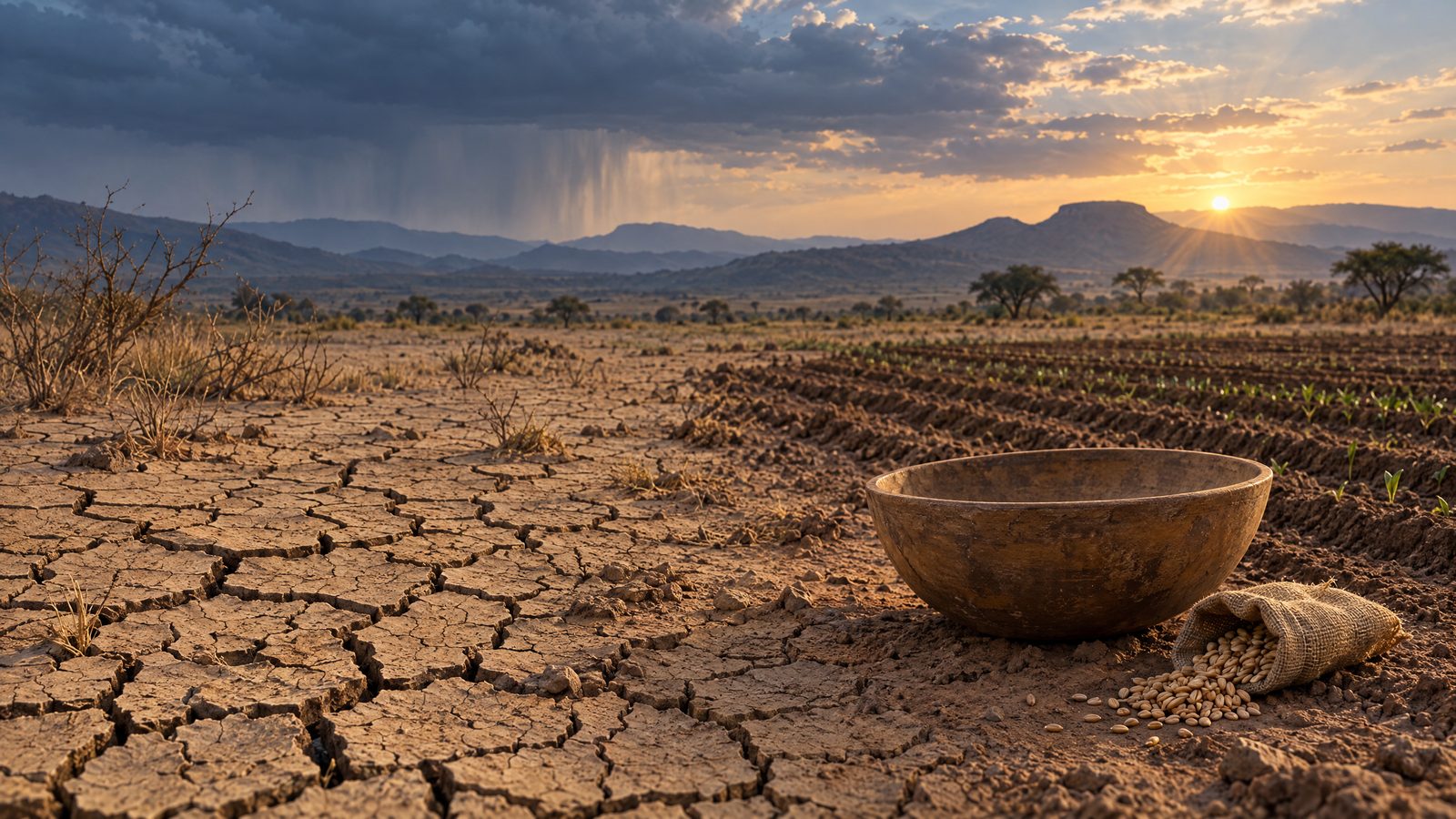

Severe rainfall deficits are adding to the pressures facing communities in parts of Sudan, where more than three years of war have already disrupted livelihoods, displaced families and restricted access to essential services. The country’s resident and humanitarian coordinator warned on 15 October that food and nutrition stocks could be exhausted by early 2027 unless urgent funding is secured.
The warning was issued from Damazine and identified Darfur and parts of Kordofan among the areas where rainfall shortages are compounding conflict-related needs. The statement said vulnerable families could lose access to life-saving assistance if the shortfall continues. The projected stock-out is conditional, not a statement that supplies have already run out or that a final date has been set.
Rainfall affects more than the coming harvest. Smallholder farmers need support before the winter planting season, while repeated displacement and insecurity can make it harder for people to reach fields, markets and services. The coordinator called for food and nutrition assistance alongside clean water, sanitation and health care. These needs are linked: illness and poor nutrition can deepen each other, particularly for children already affected by displacement.
War and poor rains compound food insecurity
The rainfall warning comes amid a worsening food emergency. A recent multi-agency food-security alert described a growing risk of famine in parts of Greater Darfur and Greater Kordofan, where conflict, mass displacement, drought and insufficient humanitarian funding are converging. It said drought was affecting roughly half the country and reducing food availability, raising prices and harming livelihoods. This assessment describes risk and deteriorating conditions; it does not mean famine has been declared across either region.
Poor vegetation growth has been reported across large areas of cropland in North and South Darfur and in parts of Kordofan. Critically low food stocks in North Darfur and delayed rains affecting cultivation have added to concern. Those details indicate why rainfall deficits matter beyond weather records: less reliable planting and crop growth can weaken household food supplies and income at a time when conflict already makes trade and aid delivery difficult.
The humanitarian coordinator’s statement does not quantify the rainfall deficit, name a particular weather station or provide a district-by-district measurement. Its focus is the immediate humanitarian consequence and the resources required to respond. The projected exhaustion of humanitarian food and nutrition stocks by early 2027 is therefore a warning contingent on funding, rather than a quantified forecast of harvest losses or a certainty about future deliveries.
Funding and access remain critical
Humanitarian operations are already trying to stretch limited resources across an exceptionally large crisis. The main food-assistance agency says it is reaching millions of people each month, including communities in Darfur and Kordofan, but that funding gaps have forced it to prioritise those facing the most severe hunger. Its published needs figures also describe widespread acute hunger and a major nutrition emergency. The coordinator’s appeal points to the risk that insufficient new funding could further constrain those operations.
Food assistance alone cannot resolve the causes of the crisis. People need safe access to water, health care and sanitation, and farmers need conditions that allow them to plant and harvest. Conflict and displacement can obstruct all of these, while poor rains add another strain to livelihoods and food availability. The recent alert called for safe and sustained humanitarian access, protection of food and water systems, and increased flexible funding.
The coordinator warned that the combined impact of war and rainfall deficits is particularly acute in Darfur and parts of Kordofan, and urged support for farmers before the planting season. The early-2027 stock projection sets out the consequences aid agencies fear if funding does not arrive in time: vulnerable families could be left without essential food and nutrition support. It remains a prospective warning, but its time frame makes the funding gap an immediate concern for the humanitarian response.







