
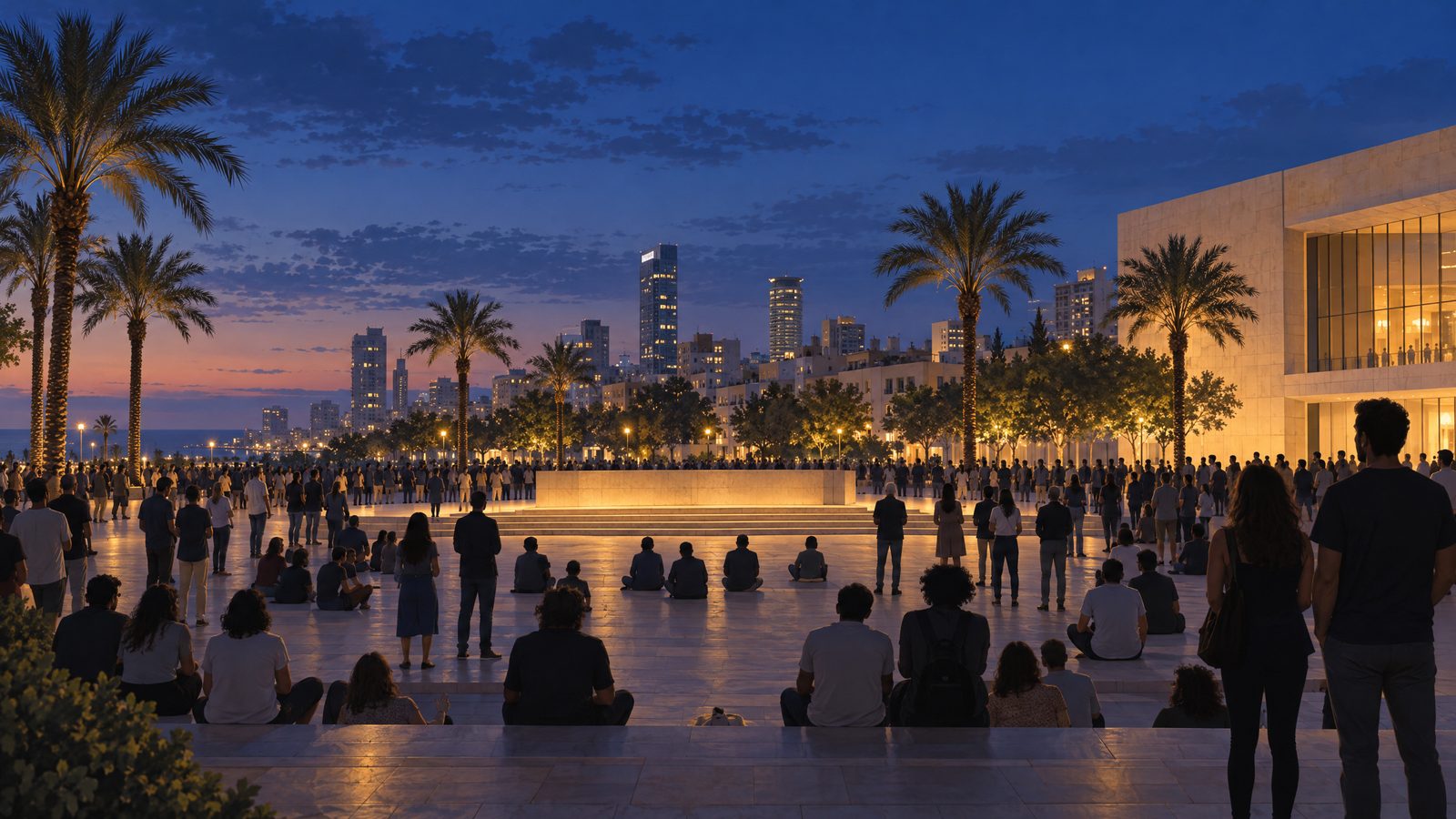

Tens of thousands of people gathered in Tel Aviv on Saturday in a final major protest against Benjamin Netanyahu’s government before Israel’s parliamentary election on 27 October.
The rally at Hostages Square brought together people who have spent years pressing for a full public examination of the failures surrounding the attacks of 7 October 2023. It also drew opposition figures, including Gadi Eisenkot, who attended as the campaign entered its last days.
The immediate demand was for an independent state commission of inquiry. Participants want a body with the authority to examine the security and political failures that preceded the attacks, and the decisions made afterwards. The gathering did not create such a commission, but it placed the question of accountability at the centre of the final weekend before voting.
A rally shaped by a long campaign
Hostages Square has become a familiar civic meeting point since the start of the war in Gaza. Earlier weekly demonstrations there focused on the return of people taken hostage. Saturday’s event drew on that history while giving the crowd a broader pre-election purpose: demanding a formal inquiry and a change in political direction.
The October Council, founded by families affected by the 7 October attacks, organised the rally. People also marched from Rabin Square towards Hostages Square before the main gathering. The choice of route connected the event with central Tel Aviv’s established spaces for public protest and political assembly.
Speakers and demonstrators made clear that the inquiry demand is not simply a request for another political debate. A state commission of inquiry is intended to investigate major public failures. Supporters of such a process argue that an independent structure is needed to establish what happened and to assess institutional responsibility. The government has not established the commission sought by the organisers and has instead proposed a politically appointed alternative. Opposition leaders have said they would not take part in that model.
Accountability becomes an election issue
The protest took place three days before voters are due to elect the 26th Knesset. The election will determine the make-up of the parliament and, in turn, the basis on which a government can be formed. It will not itself decide whether an inquiry is created, but the result could affect the political prospects for one.
For Eisenkot and other opposition figures who attended, the rally offered a visible setting for the argument that a new government should establish an independent investigation. For people in the crowd, the demand was closely bound to grief, frustration and a belief that unanswered questions cannot be left to political appointees alone.
Netanyahu’s government has faced continuing calls for a formal investigation from families, civic groups and opposition politicians. The issue has remained unresolved even as other parts of the national debate have shifted. Saturday’s turnout showed that it retains the power to bring together people whose experiences and political views may otherwise differ.
What remains undecided
No outcome had been determined at the end of the rally. The commission requested by organisers has not been set up, and the election result was still to come. The crowd’s size and timing gave the demonstration symbolic weight, but neither guaranteed a change of government nor settled the form of any future inquiry.
The event nevertheless marked a clear closing moment in a long cycle of public mobilisation. In the final days of the campaign, thousands used Tel Aviv’s streets and public squares to insist that the questions raised by 7 October must remain part of Israel’s political reckoning after polling day.







