
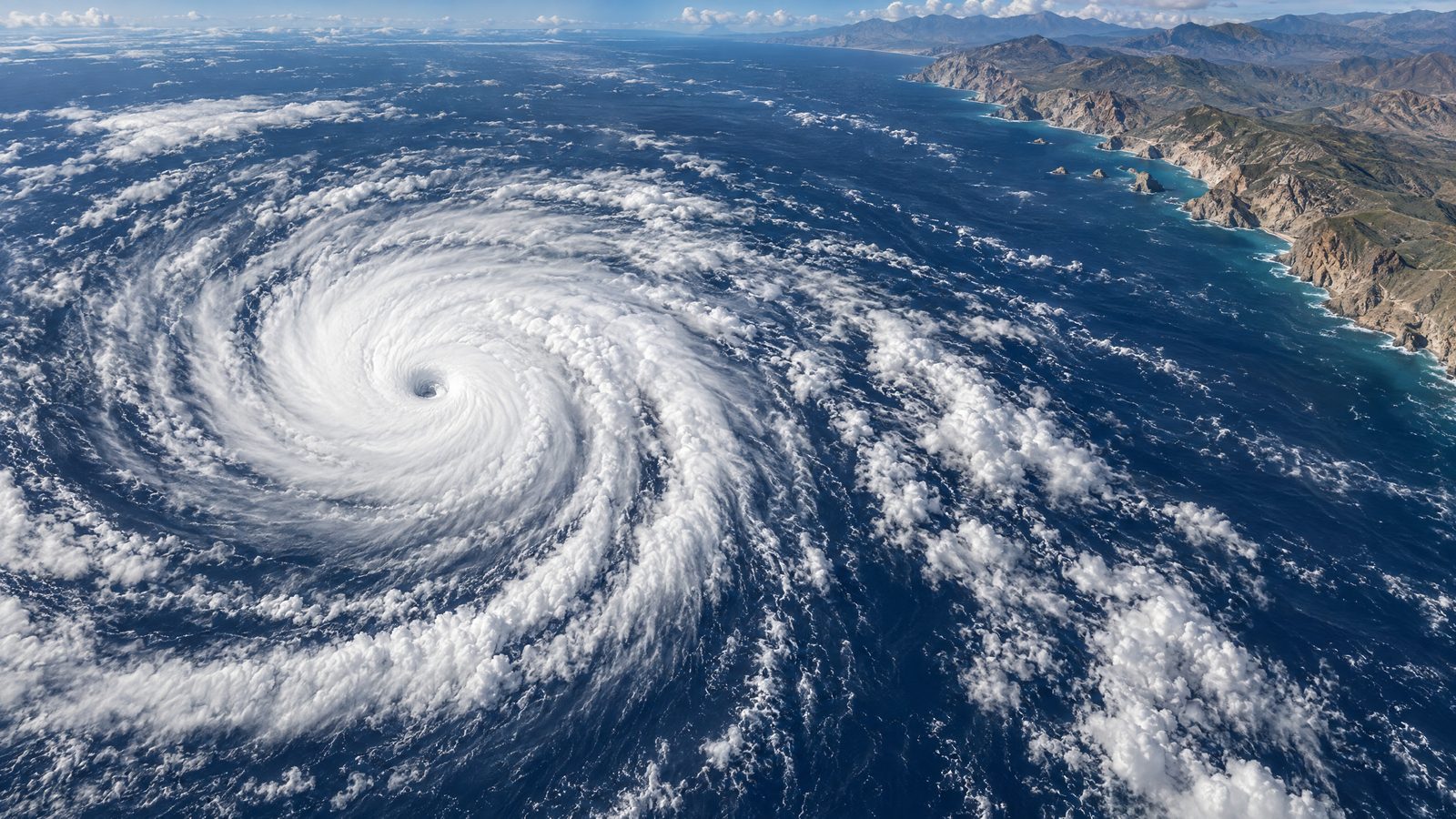

Hurricane Vance reached Category 2 strength off Mexico’s Pacific coast after rapidly intensifying over open water, before easing back to a 90mph hurricane as it continued north-northwest.
At its Category 2 point, Vance had maximum sustained winds of 110mph and was about 615 kilometres south-southwest of Acapulco. The centre was also roughly 800 kilometres south-south-east of Manzanillo. It was moving north-northwest at about 11km/h, with higher gusts around the core. The system had no coastal watches or warnings in force at that stage, but coastal interests in south-western Mexico were urged to follow its progress.
Strength changed as the storm moved offshore
The 110mph reading marked a powerful phase in Vance’s development late on Friday local time. Rapid strengthening had taken the cyclone from tropical-storm status earlier in the period to hurricane intensity, then into Category 2. The reported wind figure describes sustained winds, rather than a forecast for a particular community or a measure of conditions on land.
The latest verified update before this report was prepared placed Vance farther north-west at 03:00 UTC on Sunday. Its centre was near 13.7 north and 103.4 west, about 515 kilometres south-west of Acapulco and 595 kilometres south of Manzanillo. Maximum sustained winds were then near 90mph, and the system was moving north-northwest at about 7km/h.
That later position and wind speed show that the storm had weakened from its earlier Category 2 intensity. It remained a hurricane, however, and the outlook allowed for changes in strength through Monday before a more sustained weakening phase was expected. Forecast tracks and wind projections remain subject to revision as a cyclone’s interaction with ocean and atmospheric conditions develops.
Rainfall and surf remain the central coastal concerns
No coastal watches or warnings were in force in the latest update. That status should not be read as an absence of weather hazards. The forecast called for Vance to continue generally north-northwest through Monday, while swells were expected to affect parts of southern and south-western Mexico into the following week.
Those swells were expected to create potentially life-threatening surf and rip-current conditions. Such conditions can extend well beyond the point nearest the centre of a hurricane, so a storm remaining offshore does not remove the need for care around beaches and near-shore waters. The forecast did not establish that those effects had already occurred at every coastal location.
Heavy rain is also forecast for parts of the west-central coast. From the time of the latest update through next Thursday, the outlook indicated 4 to 6 inches of rain across Colima and western areas of Michoacán and Jalisco, with isolated higher totals around 10 inches. These are forecast totals, not measurements of rainfall already received. The potential consequences identified include flooding and mudslides, particularly in steep terrain.
The advisory did not provide a confirmed assessment of damage, injuries or disruption on land. Its immediate purpose was to set out the storm’s location, intensity and anticipated hazards. Local conditions may differ substantially from the regional outlook, especially where terrain, rainfall bands and exposure to the sea vary over short distances.
What changes in intensity do and do not mean
Vance’s drop from 110mph to 90mph alters the current wind picture, but it does not settle the eventual impact on Mexico’s coast. The forecast still anticipated hazardous surf and periods of heavy rain, while the storm’s path and strength could fluctuate. The distinction between an observed wind reading and a projected effect matters: the former records the hurricane at a given time, while the latter describes a risk that may change with subsequent updates.
For now, Vance remains offshore and is moving slowly north-northwest. The most recent status is a 90mph hurricane with no coastal watches or warnings in force, alongside continued forecasts of dangerous surf, rip currents and heavy rainfall in parts of the Pacific coast region.







