
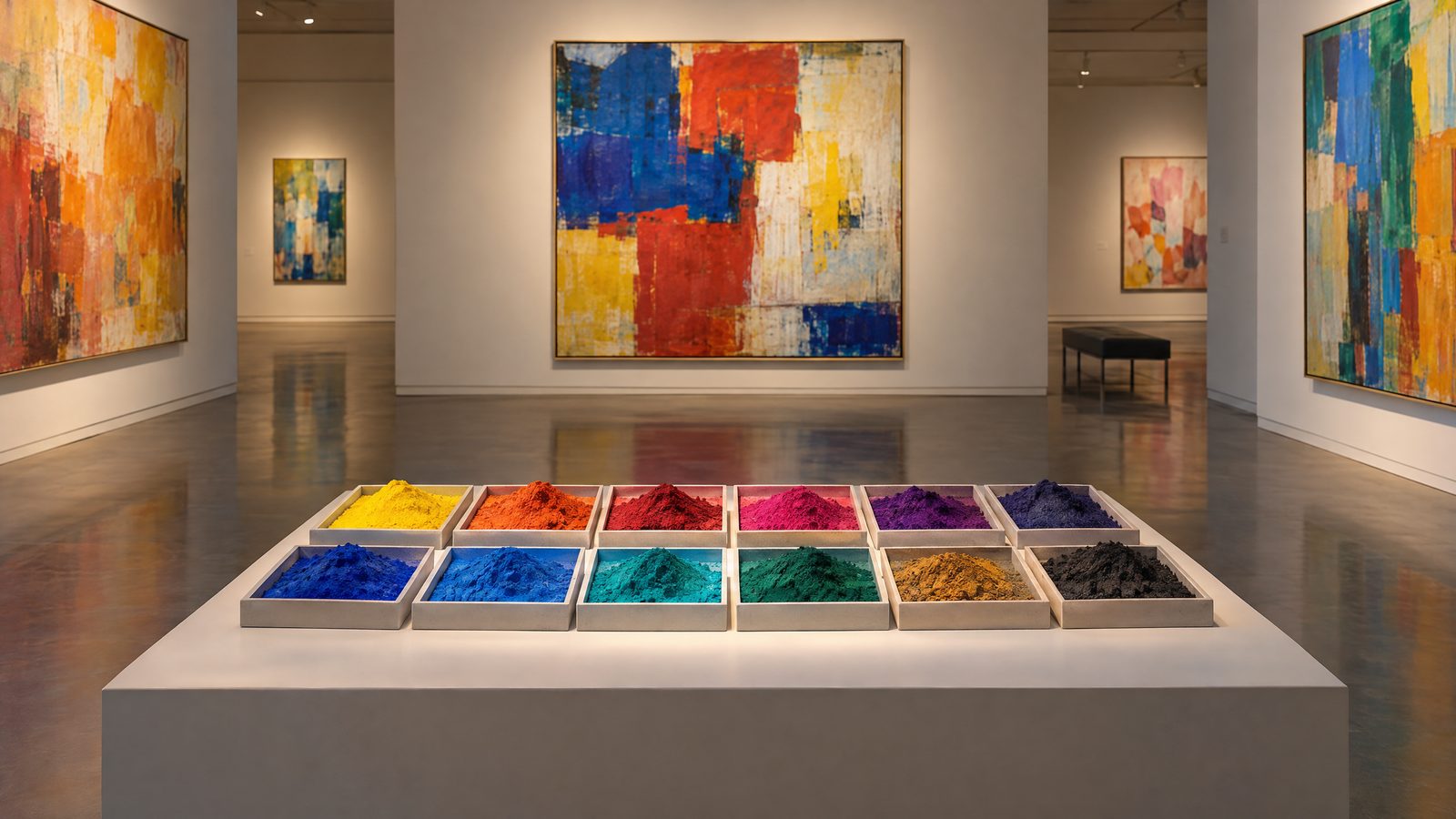

The Secret Life of Colour has opened at Bristol Museum & Art Gallery, bringing art, natural history and science into a single exhibition about the influence of colour. Running until 31 January 2027, the show looks beyond colour as decoration and considers how it is made, perceived and used across the natural world, visual culture and everyday life.
The exhibition places celebrated artworks alongside specimens and objects from different periods and places. Visitors will encounter Delftware ceramics, seabird eggs, carnival costumes, historic poison bottles, stained glass and colourful rocks and minerals. Among the geological displays is native copper from The Lizard in Cornwall. The combination gives the exhibition a deliberately broad frame: a colour can be a material, a signal, a cultural reference or a way of changing how a space is experienced.
Works by Andy Warhol, Wassily Kandinsky, Georges Seurat, Bridget Riley, Peter Blake and Katsushika Hokusai form a prominent part of the display. Their inclusion creates routes into Pop Art, Pointillism and other approaches to painting and printmaking, while the surrounding objects show that colour is not confined to an art-gallery wall. A mineral, a dye, a patterned textile or a bird’s egg can raise many of the same questions about appearance, meaning and perception.
Colour across art, nature and culture
The exhibition is arranged around four connected questions: what colour is, how colour is made, how colour can be useful and what colour can mean. The first of these considers the way the eye receives colour. The later sections move through natural and manufactured sources, including the processes behind pigments and dyes, before turning to colour in camouflage, display and cultural life.
This structure allows familiar artworks to sit within a wider account of colour. Hokusai’s use of Prussian blue, for example, opens up questions about manufactured pigment, while examples from nature explore how colour can help living things to attract attention, conceal themselves or communicate. Elsewhere, the exhibition considers the associations that colours acquire in different communities and settings. The emphasis is on looking closely, rather than treating any one meaning as fixed.
Interactive elements are included throughout the galleries, with opportunities designed for younger visitors as well as adults. At the end of the route, a creative area invites visitors to reflect on the colours that prompt memories or personal responses. That participatory ending extends the exhibition’s central idea: colour is something people encounter constantly, but may not always pause to examine.
A touring show for Bristol visitors
The touring exhibition was jointly created by Sheffield Museums Trust, Tullie, Hampshire Cultural Trust, Royal Albert Memorial Museum & Art Gallery and Bristol Museums. Its Bristol presentation brings internationally known artists together with collection material and scientific specimens, rather than presenting a conventional survey of painting alone. The result is intended to be approachable for visitors of different ages and interests, whether they are drawn by a well-known artist, the natural-history displays or the chance to explore how colour works.
The exhibition has separate ticketed entry. Adult tickets are priced at £9, with concessions and tickets for visitors aged four to 16 at £6. Entry for under-fours is £1, while family tickets cost £20 for up to two adults and two children, or one adult and up to three children. These prices include a voluntary donation to Bristol Museums Development Trust.
For Bristol, the opening adds a substantial autumn and winter cultural attraction to the museum’s programme. The show’s strength lies in its range: famous names are part of the draw, but they are not the whole story. By putting paintings, ceramics, costumes, minerals, glass and natural specimens in conversation, The Secret Life of Colour makes a case for colour as a subject that crosses disciplines and belongs to everyone’s daily visual experience.







