
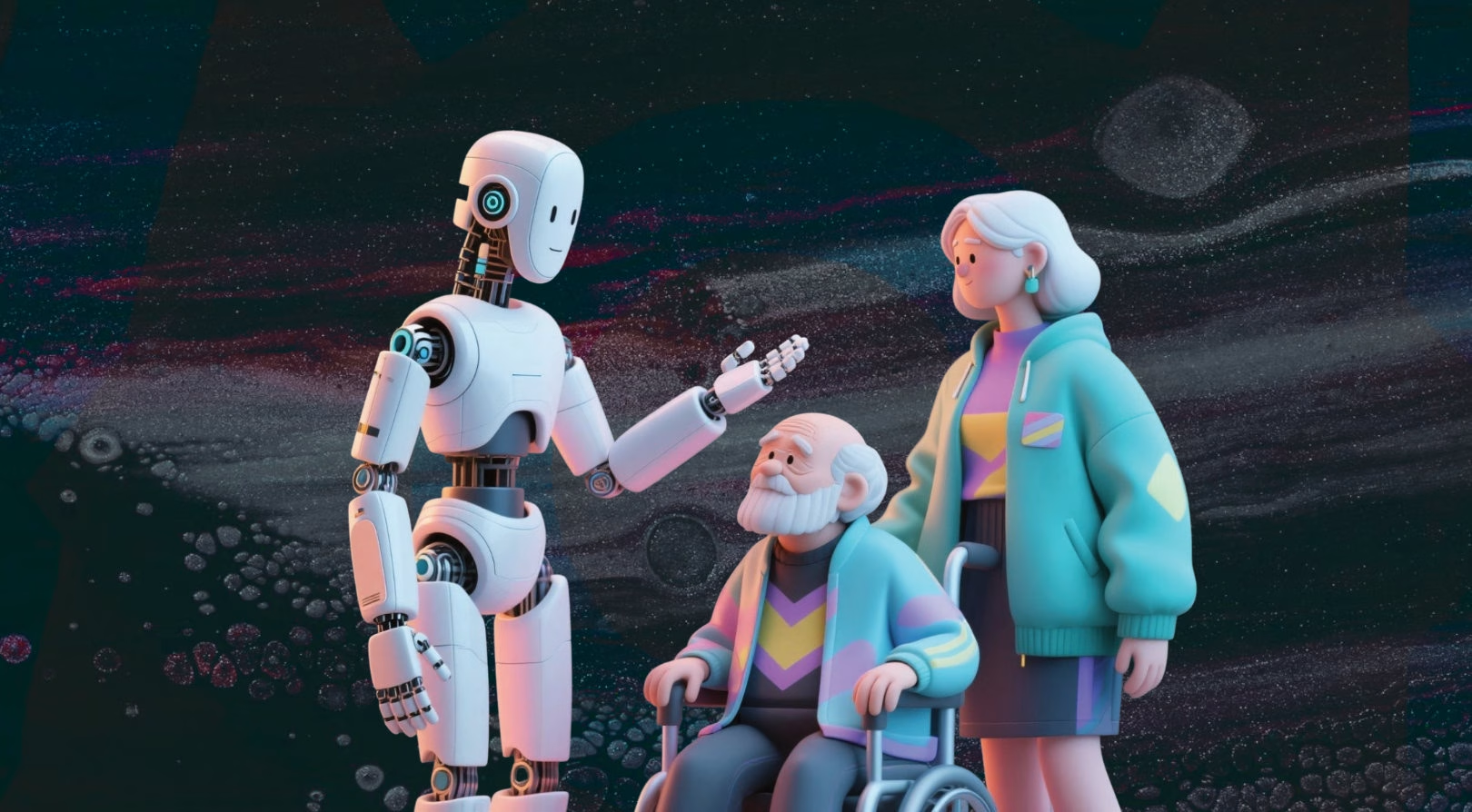

Across the Western world, the signs are impossible to miss. More gray hair on the streets, playgrounds going quiet, pharmacies filling up. In 2025, one billion people will be over 60. By 2030, that will be 1.4 billion. By mid-century, 2.1 billion. This is a looming challenge for every healthcare system. The human math is grim. The WHO reported a shortage of 15 million healthcare workers in 2020, with projections of 10 million by 2030. Fewer caregivers, more patients, and an explosion of chronic conditions. The old model of healthcare simply can’t keep pace. Hospital beds don’t multiply overnight, and medical schools can’t speed up the production line of trained doctors. Something has to give. Increasingly, that “something” is artificial intelligence.
Evidence of AI’s Impact on Aging Populations
In one Manchester care home, the quiet hero isn’t a nurse or a doctor but a strip of sensors running along the hallway. Powered by technology similar to Vayyar Care and CarePredict, these devices watch residents’ movement patterns over weeks, learning the rhythm of each. One morning, Mrs. Ellison’s gait shifts ever so slightly. She doesn’t notice, but the system does. An alert pings a carer’s phone, and within minutes, someone is at her side before gravity gets its chance. She hasn’t had a fall in half a year because her environment is paying attention. Across the Atlantic, heart failure patients are living longer between hospital visits thanks to tools like the FDA-approved CardioMEMS HF System. Implanted sensors measure tiny changes in pulmonary artery pressure and send data wirelessly to their doctor’s dashboard. Sometimes the alert comes before the patient feels anything at all, like in Ohio, where a quick medication tweak recently prevented what would have been another ambulance ride.

Multiply those moments by thousands of people, and suddenly hospital corridors are less crowded, beds stay open for true emergencies, and caregivers can focus on care instead of crisis control. In these instances, AI doesn’t feel like cold machinery. It’s a watchful presence, noticing the things we miss, and quietly changing the outcome.
Wherever these systems take root, the results follow a similar arc. Fewer emergencies, shorter hospital stays, and more time spent living at home instead of lying in a hospital bed.
In diabetes care, AI is scanning retinal images in minutes, flagging vision-threatening changes with the accuracy of human specialists but without the months-long wait for an appointment. Tools like Google’s ARDA and IDx-DR in the U.S. are already FDA-cleared for autonomous diagnosis. In Alzheimer’s research, algorithms are beginning to predict disease progression years ahead, giving families time to prepare rather than react.
AI May Very Well Be the Solution to an Aging Population
Perhaps nowhere is AI’s potential more transformative than in healthcare. The technology offers multiple pathways to address the chronic care needs that define aging populations. Data-driven healthcare systems powered by AI can enable more personalised, proactive treatment approaches. Rather than reactive care models, AI algorithms can analyse patterns to predict health issues before they become acute, potentially preventing costly hospitalisations. Telemedicine, enhanced by AI-powered diagnostic tools, can extend specialist care to underserved rural areas where elderly populations often concentrate. However, current telemedicine systems often struggle with accessibility for older adults, particularly those with cognitive impairments, vision problems, or hearing difficulties. AI-powered interfaces could adapt in real-time to user capabilities, providing larger text, clearer audio, or simplified navigation based on individual needs.
The companionship aspect deserves particular attention, as social isolation has become a significant health risk for aging populations. AI companions, including conversational AI platforms like Candy AI, already demonstrate remarkable potential in addressing this challenge. These sophisticated AI systems can engage in meaningful conversations, remember personal details, and provide emotional support around the clock. Early adopters among older adults report reduced feelings of isolation and improved mental well-being.
Wearable robotic devices and AI-powered monitoring systems represent another frontier. These technologies can provide continuous health monitoring, medication reminders, and even companionship, reducing the burden on overwhelmed healthcare systems while enabling aging in place, a preference for most older adults.
The COVID-19 pandemic highlighted both the vulnerability of elderly populations and the potential of digital health solutions. AI-powered systems could have helped identify at-risk individuals earlier, optimised resource allocation, and provided remote monitoring capabilities that might have saved lives.
We believe caregivers should be the center point of this. AI applications can dramatically enhance caregiver capabilities through symptom tracking applications, medication management systems, and appointment scheduling tools. These digital solutions help compensate for memory challenges while providing healthcare professionals with comprehensive patient histories. More sophisticated AI systems could analyse behavioural patterns to detect early signs of conditions like dementia, enabling earlier interventions. Voice recognition technology could monitor changes in speech patterns, while computer vision systems could track mobility and fall risks.
Addressing Workforce Challenges
As working-age populations shrink, AI and automation become essential for maintaining economic productivity. However, the relationship between AI and employment in aging societies is nuanced. While automation might displace some jobs, it can also enable older workers to remain productive longer through assistive technologies. AI-powered tools can help older employees adapt to new technologies, providing personalised training programs that account for different learning styles and paces. Voice interfaces and simplified user experiences can make complex systems accessible to workers who might otherwise struggle with digital transformation. The informal economy, where automation is more challenging, could benefit from AI-powered logistics and coordination systems. Digital platforms could help informal workers access broader markets while providing them with basic social protections.
The Silver Economy Opportunity
While much focus centres on the challenges of aging, AI can also help societies capitalise on the economic opportunities presented by older populations. The “silver economy represents a massive market opportunity.
AI-powered market analysis can help businesses understand and cater to older consumer preferences. Personalised recommendation systems can connect elderly consumers with appropriate products and services. Digital platforms can facilitate the travel, healthcare, and leisure spending that characterises many older adults.
Moreover, AI can help harness the experience and knowledge of older workers through digital mentorship platforms, consultation networks, and knowledge management systems that preserve institutional wisdom even as employees retire.
Where the Seam Snags
If you’re asking yourself why AI solutions for the elderly aren’t everywhere yet, think about this. In a rural Norwegian clinic, internet speeds are still stuck in the dial-up era. The most advanced fall-prevention sensors in the world won’t help if the data can’t leave the building in real time. In U.S. nursing homes, installing smart monitoring systems can cost tens of thousands upfront, which is a near-impossible stretch for facilities already choosing between paying staff or replacing basic medical equipment. Then there’s trust. Surveys show nearly half of older adults doubt AI diagnostics, fearing the technology might miss what a human doctor would catch. Data breaches, like the controversy over Google DeepMind’s access to UK patient records without consent, haven’t helped. And the data that trains these algorithms often leaves out the oldest and frailest, meaning predictions are less reliable for the people who need them most.
Healthcare workers themselves can be wary. Many see AI as a challenge to their judgment, not a complement to it. Years spent learning to read subtle human cues can make it hard to hand part of that responsibility to a computer.
Real breakthroughs are coming where systems adapt the tech to the user, not the other way around.
In Germany, nurses trained on AI-powered fall detection in hands-on workshops saw adoption jump 30% and response times drop by nearly half. In the UK, Age UK’s digital skills programs brought thousands of seniors online, boosting telehealth participation dramatically. In California, Stanford co-designed wearable devices with older adults, resulting in a 15% jump in satisfaction and higher rates of daily use.
Norway’s health authorities have partnered directly with tech firms to bring chronic disease monitoring into rural homes, increasing specialist access in areas that never had it before. Japan’s government is subsidising AI for care facilities, cutting operational costs by 10% in a year and freeing up staff for more personal, human interaction. When seniors are involved in design, when caregivers are trained properly, and when costs aren’t an insurmountable wall, adoption accelerates.
Learning from Global Leaders
Japan’s experience offers valuable lessons for Western Hemisphere countries. The nation has integrated AI and digital transformation into a comprehensive aging strategy that includes workforce policies, healthcare innovation, and social support systems. Japan’s Gold Plan demonstrates how coordinated government investment can drive technological adoption while addressing social needs.
Virtual reality systems for dementia care, AI-powered health monitoring, and robotic assistance devices represent just a few examples of Japan’s technological approach to aging. These innovations didn’t emerge overnight but resulted from sustained investment and policy coordination over multiple decades.
European countries like Denmark and the Netherlands have similarly integrated AI into aging strategies, focusing particularly on home care technologies and digital health platforms. Their experiences highlight both the potential benefits and implementation challenges.
The Path Forward
Successfully leveraging AI to address population aging requires coordinated action across multiple sectors. Governments must invest in digital infrastructure, particularly in rural areas where many elderly populations live. Regulatory frameworks need updating to address AI applications in healthcare, finance, and social services.
Private sector engagement is equally crucial. Technology companies must prioritise accessibility and usability in their designs, while healthcare organisations need support transitioning to AI-powered systems. Financial services companies can help modernise pension and insurance systems through digital transformation. International cooperation offers additional opportunities. Countries facing similar demographic challenges can share technological solutions and policy approaches. Development organisations can facilitate technology transfer and capacity building.
Training and education programs must address digital literacy gaps, particularly among current older adult populations. However, these programs should also recognise that digital comfort levels will evolve as more tech-savvy cohorts age.
The demographic transformation reshaping the Western Hemisphere is irreversible, but its impacts are not predetermined. Artificial intelligence and digital transformation offer powerful tools for creating societies where aging populations can thrive rather than merely survive. The window for preparation is narrowing. Countries that begin implementing AI-powered solutions today will be better positioned to manage the demographic pressures of the next three decades. Those who wait risk being overwhelmed by the scale and speed of change.
Success requires viewing AI not as a panacea, but as one component of a comprehensive strategy that includes policy reform, infrastructure investment, and social innovation. The goal isn’t simply to manage aging populations more efficiently, but to create societies where longer lives represent genuine opportunities for continued contribution and fulfilment.







