
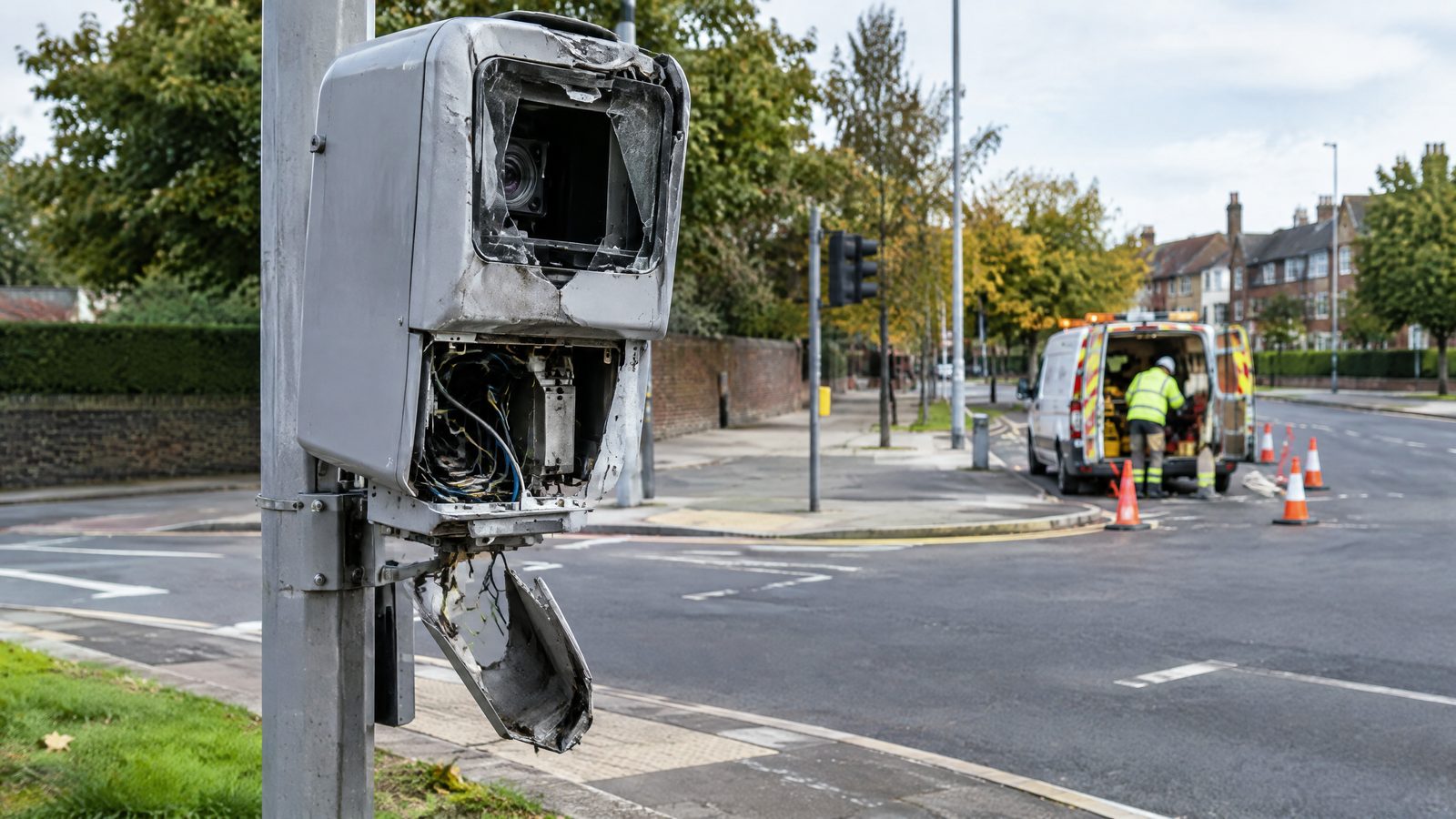

Traffic-light detector vandalism has prompted renewed warnings from councils after damage to equipment designed to help vehicles and pedestrians move safely through junctions. The incidents have involved sensors mounted on traffic-signal poles, rather than the red, amber and green lights themselves. Local authorities say the equipment helps signals respond to people and vehicles waiting at crossings and junctions.
Some people using the name Blade Runners have promoted unproven claims about the technology online. Councils have rejected those claims and said the equipment poses no danger to the public. Their concern is that cutting cables or removing detector units can make roads less efficient and may introduce avoidable safety risks.
What the damaged detectors do
Traffic-signal detectors are used to identify vehicles approaching a junction and, at some sites, pedestrians waiting to cross. That information helps the signal system respond to demand instead of operating only on a fixed timetable. It can help reduce unnecessary delays, manage queues and support safer crossings.
Cambridgeshire County Council said detector units mounted on traffic-signal poles had been deliberately damaged by cables being cut. Where a detector is out of action, the lights can revert to fixed-time operation. The council said this can lead to congestion and delays, with potential safety implications.
The authority also said a crossing outside Park Primary School in Histon had been targeted. Its sensors are used to help large groups of children cross. The council said it was working with police and replacing damaged equipment, while asking people to report suspicious behaviour around traffic lights.
Damage recorded across Cambridgeshire
Cambridgeshire County Council said that, from the May bank holiday weekend, about 200 detector units had been vandalised at around 50 sites across the county. Most of the incidents were in Cambridge, although other locations were also affected. In one week, the council recorded vandalism at 20 junctions and crossings, including nine incidents within 50 minutes on the bank holiday Monday.
The repair bill varies with the severity of the damage. The council said a typical repair costs about £250, while replacement of an entire unit can cost between £250 and £1,500. Those costs fall on public funds that would otherwise support routine highways maintenance.
The figures do not establish who was responsible for every incident. The council said it was passing information to police to support an investigation. That distinction matters: damage reported at different sites should not automatically be attributed to the same people without evidence.
Sleaford council says 10 sensors were targeted
In Sleaford, Lincolnshire County Council said two sets of traffic lights were targeted and that repairs were expected to cost about £8,000. The equipment damaged included 10 sensors used to manage traffic flow and help pedestrians at crossings.
The council said a group describing itself as Blade Runners had claimed responsibility on social media. It rejected the group’s claims about the sensors and said the technology had been used for years. Its traffic-signals team said the detectors help make journeys safer and more efficient by recognising vehicles approaching junctions and crossings.
Lincolnshire Police described the incidents as criminal damage that could be dangerous and appealed for anyone with footage or information to come forward. No broader conclusion should be drawn about individual responsibility beyond the evidence available to investigators.
Why the safety warning matters
Traffic lights are a shared piece of public infrastructure. Their purpose is not simply to regulate cars: they also create predictable opportunities for people walking, cycling and using mobility aids to cross busy roads. Removing part of the detection system can affect how that infrastructure responds at the point it is needed.
There is also a practical distinction between raising questions about how technology is used and damaging highway equipment. Councils are accountable for decisions about road systems, and residents can challenge or seek information about those decisions through established public processes. Vandalism can disrupt journeys, increase repair costs and leave signal engineers dealing with faults that did not need to occur.
The recent reports bring attention to incidents that occurred over recent months, rather than announcing a new national enforcement operation. The most reliable picture remains the one provided by the authorities responsible for the roads: detector units are being repaired, police inquiries are continuing where damage has been reported, and members of the public are being asked to share relevant information through the appropriate channels.







