
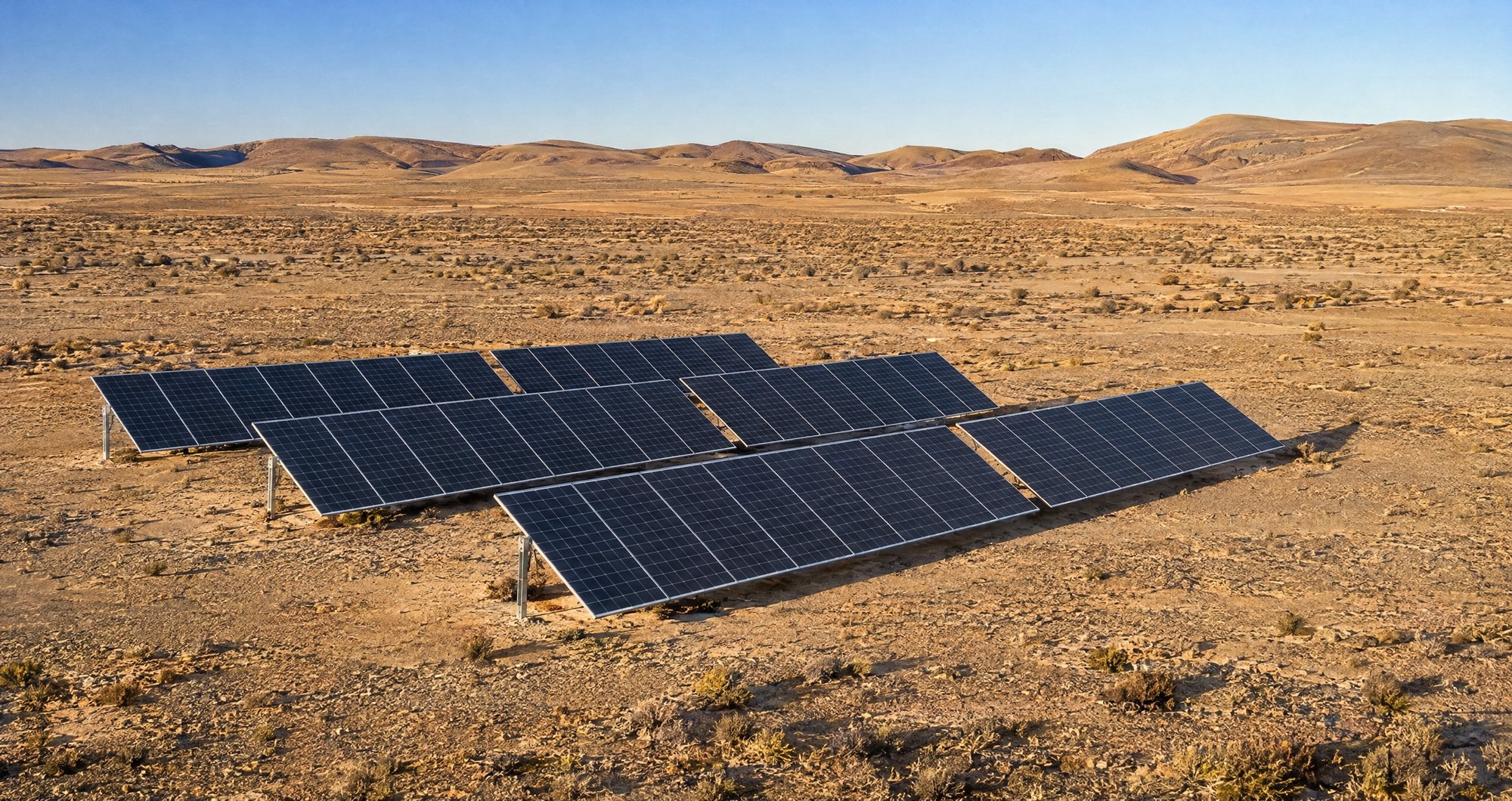

Tunisia has signed a €50 million financing package for a solar power plant and battery storage project in the southern governorate of Tataouine, bringing a planned addition to its electricity system a step closer to construction.
The agreements, signed in Tunis on 11 November, will support a 50-megawatt solar plant at Beni Mhira and a battery designed to store electricity for use when it is needed. The project is intended to be Tunisia’s first utility-scale battery storage installation.
The financing is going to the state-owned electricity and gas utility, Société Tunisienne de l’Électricité et du Gaz, known as STEG. It consists of a €30 million loan from the European Bank for Reconstruction and Development and a €20 million concessional loan from the Clean Technology Fund, part of the Climate Investment Funds. Tunisia is providing a sovereign guarantee for the financing.
The agreements secure a financing commitment; they do not mean that the plant has been built or that electricity is already being generated. STEG’s chief executive has set a target of beginning construction in the first quarter of 2027 and bringing the project into service in summer 2028.
How the solar and battery system will work
The proposed photovoltaic plant will have a generating capacity of 50 megawatts in alternating current. Its battery is rated at 10 megawatts of power and 20 megawatt-hours of storage. These are different measures: the power rating describes how quickly the battery can deliver electricity, while the storage figure describes the amount it can hold.
At its rated output, a full 20-megawatt-hour battery would provide 10 megawatts for up to two hours in a simplified calculation. Actual operation will depend on how the system is charged and managed, as well as the conditions under which it is used.
Solar panels produce electricity when sunlight is available, but that does not always coincide with the periods when the grid most needs power. A battery can take in some electricity during strong solar production and release it later. This can give grid operators more flexibility, although the battery cannot match the plant’s full 50-megawatt output.
The scheme also includes a substation and an approximately 1.2-kilometre high-voltage line to connect the facility to the national grid. The plant is projected to produce about 118.6 gigawatt-hours of electricity a year once operating; that is an estimate, not a guaranteed output.
From finance to delivery
STEG launched an international tender for the project in October. The envisaged contract covers design and equipment supply as well as installation, testing and commissioning. It also includes training for staff and maintenance during the warranty period, reflecting the need for the utility to operate a technology new to it at this scale.
The two loans make up the announced €50 million package. The concessional portion is intended to make the financing more affordable than a package relying solely on ordinary lending terms. Tunisia’s economy minister has described an 18-year repayment period, including a five-year grace period, and a separate grant to support technical assistance.
A sovereign guarantee is a commitment by the state to stand behind the borrowing. It is not the same as a grant, and the financing agreement is not evidence that the full sum has already been spent. Delivery will still depend on procurement, construction and the equipment’s successful connection to the grid.
A wider shift in the power system
Tunisia has relied heavily on natural gas for electricity. Gas accounted for about 91 per cent of generation in 2024, and the country imports a substantial part of its gas supply. Adding domestic renewable generation could reduce some of that reliance over time, but the effect of any one project will depend on its output and how it operates alongside other sources.
Beni Mhira forms part of a broader STEG programme for 380 megawatts of solar capacity and 100 megawatt-hours of battery storage. Those figures describe a wider development programme, not capacity already delivered by this project.
The battery component could also give the utility experience in managing stored power on the grid. That experience may help with future installations, but wider benefits will depend on the project being completed and the equipment working as planned.







