
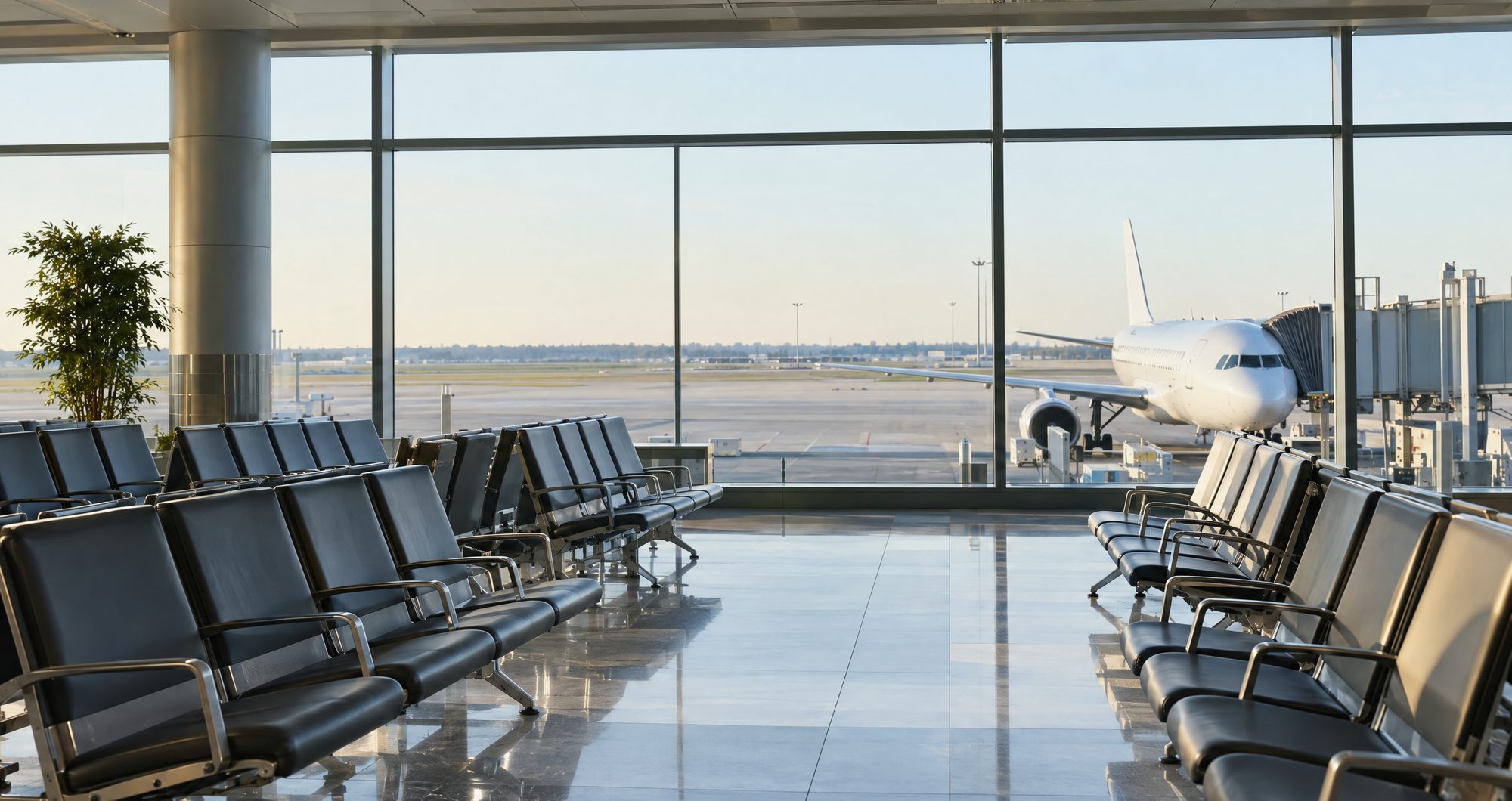

US airline schedules are expected to recover fully by the end of Sunday after a nationwide ground stop disrupted thousands of journeys, the head of the country’s aviation regulator has said.
The forecast, given on Saturday 14 November, came as airlines continued cancelling flights and moving aircraft and crews into position. It is an expectation for the overall schedule, not a guarantee that every passenger will travel on time.
The Federal Aviation Administration (FAA) lifted the nationwide departure restriction at 8.15pm Eastern time on Friday 13 November, or 1.15am GMT on Saturday, after more than four hours. Officials said on Saturday that the air traffic control system was stable, but the lifting of the order did not immediately restore airlines’ timetables.
FAA administrator Bryan Bedford said airlines would still face delays and cancellations on Saturday but expected a full recovery on Sunday. A major US airline said late on Saturday that it had completed its planned cancellations for that night and Sunday, although individual flights could still be cancelled while it restored its operation.
Thousands of journeys affected
Bedford said that about 20,000 flights still had journeys to complete when the ground stop began. Around 8,000 were able to continue afterwards, while approximately 12,000 could not recover. The latter figure included roughly 9,000 commercial flights and 3,000 private flights, he said.
Separate tracking data showed about 5,600 US-related flights cancelled by 6pm Eastern time on Saturday. That is a snapshot for Saturday, not the number of passengers affected. The figures for Friday’s flights unable to recover and Saturday’s cancellations cover different periods and are not the same measure.
The stop applied to departures. Aircraft already airborne continued to be managed by controllers, rather than being required to land immediately. The transport secretary said more than 3,500 aircraft were in the air when the restriction began and that crews and controllers followed established procedures.
A flight scheduled after the restriction ends can still be affected if the aircraft or crew needed for it is elsewhere. Airlines also have to accommodate passengers whose earlier journeys were cancelled. One carrier said its teams worked overnight to reposition aircraft and crews and warned that further disruption could follow.
Upgrade work under examination
Officials gave a more detailed account on Saturday of the work that preceded the communications problems. Transport Secretary Sean Duffy said a contractor was replacing an old section of copper telecommunications wire with fibre at a remote location on Friday when equipment began overloading the air traffic control system.
The disruption produced intermittent gaps in communications and radar information. Officials said they ordered the ground stop as a safety precaution while the cause of the instability was being identified.
The precise fault remains under investigation. Duffy said officials were examining whether an error in the work or a faulty router was responsible. Neither possibility has been established as the final finding, and the description of the upgrade does not by itself establish that a particular worker or company acted improperly.
The transport department said the problems did not amount to a complete loss of all radar or telecommunications. It also said systems were being restored before the airspace reopened. Officials said there was no indication at that stage that a cyberattack had caused the disruption.
Rebuilding the timetable
Airlines’ recovery depends on more than reopening departures. An aircraft that finishes one journey late may be needed for another, while crew members also have to be available in the right place. Disruption on one route can therefore affect later flights elsewhere, including international services.
The aviation regulator has advised passengers to check with their airlines. A major carrier has offered affected customers options to change their reservations or receive a refund under its travel alert. The terms available to an individual traveller depend on the airline and booking.
The episode has also renewed attention on the age of US air traffic control infrastructure. Congress previously approved $12.5 billion for modernisation, and the administration is seeking further funding. That request is separate from the investigation into the latest disruption and does not mean additional money has already been approved.
By Saturday, officials were confident the system could operate safely and were looking towards the end of Sunday for a return to normal schedules. Whether that forecast is met will depend on airlines completing the work of restoring their networks.







