

The Welsh Museums Festival has opened for a week of half-term events at more than 60 museums and galleries across Wales, bringing exhibitions, family activities and seasonal trails to venues from Anglesey to south-east Wales.
The 12th annual festival runs from Saturday 24 October to Sunday 1 November. It is timed for the school half-term and includes activity in North, Mid and West Wales as well as the south-east. The programme brings together independent museums, local authority venues, national institutions and galleries rather than concentrating activity in one city or a single collection.
This year’s participation is the largest since the festival began. The scale matters because the programme gives families options close to home across a full week, while placing smaller museum sites alongside familiar larger venues. More than 60 participating locations is a marked increase on the 52 venues involved last year.
The festival is organised by Museums Federation Cymru with Welsh Government funding. Grants totalling more than £12,000 have been awarded to 18 museums to help them take part in the 2026 programme. That support is for participation in the festival, not a general funding settlement for every museum in Wales, and it sits alongside the individual activities planned by each venue.
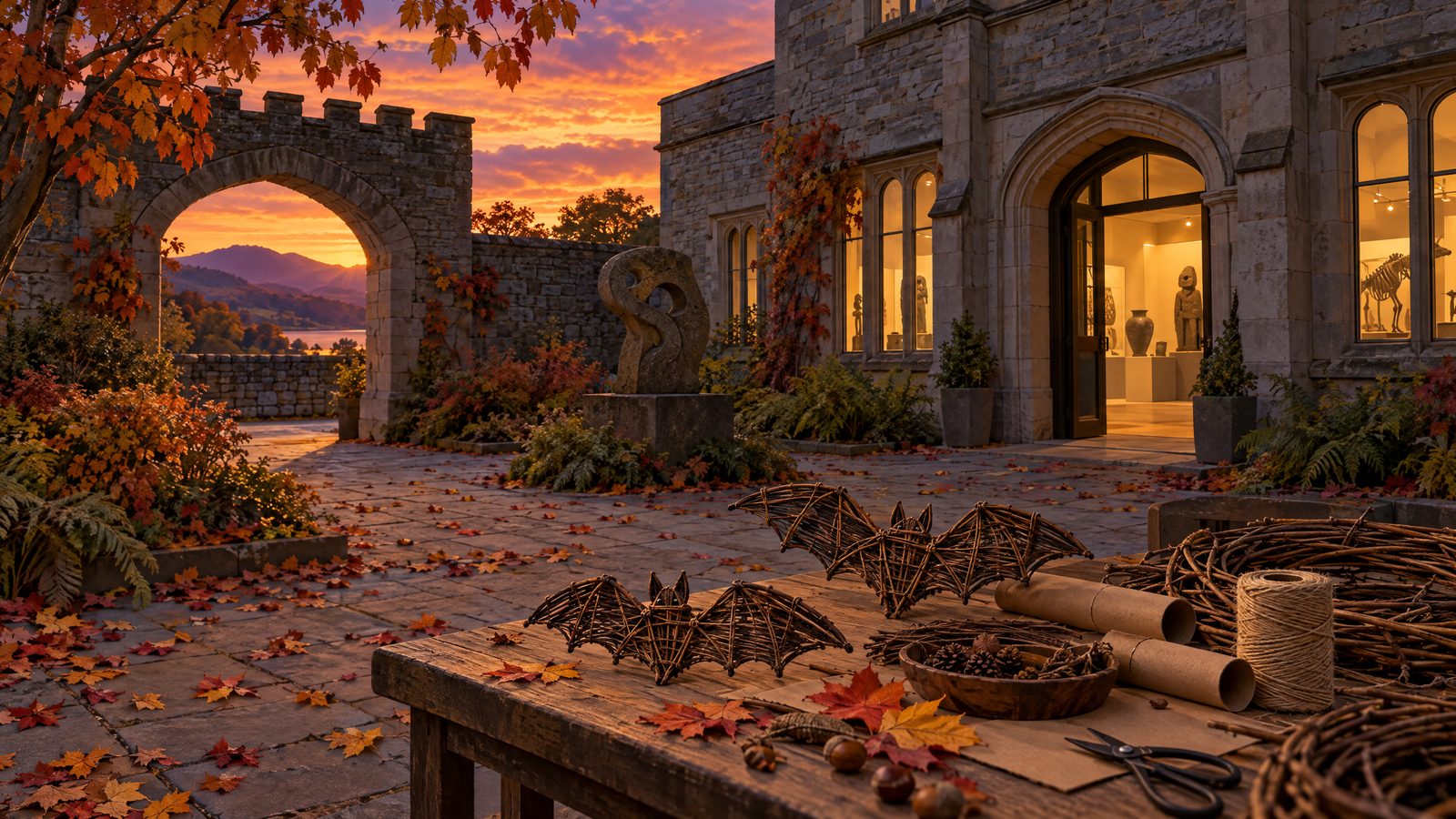
A central theme is a greener approach to the Halloween and Calan Gaeaf season. Participating museums are being encouraged to use natural materials and reduce waste, moving away from disposable decorations and plastic props where possible. The approach does not remove the seasonal element: the programme includes spooky visits, stories, crafts and trails, but asks venues and visitors to consider how those activities are made.
Many of the special events and activities are free or low cost, although arrangements differ by venue. At the Museum of Cardiff, the half-term programme includes a free family film screening on 26 October, a drop-in session for making spooky decorations on 28 October, and recycled-material zine workshops on 29 October. The examples show how the wider theme can be adapted locally, combining a seasonal activity with an environmental focus rather than setting one uniform event for every site.
Other participating places range from historic houses and maritime museums to museum collections focused on natural history, art, industry and local history. The list includes Porthcawl Museum and Historical Society, where the opening was marked by a visit from the Cabinet Minister for Culture and Sport. The museum occupies the town’s former police station and holds a collection documenting Porthcawl’s history.
The programme is a time-limited autumn initiative rather than a replacement for museums’ regular work or a new national admissions policy. Its shared framework leaves individual venues responsible for the details of their own events. That is why the same festival can include a screening in Cardiff, a craft session elsewhere and a local-history activity in another part of Wales.
For families, the practical appeal is the breadth of choice during the half-term break. A visit can take the form of a planned workshop, a film, a trail or an exhibition, depending on the venue. It is still important to check the individual arrangements for a chosen site, since admission, start times, booking and age guidance are not identical across the programme.
The festival’s week-long run does not create a permanent change to museum opening or funding, nor does the participation grant mean that every activity is free. Its immediate development is the opening of a coordinated national programme that combines access to collections with family events, while asking participating venues to give the Halloween season a less wasteful character.







