

West Sussex County Council has set out a programme of road repairs, drainage work and winter-service changes after a year in which heavy rain and prolonged summer heat affected the county’s highways.
The plan combines completed maintenance figures with work still to come. It includes targeted drainage cleansing at locations considered prone to flooding, further repairs to road surfaces affected by hot weather and equipment intended to make salt treatment more efficient when freezing conditions arrive.
Repairs after wet and hot conditions
The council said its highways teams repaired more than 15,000 potholes and patched over 110,200 square metres of road surface during the first six months of the financial year. It linked the high number of defects to the previous winter’s wet weather.
High temperatures during the summer also softened some road surfaces. The council applied crushed granite to affected stretches during the hot spell to help bind and stabilise the surface. As temperatures have fallen, it is inspecting those roads and carrying out patching or remedial work where needed.
Where damage covers an area too large for patching, the council plans to schedule hydro-blasting treatment or resurfacing. That distinction is important because the programme does not present every weakened surface as requiring the same response. The proposed work ranges from smaller repairs to more extensive treatment where the condition of the road warrants it.
A new thermal road repair unit is also part of the approach. The equipment heats, rejuvenates and reworks existing asphalt in place, reducing the need to excavate damaged sections. The council said the method can treat several potholes at once and may allow defects to be dealt with before they develop into larger holes. It also expects the technique to use less new material than conventional repairs.
Drainage work ahead of winter
Flood resilience is the other main element of the update. Since 1 April, the highways team has cleansed 29,645 drainage assets and completed 75 drainage repair and improvement schemes across West Sussex. A further nine large-scale improvements are scheduled for completion by 31 March 2027.
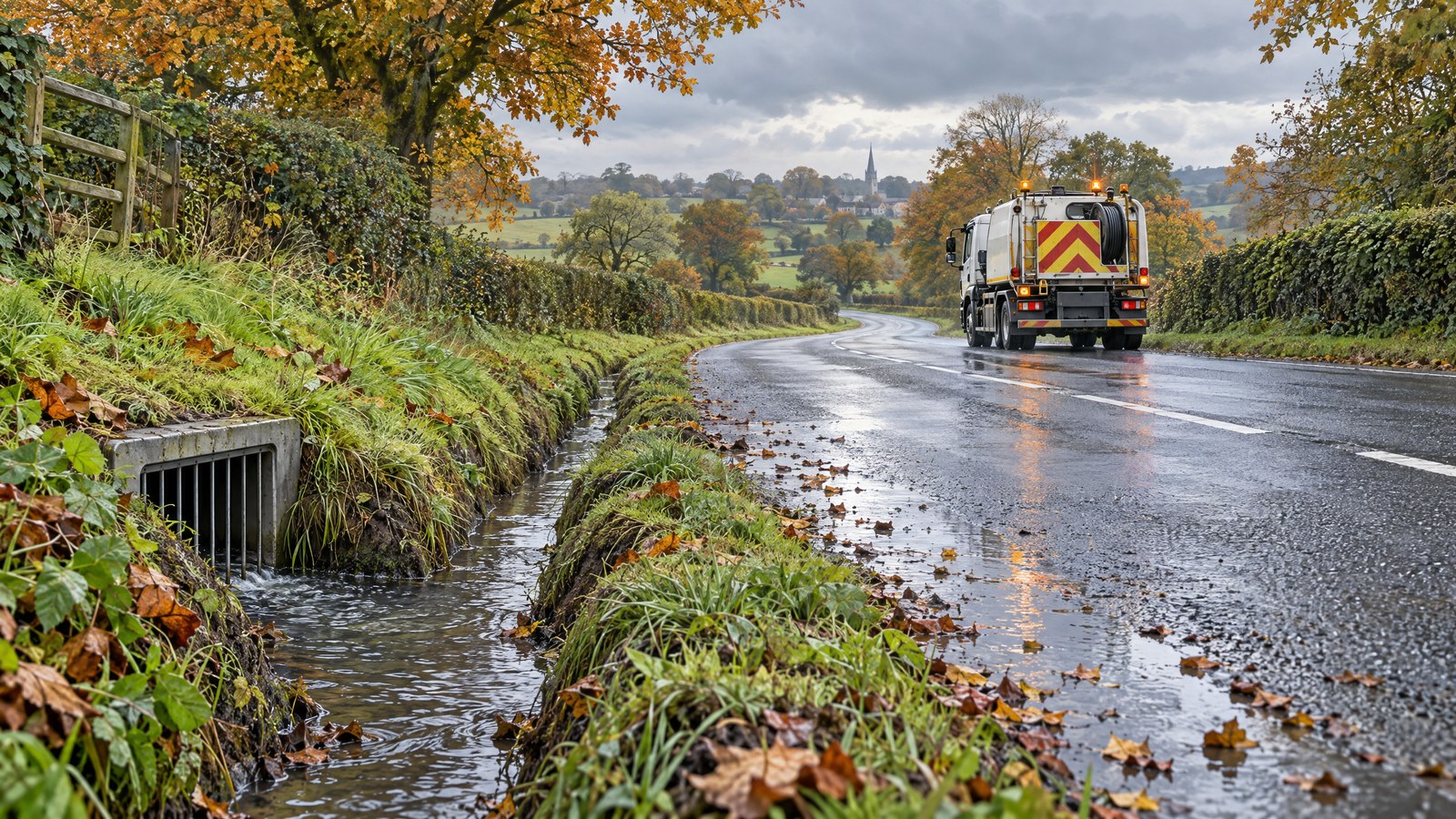
Over the next eight weeks, 63 flood-prone locations are due to receive proactive drainage cleansing. The aim is to ensure that ditches, gullies, culverts and other drainage systems are working as effectively as possible before winter conditions arrive. Cleansing can remove material that obstructs water flow, but it is a risk-reduction measure rather than a guarantee that flooding will not occur.
Shripney, which was among the areas most affected by flooding last winter, has recently had a programme of drainage-asset cleansing. The council is also working with the Environment Agency on removing silt from river outlets to improve water flow. Investigations into longer-term measures at the location are continuing, so the update does not present them as completed works.
Changes to the winter service
The council has installed equipment at highway depots and on gritting vehicles so salt can be pre-wetted as it is spread. Pre-wetting is intended to help the salt adhere to the carriageway, rather than being displaced as readily after application.
The authority expects this to make better use of salt stocks while maintaining treatments across its priority road network. The update does not set out individual gritting routes, start times or a forecast of disruption. Its central message is that maintenance, drainage and winter treatment are being prepared together after two contrasting weather pressures on the county’s roads.







