
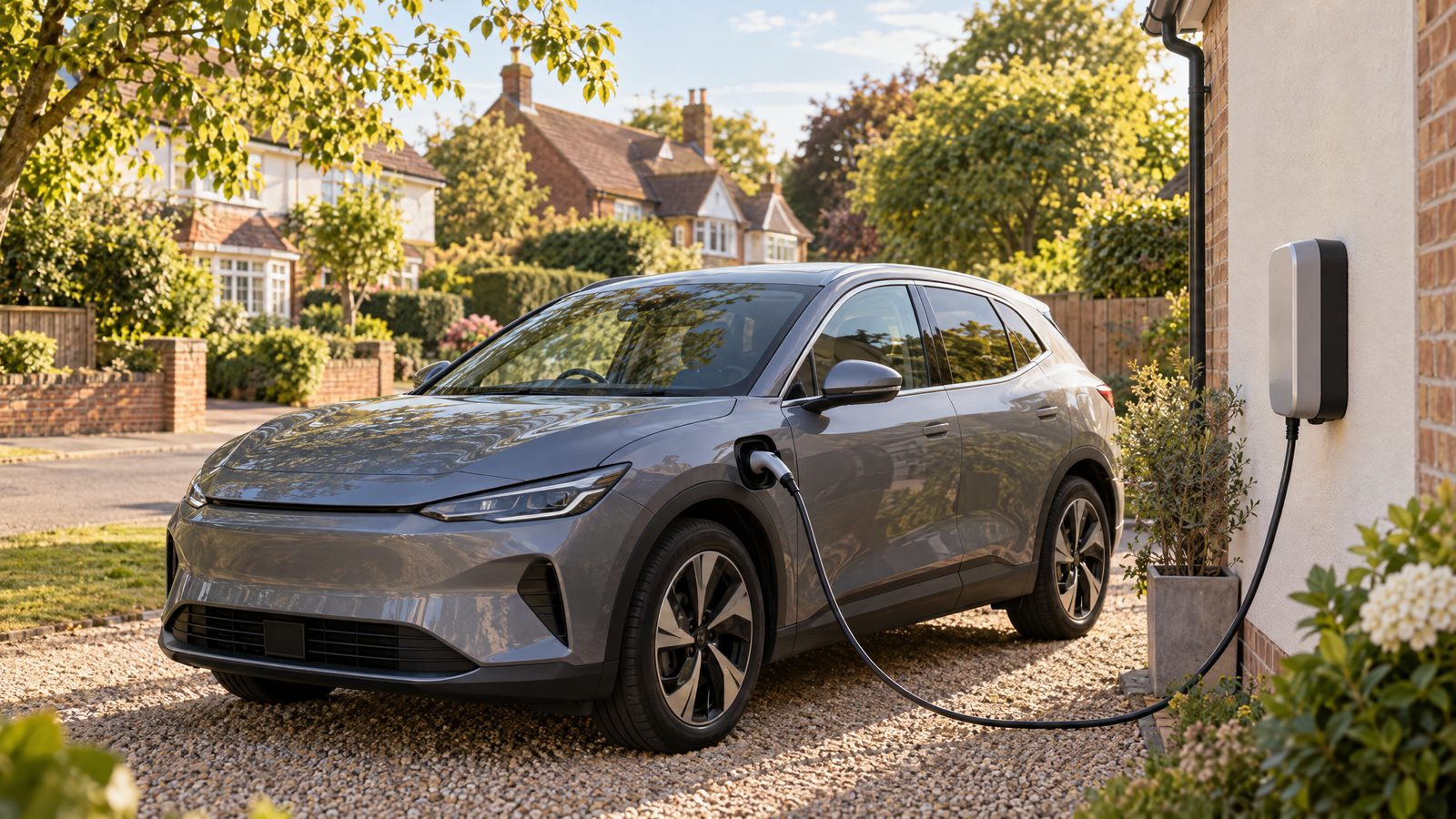

Drivers in England can now install certain home electric-vehicle charging points without applying for planning permission, including outlets serving homes without a driveway. The change took effect on 21 October and is intended to remove one step from installing a pavement-embedded cable channel between a home and a parked car.
The new route is not blanket permission to run a cable across a footway. Where the vehicle is separated from the outlet by a footway, the cable must cross it through an authorised channel. The channel must be installed by or for the highway authority, or with that authority’s authorisation. A loose cable laid over the pavement is not the arrangement covered by the change.
What the rule changes
The planning change covers qualifying electrical outlets at a dwellinghouse or block of flats, including those outside an area used for off-street parking. Previously, the relevant permitted-development rights for outlets and associated charging equipment were more narrowly tied to off-street parking. A separate permitted-development right now covers installation, alteration or replacement of a domestic cross-pavement channel by, on behalf of, or with the authorisation of a highway authority.
The government estimates that removing the planning application requirement could cut installation costs by up to £300. That is a potential saving, not a guaranteed reduction in the final bill. It does not mean the channel itself, charger, electrical work or any local process will be free. The amount a household pays will depend on the equipment, the work required and the arrangements in its area.
Nor does permission to install a charging point create a reserved parking space. A driver using a home charger still needs to find a vehicle space within reach of the authorised channel. The rule does not confer a right to park outside one’s home or guarantee that a particular council will offer a channel scheme.
Highway authorisation still matters
The legal definition makes the highway authority central to the pavement element. It may install a channel itself, arrange installation, or authorise another party to do so. The planning exemption should therefore be read alongside the highway authority’s own process, rather than as permission for a resident or contractor to cut into a pavement independently.
There are also protected-area restrictions. The new right for a pavement channel does not apply within a conservation area, the curtilage of a listed building or a scheduled monument site. Separate limits apply to wall-mounted outlets: for example, the rules exclude certain placements in conservation areas and restrict the number, height and projection of qualifying equipment. Some ordinary installation conditions also remain in force.
Those safeguards mean a prospective installation needs to be checked against the property and pavement, not just the headline change. A driver should establish which highway authority is responsible for the footway, whether it authorises channels and what technical or application requirements apply. Landlords, leaseholders and tenants may also need consent from the relevant property owner or manager; the planning change does not itself settle those separate arrangements.
A step towards home charging, not a complete solution
Charging from a household electricity supply can be cheaper than relying on public charge points, particularly for drivers who can charge at home overnight. The new option could make that route more practical for some people whose cars are normally kept on the street. But its usefulness will vary with local policy, availability of parking, installation costs and the driver’s electricity tariff and charging habits.
Reports on the first day of the change highlighted how uneven access can remain between neighbouring areas. Some councils have declined to permit pavement channels or have not established a scheme, citing safety, accessibility, maintenance or liability concerns. The nationwide planning rule removes a planning application requirement for qualifying development; it does not compel every highway authority to install a channel at every address.
The distinction matters for pedestrians as well as drivers. A channel is embedded in the footway so a charging cable can cross without being laid loose across the walking route, but local authorities retain a role in determining how a solution is authorised and managed. Residents should not assume that a cable channel can be fitted simply because an outlet no longer needs planning permission.
The government has also opened separate consultations on access to charging for tenants and leaseholders and on charging infrastructure in new and refurbished covered car parks. Those proposals are not part of the rule that began on 21 October. For now, the practical change is narrower: qualifying home charging equipment can use permitted-development rights, while any pavement crossing still depends on an authorised, eligible solution.







