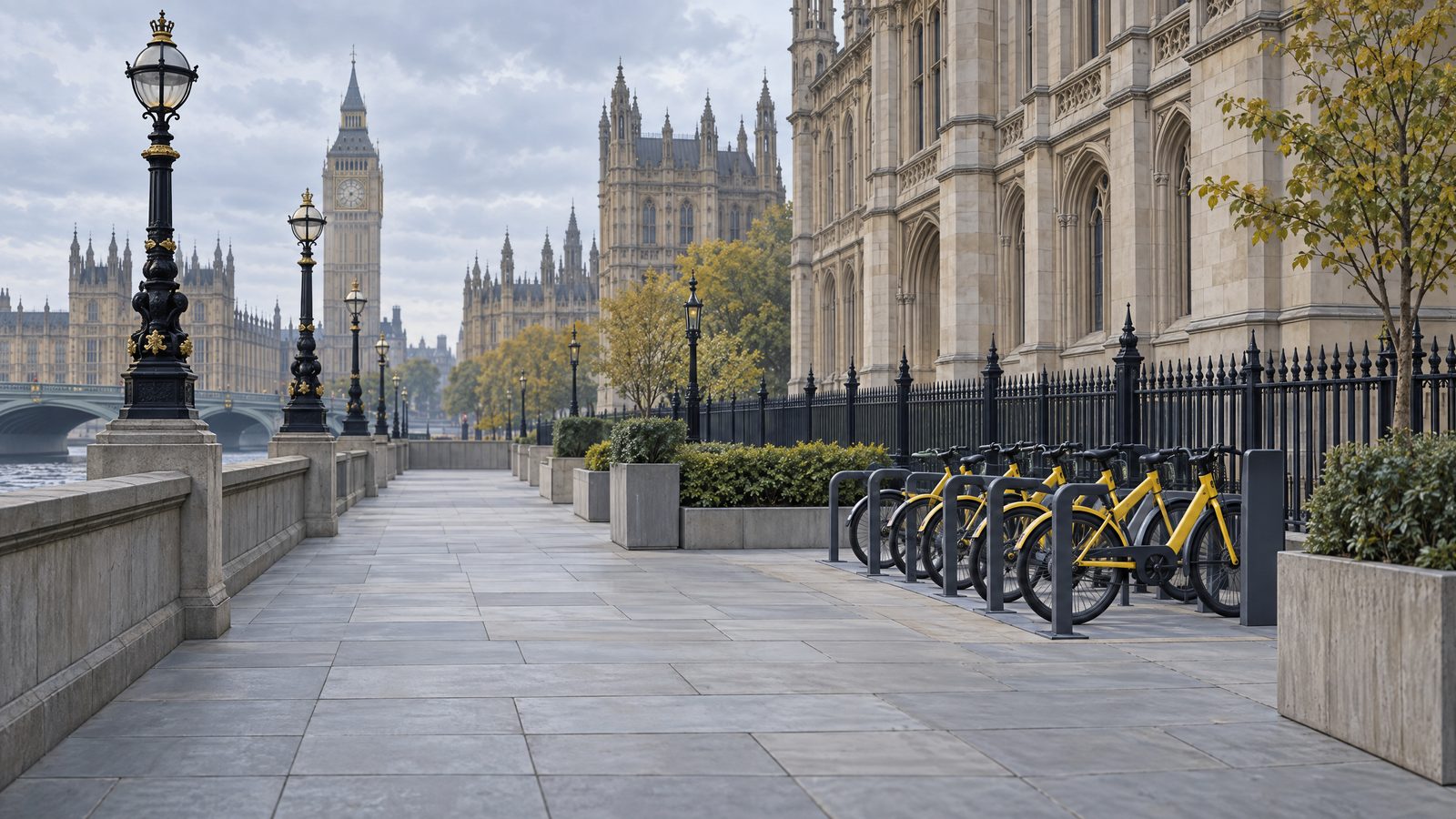

Westminster City Council says it has seized more than 1,000 dockless bikes since May and issued more than 5,300 fixed penalty notices to operators, with the notices worth more than £53,000. The figures mark a new enforcement milestone in the borough’s campaign against bikes parked in ways the council says obstruct streets.
The council said the latest total followed a doubling of its street enforcement patrols. During the earlier blitz, its teams seized 217 bikes in one week, a record weekly figure at the time. The authority says it will continue removing bikes it considers to be causing an obstruction, storing them and charging operators for their return.
What the figures cover
The council’s statement says the seizures and fixed penalties have accumulated since May 2026. It describes the notices as being issued directly to bike companies, rather than to individual riders. The total value of more than £53,000 is the value of those notices; the announcement does not say how much has been paid or recovered.
Seizure and penalty notices are separate enforcement actions. The council says it removes bikes that are causing an obstruction and holds them for collection, with companies charged for their return. The fixed penalties are directed at operators. The figures therefore describe both physical removals from the street and formal notices issued to the businesses responsible for the fleets.
The council has framed the action around access and safety on pavements. Poorly parked bikes can take up space on footways and at access points. In its statement, the authority gave examples of people who may be inconvenienced by an obstruction, including wheelchair users and parents pushing buggies. It says its aim is to press operators to manage their fleets and act against riders who park dangerously.
Patrols and operator responsibility
The patrol increase was announced in September as an enforcement blitz focused on locations where bikes were parked dangerously or causing an obstruction. The council said inspectors would visit every ward during that operation and described the intensified patrols as a response to resident complaints. It also said it was continuing to work with operators while warning that fines or seizures could follow when their obligations were not met.
The new milestone moves the story beyond that announcement of increased activity: it supplies cumulative results, including the number of bikes removed and the number and stated value of penalty notices issued. It does not provide a ward-by-ward breakdown, identify individual operators, or explain how many notices have been paid, challenged or remain outstanding. Nor does it give a separate count of bikes returned after storage.
Those distinctions matter when interpreting the totals. More than 5,300 notices is a count of notices, not necessarily the number of individual bikes involved, and the stated £53,000-plus is not presented as collected revenue. The seizure total likewise records bikes taken into storage, not a measure of how many remain on the streets or the overall scale of the borough’s dockless fleet.
A continuing borough enforcement approach
Westminster’s approach relies on action against operators when their bikes are left in places the council regards as obstructive. The authority says companies are expected to manage their fleets and ensure riders park responsibly, while its enforcement teams remove bikes where they cause an obstruction. It says it will continue the programme rather than treating the 1,000-bike threshold as an end point.
The announcement concerns Westminster’s borough enforcement and its recorded results. It is separate from proposals for a possible London-wide licensing arrangement for dockless hire bikes, which would involve a different policy framework. The council’s latest figures report what its own teams have done locally; they do not signal that a city-wide licensing system has been adopted.
For residents, the council’s stated test is whether bikes are left in locations that impede people using the pavement. For operators, the message is that the authority will continue to use removals and fixed penalties to press for better management. The figures provide a snapshot of enforcement since May, while leaving unanswered questions about payment outcomes, the distribution of seizures across the borough and the longer-term effect of the stepped-up patrols.