
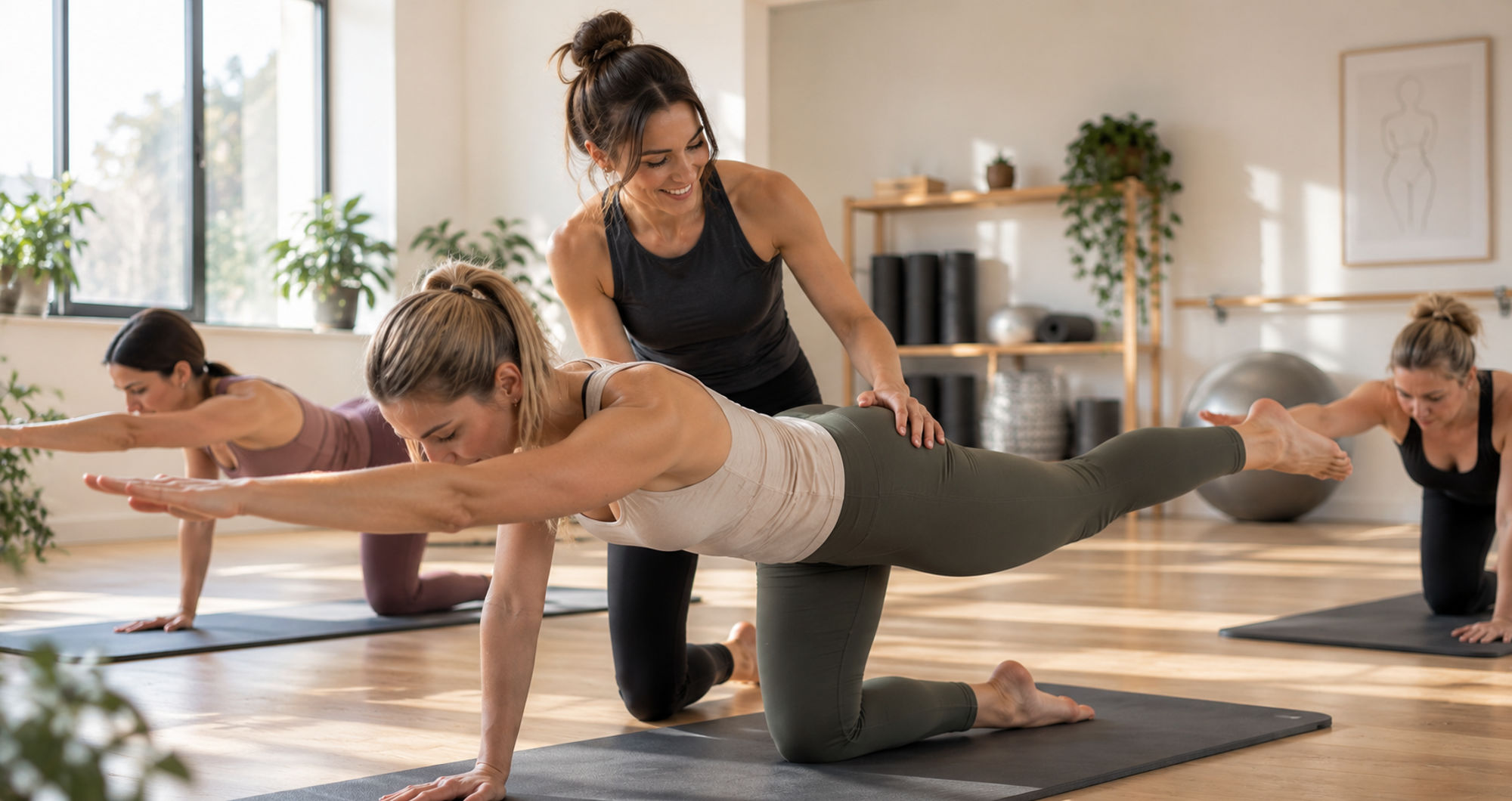

Pilates has come a long way from being the class quietly tucked away in the corner of the gym timetable.
Today, you’ll find Pilates studios across the UK, classes filling up at health clubs and community centres, and an endless stream of reformer workouts appearing on social media. As more people discover the benefits of Pilates, you might have found yourself wondering what it would actually take to move from attending classes to teaching them.
The good news? Becoming a Pilates instructor may be more achievable than you think.
What Does a Pilates Instructor Actually Do?
There’s much more to teaching Pilates than demonstrating a few exercises at the front of a class.
A Pilates instructor plans and delivers sessions designed to help people move safely and effectively. That includes explaining exercises clearly, observing participants, offering adaptations where needed and helping people gradually progress.
Classes can include people with very different levels of experience, so instructors need to be able to adapt their approach rather than simply delivering the same workout to everyone.
Some instructors teach group classes, while others offer one-to-one sessions or a combination of both.
Do You Need to Be Amazing at Pilates Already?
You certainly don’t need to be capable of performing every advanced Pilates exercise before you begin training.
Having some experience of Pilates is useful because it gives you an understanding of how a class feels from a participant’s perspective. However, becoming an instructor is about learning how to teach rather than simply becoming brilliant at the exercises yourself.
Communication, patience and confidence working with different people are all important qualities.
In fact, being able to explain a relatively simple movement clearly can be far more valuable as an instructor than being able to perform the most impressive exercise in the room.
What Qualification Do You Need?
This is one of the most important things to consider before starting.
CIMSPA, the professional development body for the UK’s sport and physical activity sector, says those wanting to become Pilates instructors should complete a Level 3 qualification in teaching matwork Pilates.
Training should cover much more than the Pilates exercises themselves. You’ll need an understanding of areas such as anatomy and physiology, planning sessions, adapting exercises, communicating with participants and delivering Pilates safely.
If you’re considering entering the industry, completing a recognised Pilates Instructor Course can provide the knowledge and practical skills needed to begin working towards a career teaching Pilates.
It’s worth researching any training provider carefully and checking exactly what qualification you’ll receive before enrolling.
What About Reformer Pilates?
If your love of Pilates started on a reformer, there’s an important distinction to understand.
Matwork Pilates and equipment-based Pilates aren’t exactly the same thing. A Level 3 matwork qualification provides a foundation for teaching Pilates, but instructors who want to teach specialist equipment such as reformers should undertake appropriate additional training.
That can actually make Pilates an interesting career for people who enjoy learning. You can begin by developing strong foundations and then continue adding to your knowledge and skills as your career progresses.
Where Can You Work?
One of the appealing things about becoming a Pilates instructor is the variety of ways you can work.
You might teach classes at a gym or leisure centre, join a specialist Pilates studio, offer sessions within your local community or eventually work independently.
Some instructors combine Pilates with another career and teach a handful of classes each week, while others make it their full-time profession.
Your working life can therefore look very different depending on what you want from it.
Is It the Right Career for You?
Loving Pilates is a good starting point, but enjoying working with people is just as important.
You’ll be teaching people with different personalities, abilities and reasons for attending. Some may arrive feeling confident, while others might be completely new to exercise and nervous about joining their first class.
Being able to make people feel welcome, explain movements clearly and create an environment where they feel comfortable asking questions can make a huge difference.
Ultimately, becoming a Pilates instructor isn’t about being the most flexible person in the room.
It’s about developing the knowledge to teach safely, the communication skills to help others learn and the confidence to lead a class.
If Pilates is already something you look forward to each week, turning that enthusiasm into a qualification could open the door to an entirely new career.







