
Moving costs have doubled in a decade, tenure is stretching past two decades, and a new generation of homeowners is asking a question the bathroom industry has rarely had to answer: what if we only do this once?
Homeowners Are Staying Put
Something has shifted in the numbers, and it has real consequences for how people are choosing to renovate. According to the English Housing Survey 2023-24, owner occupiers now live in their current home for an average of 17.2 years. Among those who own outright, that figure reaches 23.8 years. These are not people positioning for their next move. They are settling in, and they are spending accordingly.
What the Industry Is Seeing
Impey is a Somerset-based manufacturer and the UK’s market-leading specialist in wetrooms and level-access showering systems, with more than 600,000 installations completed across healthcare, residential and commercial environments over 25 years.
Chris Kingaby, Product and Marketing Director at Impey, says the change in how homeowners approach the conversation is now clearly visible.
“The questions people are asking have shifted. It is much less about what looks good for the next sale and much more about what will still work well in fifteen or twenty years. People want design appeal and genuine adaptability, and they are not willing to trade one for the other. Bi-folding and half-height shower doors are being increasingly specified for smaller footprints and changing household needs, and we are seeing this right across mainstream residential projects now, not just healthcare and adaptation work. Accessibility-led design has moved firmly into the wider market.”
What Homeowners Are Choosing
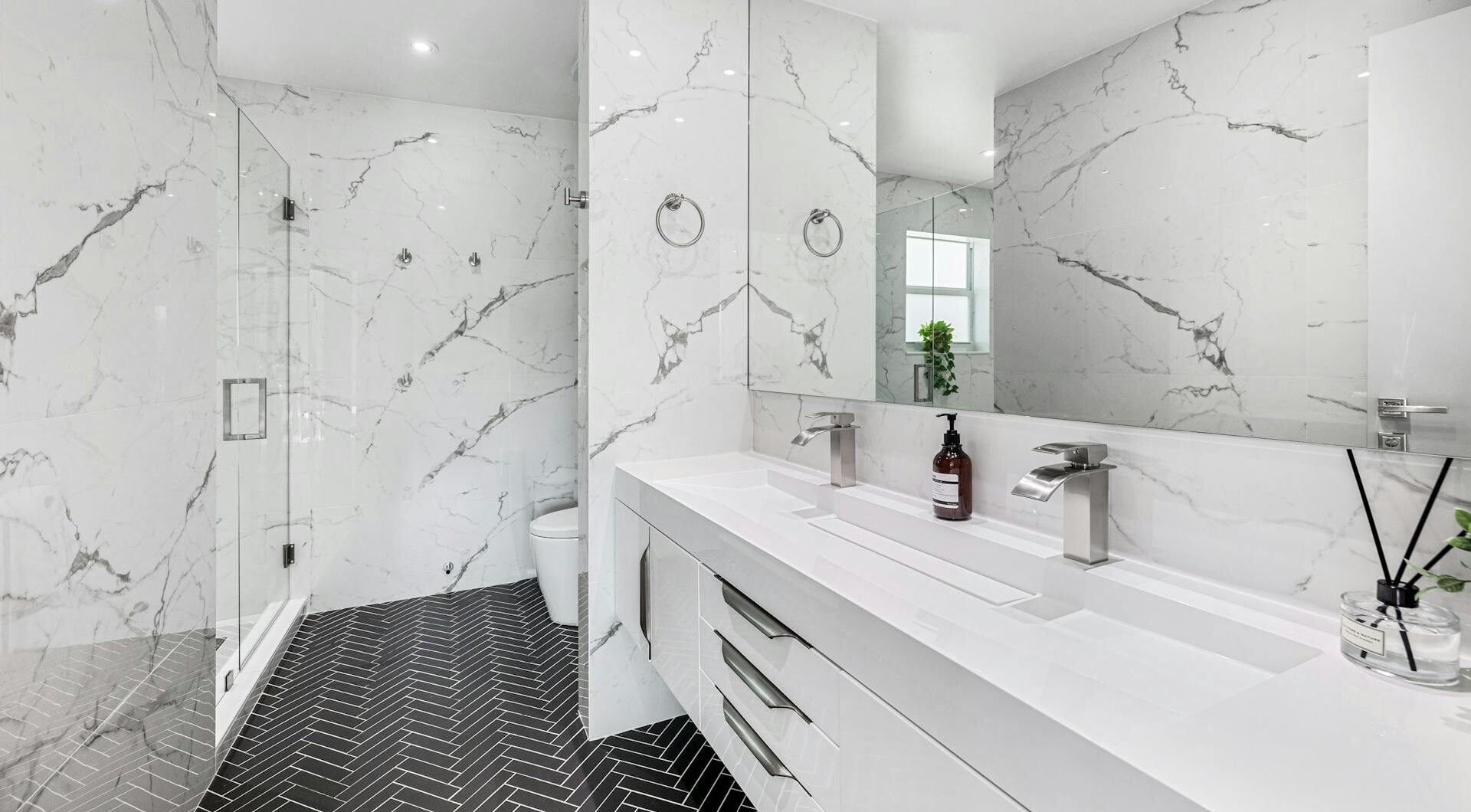
The forever bathroom brief tends to converge on a consistent set of decisions: level-access wetrooms over traditional shower trays, wall-hung fixtures that keep floor space open, neutral finishes that age well, and layouts that anticipate future needs rather than react to them.
For homeowners thinking about longer-term solutions, product categories like bi-folding half-height shower doors from specialist manufacturers such as Impey are becoming a natural starting point for renovations designed to go the distance, combining flexibility for users of all ages with the design quality the mainstream market now expects.
The Cost of Moving Has Changed Everything
The financial case for staying put has never been stronger, particularly in London. Research by comparison platform reallymoving, drawing on data from nearly 140,000 home movers, found that buying and selling a property in 2024 cost an average of £13,978 in upfront expenses, more than double the figure from a decade earlier. In London, that total climbs past £30,000, driven by higher house prices pushing up stamp duty and estate agent fees.
Home improvement spending has moved in the opposite direction. According to the 2025 UK Houzz and Home Study, 51% of homeowners renovated their properties in 2024 at a median spend of £21,440, a 26% year-on-year increase. Bathrooms lead consistently as the most commonly renovated interior space. The question has shifted from whether to renovate to how to do it in a way that does not need repeating.
The Problem With Short-Term Thinking
For most of the past thirty years, bathroom renovations followed a familiar logic: design for how you live now, keep it broadly appealing for resale, and revisit in a decade. It was a short-horizon brief, and its limitations are becoming harder to ignore.
A bathroom designed for a household at 45 produces a very different result to one that still performs at 70. High-threshold shower trays become trip hazards. Full-height fixed enclosures create difficulty for older users or anyone recovering from surgery. A freestanding bath that photographs beautifully can become a fixture that goes unused within a decade. Renovating twice, once for now and once for later, is not just expensive. It is something a growing number of homeowners have decided they want to avoid altogether.
The Rise of the Forever Bathroom
A distinct renovation category has emerged in response. Rather than designing around how the space looks today, homeowners are making decisions around how it performs across life stages: for children, for ageing parents, and for themselves as they move through their fifties, sixties and beyond.
This is not a story about disability. It is a story about households becoming more complex over time. Multi-generational living is on the rise, with 17% of homeowners in Aviva’s 2024 research adding bathroom facilities or rooms specifically to accommodate family across generations. Accessibility has quietly become a mainstream design consideration, not a specialist afterthought.
A London Problem, and a London Opportunity
London presents a particular version of this challenge. The capital’s housing stock is among the oldest in the country, built long before modern accessibility standards existed. Small bathrooms, constrained layouts and period features can make conventional renovations both costly and limiting.
With a typical London home move now costing over £30,000, many homeowners are directing that sum into the property they already own. Architects, specifiers and interior designers are increasingly being briefed to plan for the long term: layouts that work today and tomorrow, and finishes that hold their relevance rather than date.
The Shift in Priorities
The metrics that once shaped bathroom decisions, on-trend finishes and short-term resale appeal, are giving way to something more considered. Homeowners are building bathrooms that accommodate the household as it changes, that do not require revisiting in a decade, and that perform as well at 70 as they do today.
The best renovation is not the one that looks good for the next viewing. It is the one you do not have to do again.
Feature image by Haider Syed from Pexels