Despite a surge in women’s football participation with 4.4 million playing regularly across the UK, and 41% of women’s football clubs in the UK only being created in the last four years, there is still a host of on-going challenges and barriers being experienced everyday both on and off the pitch.
New research from Sure UK has found that women’s football is still far behind men’s in terms of equality despite growing participation from women. Sure’s study found that 40% of women footballers surveyed do not have access to their own pitch, one in four (25%) do not have changing room access and one in five (21%) do not have appropriate facilities for when they are on their period.
This news comes as The Football Association is projecting that one in five football teams in the UK will be female by 2030. And yet, 78% of female footballers agree that opportunities for women in their local football league are still far behind those available for men.
Barriers for grassroots women’s football gaining parity with men’s football in the UK are broad, with those at the heart of the game claiming the key barriers are a lack of funding (41%), a lack of sponsors (37%) and a lack of equipment (35%), according to Sure’s research.
Sure has been supporting women’s football for many years, engaging in partnerships and working with ambassadors to shine a light on professional athletes in the women’s game to help inspire today’s and tomorrow’s girls.
Carly Telford, Sure partner and former goalkeeper for the Lionesses, said:
“There’s still much more to do in order to fulfill the true potential of women’s football. We’ve come a long way but even after the international success from our Lionesses, we still have so much ground to make up. Together we need to come together to maximise the opportunities available at a grassroots level for women and girls so that everyone has the right opportunities and facilities to play wherever and however they want.”
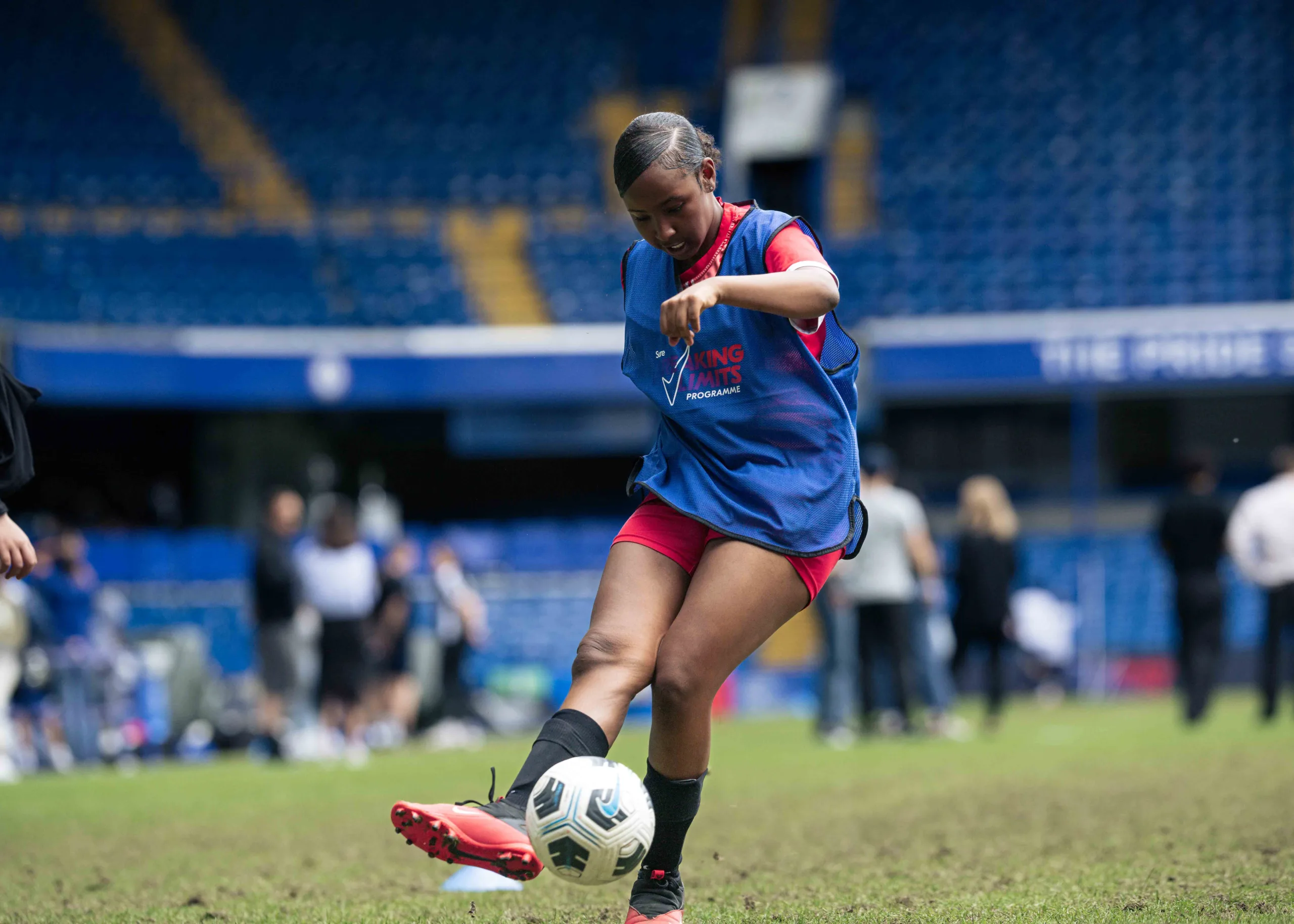
Sure launched its Breaking Limits Programme in 2021 with a vision to give millions of young people around the world the opportunity and confidence to be active. The initiative partners with 11 UK-based NGOs to provide funding and training to give young people access to coaches, community and safe spaces that help break down barriers that stop them taking part, including collaboration with football NGOs such as including Girls United, Street Soccer London and Bloomsbury Football. So far, the programme has reached more than 1 million young people aged 9-12 globally, and engaged with 11,000 coaches.
Alice Duffill, Senior Brand Manager at Sure UK commented:
“At Sure we aim to facilitate everyone’s ability to reap the rewards of movement – especially in women’s football. However, it’s clear that numerous barriers remain in this country which need to be tackled. That’s why we’re committed to investing in women’s football at a grassroots level, increasing the avenues available for people to train and get involved.”
“In the dynamic world of sports, brands that are allocating resources to elite sports events and sponsoring world-famous athletes hold considerable influence. It’s vital that these brands recognise their responsibility to invest into grassroots opportunities in order to level the playing field and give opportunities to women, girls, and those from marginalised communities to help foster community development, physical health, and well-being.”
Further data from the research includes:
- A huge 64% of women’s footballers are not able to have a trainer for their team
- 89% of women surveyed who play football believe that significant investment into women’s football at a local level is vital in order to progress the sport
- 43% of female footballers struggle to get a referee for matches
- 29% don’t have access to a football manager
- Over half (61%) on women footballers pay for their own kit for football games, with 1 in 10 (11%) even having to go without a kit for matches
- 1 in 5 (22%) of female footballers who play for local leagues don’t feel that their community supports them
- Over 4 in 10 (43%) of women who play football in and around Wales say that childcare is the biggest barrier that they face when it comes to being able to play football, while a third of women (33%) who play football in Scotland it’s a quantity game as the biggest barrier to playing is that there are not enough other players in their local area to make up a full team and opposition
- In Northern Ireland, over 4 in 10 (43%) do not play football because there simply isn’t a local women’s team near them