
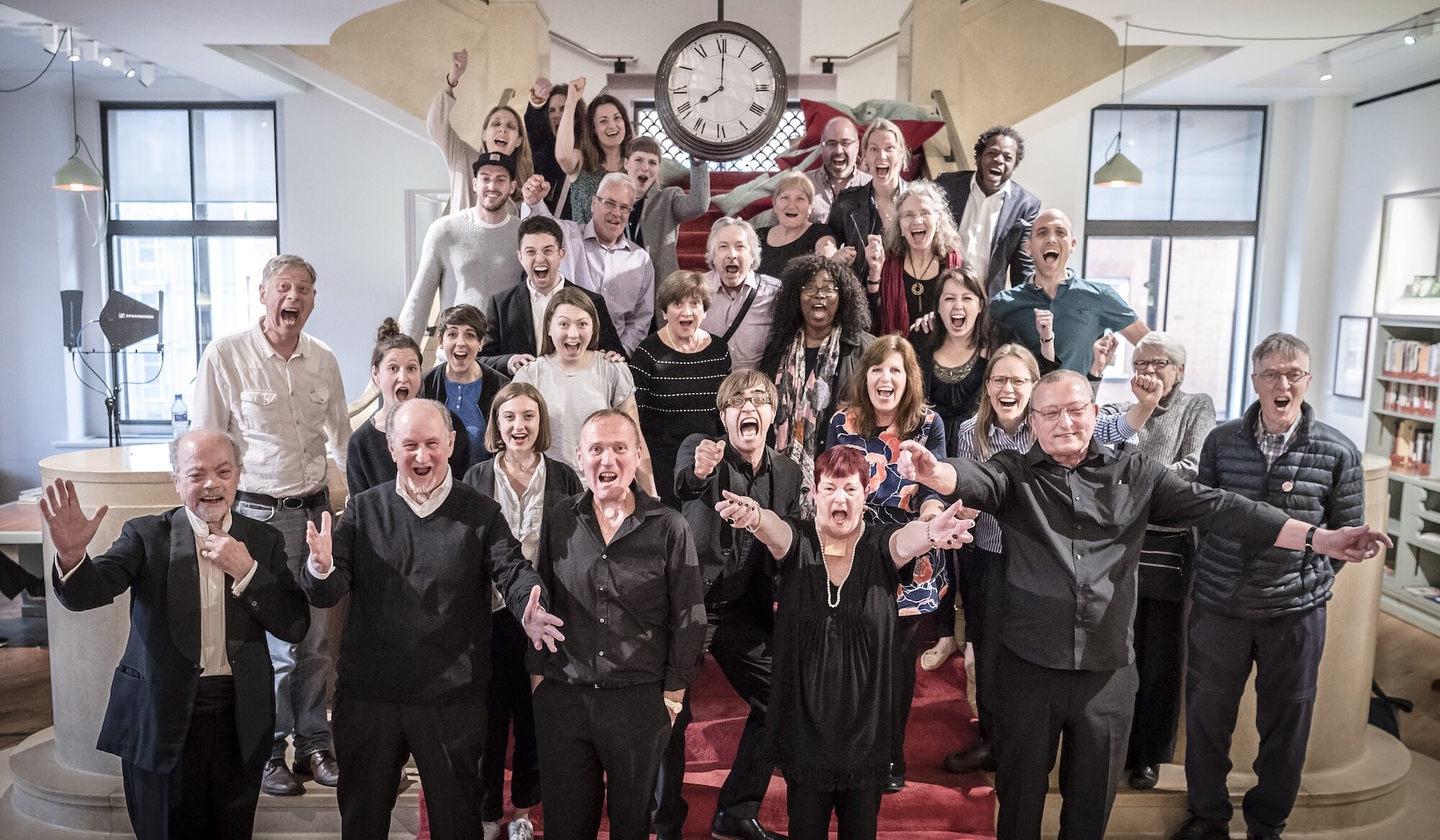

Laryngectomy patients aren’t what people would normally associate with singing. But a ground-breaking collaboration between clinicians and international composers has produced the world’s first musical instrument based on singers who have had their voice boxes removed.
Working with leading researchers at UCL, Royal Holloway University, the Birkbeck–UCL Centre of Neuroimaging, and the University of Iowa, Dr Thomas Moors, ENT Surgeon and founder/choir director of Shout at Cancer, carried out a world-first experiment: singing inside an MRI scanner.
Members of the Shout at Cancer choir, all of whom have had laryngectomies, sang inside the scanner. From the scans, researchers 3D-printed choir members’ vocal tracts, transforming them into a playable pipe organ.
There will now be a chance to hear the results of this unique fusion of science and art at Shout at Cancer’s 10th anniversary concert, “Louder Than Before,” on 26 October 2025 at Kings Place, London.
Breaking scientific and artistic boundaries
The process of creating this innovative instrument was far from straightforward. MRI scanners are deafeningly loud, and the magnets inside are so strong that conventional hearing aids and timing cues couldn’t be used.
The team designed an MRI-safe microphone and special hearing and timing solutions so participants could hear the music and stay in sync. They even provided MRI-compatible glasses so singers could read lyrics while lying in the machine.
Composers Teddy Riley and Christian Drew worked with the choir to co-create lyrics and shape the themes of the songs. For participants, this was a rewarding way to contribute to both scientific discovery and artistic expression.
As members of the choir sang inside the scanner, the machines captured detailed images of how sound was produced without a voice box. Those scans were then converted into 3D models of the singers’ vocal tracts. From those models, researchers 3D-printed physical replicas which were transformed into pipes for a custom-built organ. The result is an instrument that allows the anatomy of laryngectomy patients to be played as music.
A decade of giving voice after cancer
Formed in 2015, Shout at Cancer is the world’s only organisation using music to support speech recovery and social reintegration following a laryngectomy. It has grown from a small community group into an internationally acclaimed choir that has performed at the Royal Opera House, Barbican, Amsterdam Opera, V&A, and Bozar Brussels, with audiences ranging from local communities to The Queen and the UK Prime Minister.
The 10th anniversary concert, “Louder Than Before,” offers a moving journey into life after laryngectomy. The programme combines original poetry and compositions, including the debut of the laryngectomy vocal-tract organ.
Prof David Howard, Royal Holloway University London:
“Designing the laryngectomy vocal tract organ has been an extraordinary journey of science and empathy. By translating MRI scans of choir members into a playable instrument, we are not only visualising anatomy but transforming it into music. It shows, in the most tangible way, that even after the loss of a voice box, the human spirit finds new ways to resonate and to be heard.”
Choir member Peter Cawrey:
“After my laryngectomy, I thought my voice was gone forever. Singing with this choir has given me back more than sound: it’s given me confidence, joy, and the feeling that I am part of something bigger than myself.”
Composer Christian Drew:
“This project was unlike anything I’ve ever worked on, profoundly human and artistically transformative. The resilience of the choir opened up new ways of thinking about voice, song and connection. What moves me most are the friendships and lightness of spirit among the participants. Their strength made the weight of the subject uplifting and deeply inspired my music.”
The concert will also feature collaboration with Die Verdammte Spielerei, the award-winning Belgian saxophone ensemble.
Presented by Shout at Cancer and supported by golden sponsors Atos Medical and the General Representation of the Flemish Government in London, with additional support from Arts Council England (National Lottery), UCL Brain Sciences, the Birkbeck-UCL Centre of Neuroimaging, and Royal Holloway London University Engineering Department.
Feature Image: Thomas S.G. Farnetti, Wellcome Collection, Thinking out of the Voice Box, 8 June 2017, Wellcome Collection







