
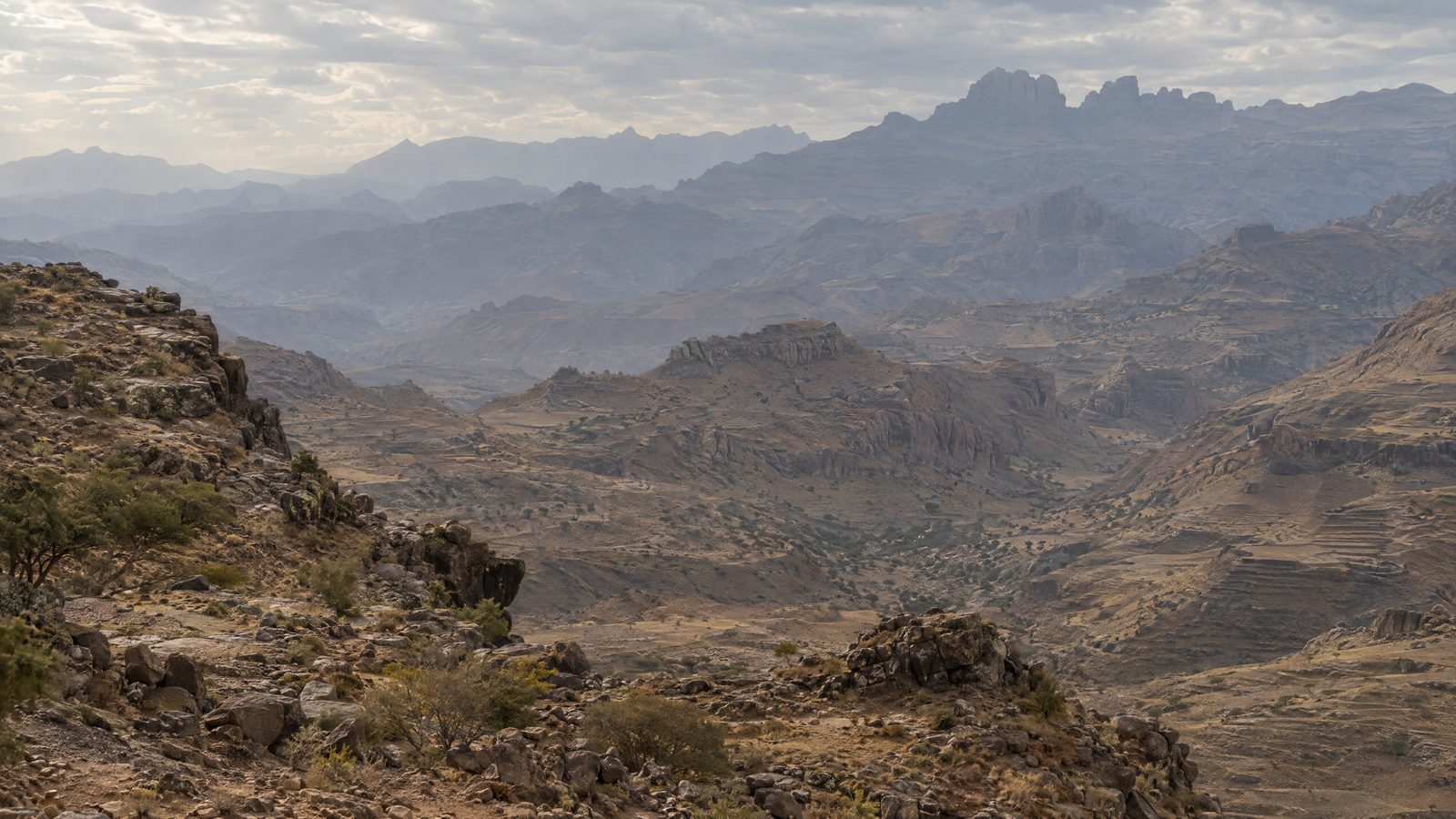

Yemeni government forces say they have advanced into the al-Dahida mountain range in al-Jawf governorate, as fighting with the Houthis continues east of the provincial capital, al-Hazm.
In a statement on 4 November, the armed forces said troops had entered Houthi fortifications and barracks in the mountains and recovered weapons and military equipment. They said aircraft and drones had supported the operation and targeted positions and stores at several sites.
A government emergency force separately claimed that the range and surrounding areas had been secured. That broader claim has not been independently established, and there was no immediate Houthi comment on the announcement. The armed forces also claimed heavy losses among their opponents, but an independently verified casualty count was not available.
What the available evidence shows
Military analysts who examined geolocated video published on 4 November said it showed government-aligned forces at several positions near Jabal Dahida. The footage supports their presence in the vicinity; it does not establish that every part of the range is under their control or that any position will remain in their hands.
The same analysts had reported footage showing government-aligned troops at a previously Houthi-held position near the mountains on 3 November. A day earlier, they said they could not verify whether government forces had captured the Dahida area. The sequence illustrates the difference between evidence of activity at individual sites and confirmation of control over a wider area.
The analysts also reported Saudi air strikes near the mountains on 3 and 4 November. They assessed that air support may have assisted the ground forces. Yemen’s armed forces said air and drone strikes accompanied their operation, although the effect of those strikes on the battle cannot be independently established from the military statement.
A contested approach to al-Hazm
Al-Jawf borders Saudi Arabia and connects with several other Yemeni governorates, including Marib, where the government holds territory. The Houthis took al-Hazm in 2020 and remain in control of the city. The provincial capital has been a focus of the government’s wider offensive.
Government forces had earlier claimed control of the Huwaishian mountain range east of al-Hazm. A field commander said the heights formed part of the Houthis’ defensive positions. The latest claim concerns the separate al-Dahida range; it should not be taken to mean that government troops have reached or recaptured al-Hazm.
High ground can provide observation over surrounding routes and positions. Analysts have suggested that a sustained government presence in the mountains east of al-Hazm could help prepare the way for an attempted advance towards the city. That is an assessment of a possible future operation, not evidence that the city is about to change hands.
The fighting forms part of an offensive the government calls Operation Dawn of Yemen, which began in October. Presidential Leadership Council head Rashad al-Alimi has said the operation will continue until state institutions and the internationally recognised government’s authority are restored across the country.
The Houthis took the national capital, Sanaa, in 2014. A Saudi-led coalition intervened in support of the internationally recognised government the following year. A truce in 2022 brought a period of relative calm, but fighting has intensified again in 2026.
Separately, the UN migration agency has documented the civilian consequences of renewed fighting in western Yemen. Its 4 November update recorded approximately 308,653 people displaced between 1 August and 3 November. That figure concerns the wider western Yemen escalation; it is not a count of people displaced by the al-Dahida fighting.
Featured image: AI-generated illustration.







