The jellyfish is not real. It is made from discarded plastic bags. A fan blows from below, and the creature stirs, drifting toward you like a ghost. It is beautiful. It is also a warning.
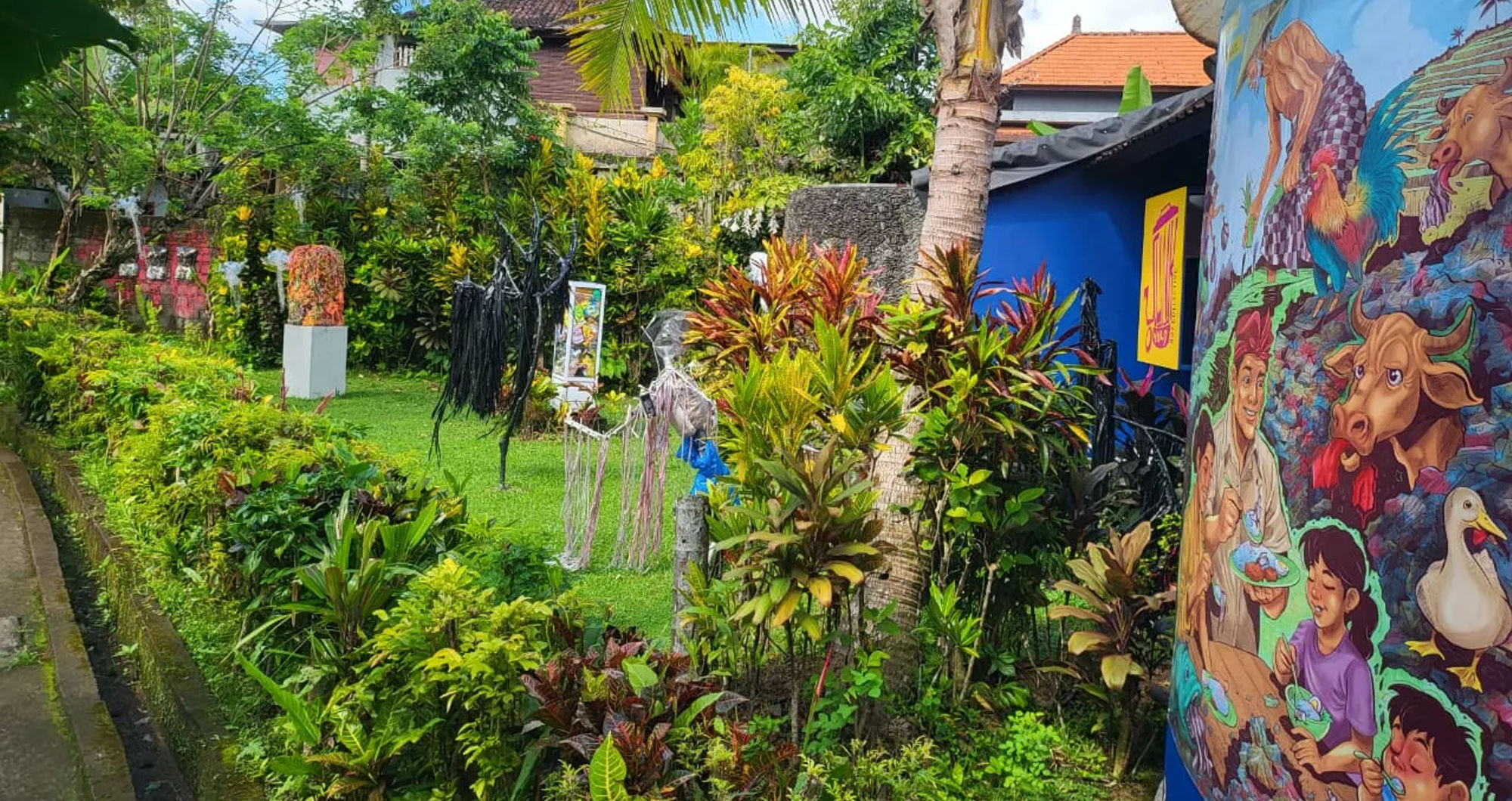
The artists who built it do not want your money. There is no ticket booth at the entrance of their gallery, no price list on the wall, no red dots indicating a sale. They have turned a small room off a narrow lane in Ubud, Bali’s most famous tourist town, into a space that operates on a single principle: awareness.
Eight of them, a mix of Balinese and foreign artists, call themselves Junkyard Collective Bali. Their medium is garbage. Their message is simple. The plastic you throw away today will end up inside your body. Not metaphorically. Literally.
The Man Who Stopped Cleaning and Started Creating
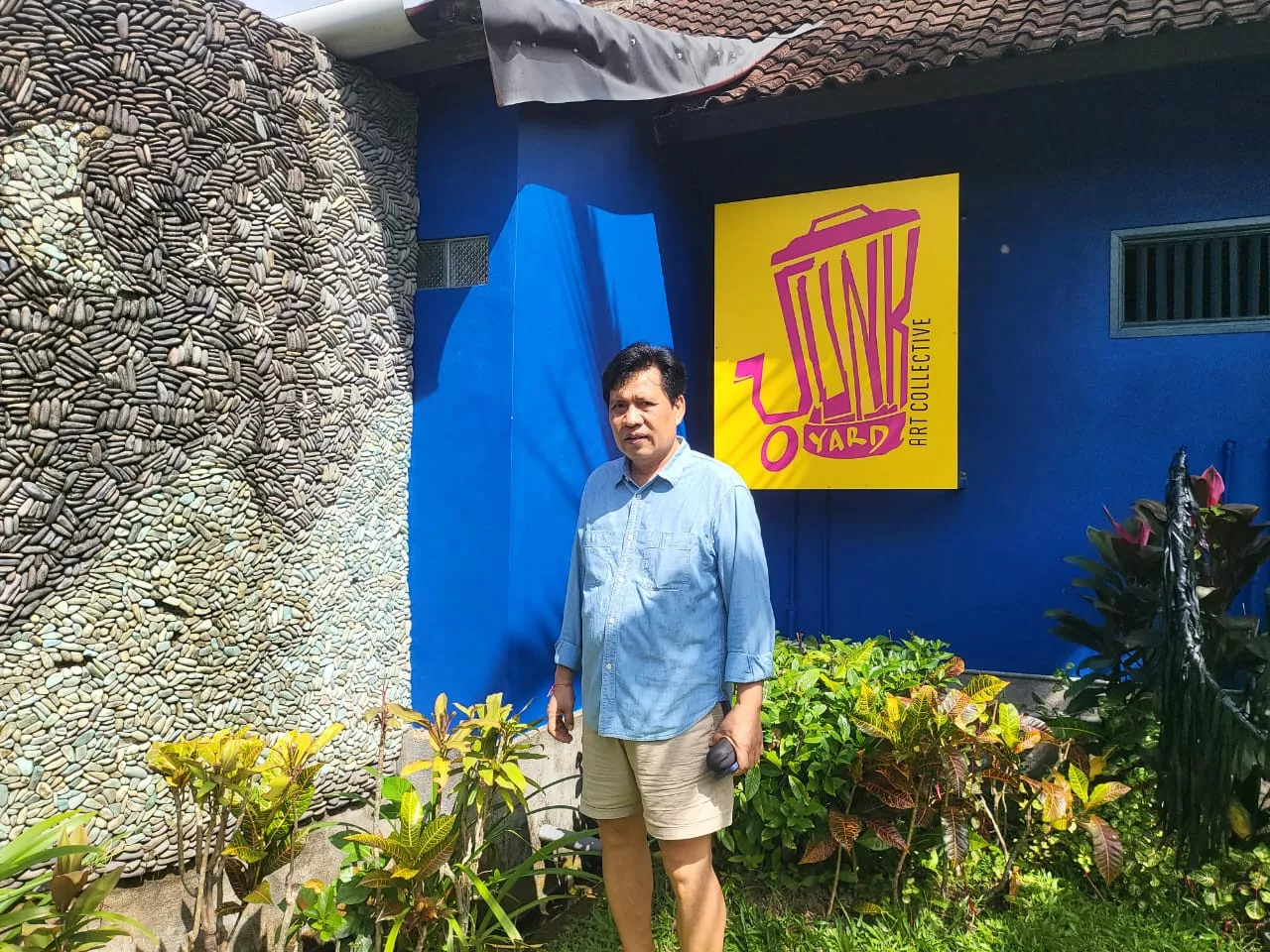
Dr. I Made Jodog (Hey Bali News)
Dr. I Made Jodog spent years of his life cleaning rivers. In the late 1990s, he led a youth organisation in his village. The river below his family home was a floating landfill. Plastic bags tangled in bamboo roots. Bottles bobbed past. He organised cleanups. He begged his neighbours to stop. He watched tourists wrinkle their noses at the smell.
Nothing changed. The plastic kept coming.
At some point, Jodog, now the Vice Rector of the Indonesian Institute of the Arts in Bali, realised that cleanups would never be enough. People needed to understand why the waste mattered.
So he stopped cleaning. He started making art.
“Plastic does not disappear,” he says, standing beneath the floating jellyfish. “It breaks down into smaller pieces. Microplastics. Invisible. Then rain carries it into rivers. Rivers carry it into rice fields. Rice plants absorb it. The microplastics travel up the stalks. They settle inside the grains. Then you harvest the rice. Cook it. Eat it.”
He lets the sentence hang in the air.
“This is not about pollution,” he says. “This is about the food you put in your mouth.”
The Gallery That Refuses to Sell
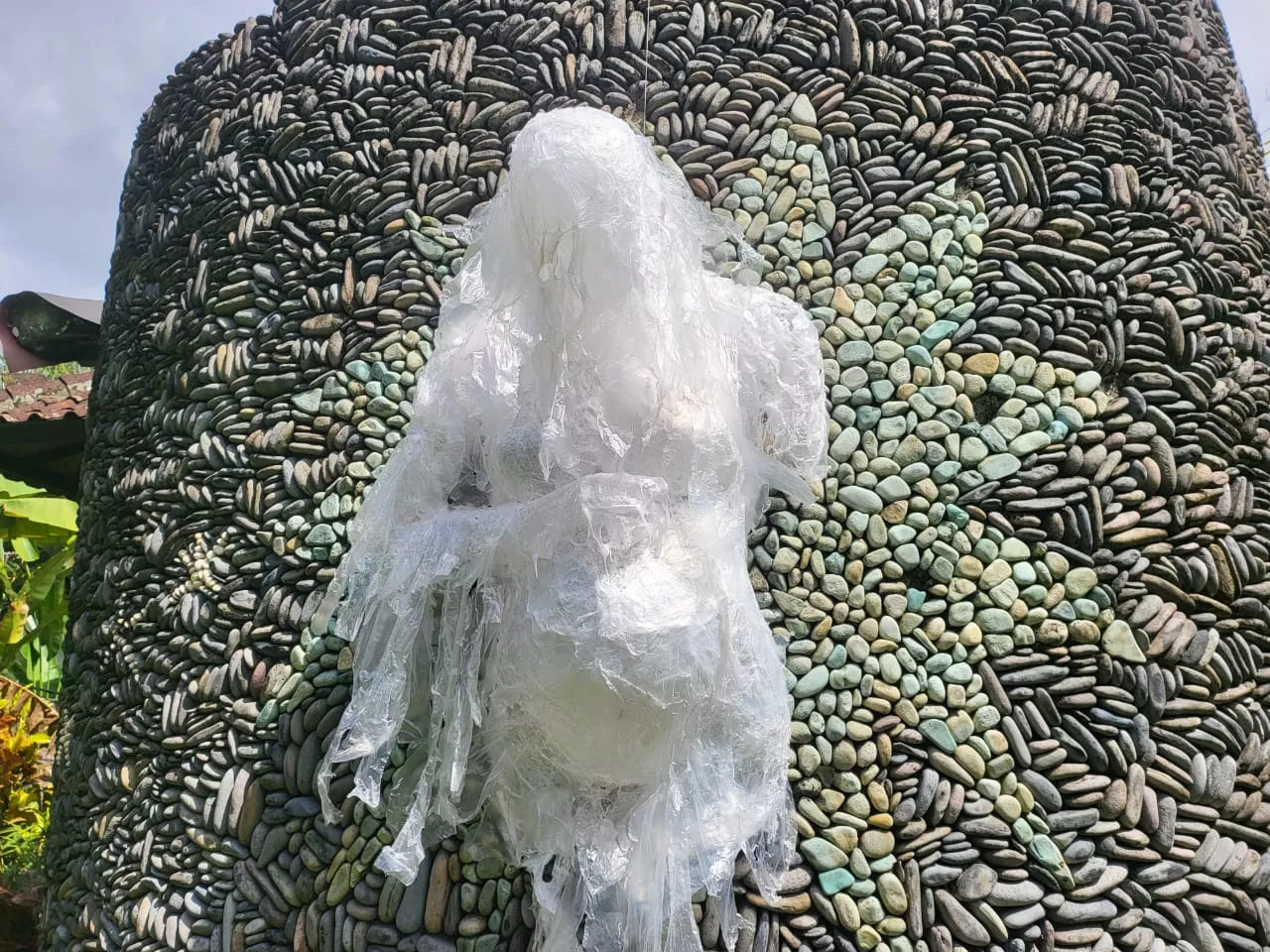
One of the works of art made of plastic in Junkyard Collective Bali (Hey Bali News)
Walk into any art gallery in Ubud, and the first question is always the same. How much? Not here. None of the works are for sale. The artists have day jobs. They teach. They freelance. Some are still students. They are not waiting for a collector from London or Singapore to discover them.
One artist, Arde, creates paintings by heating plastic sheets until they fuse into something that resembles canvas. The images are quiet — a woman’s face, a child — but the material is anything but innocent.
Another, Wayan Suja, builds female figures that represent the earth. Beneath their bodies, plastic has taken root like weeds. On top of them, he plants real vegetables that grow during the exhibition. The message is unmistakable. The food we eat grows inside the waste we create.
Prangawardana built a traditional Balinese scarecrow, a guardian of the rice fields, entirely from plastic. He wants to restore a sense of fear. Not terror. Just enough fear to make someone hesitate before throwing a wrapper into a ditch.
And then there is the jellyfish.
“When a jellyfish stings you, you wake up,” Jodog says. “This jellyfish is meant to sting your consciousness.”
A Spiritual Crisis, Not Just an Environmental One
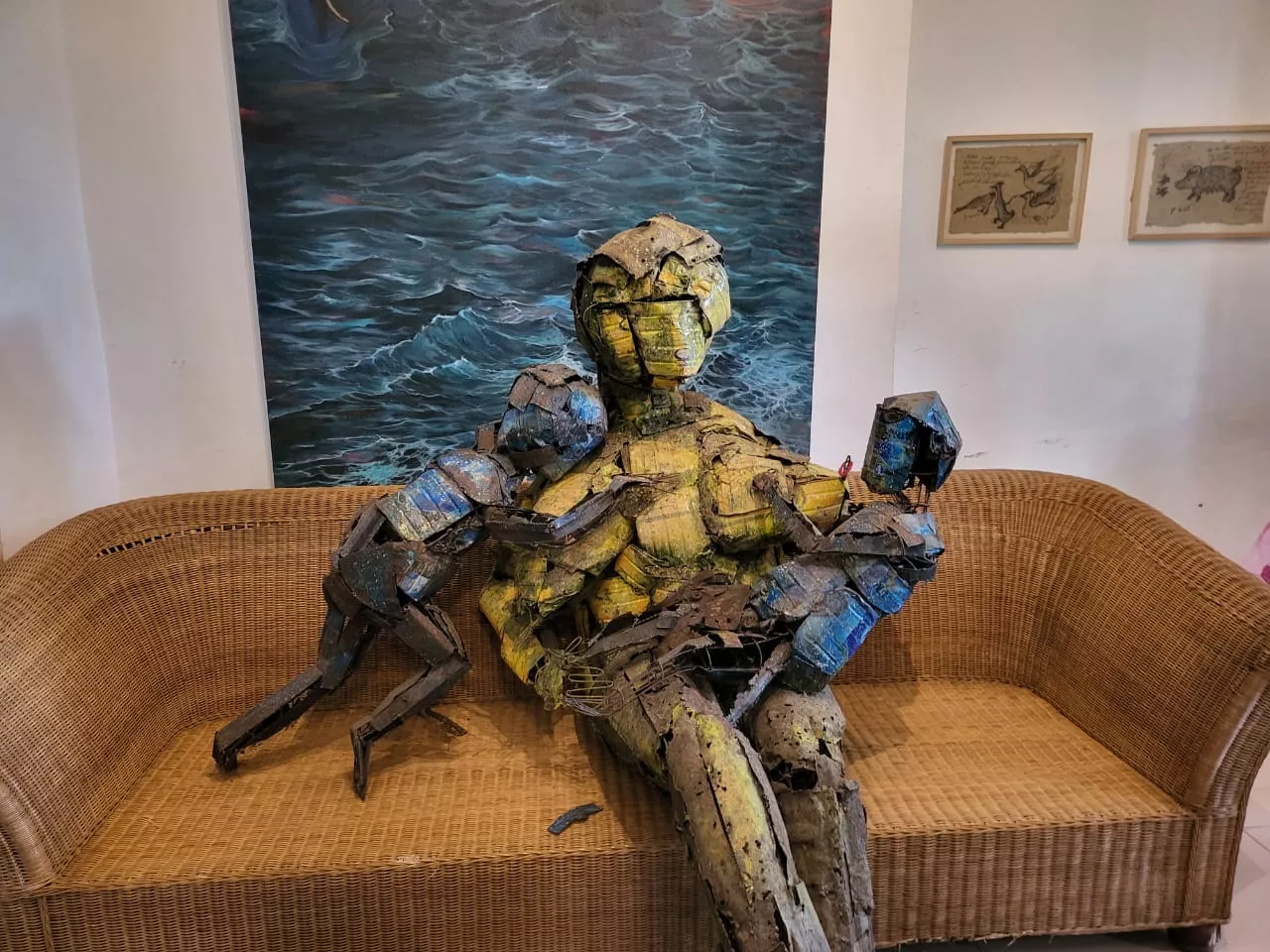
One of I Made Jodog’s paintings made from formula milk cans forms a high-value sculpture (Hey Bali News)
Jodog is not an activist in the Western sense. He does not shout. He does not march. He is a Balinese intellectual, steeped in the island’s spiritual traditions. He sees the plastic crisis as a violation of cosmic balance.
In Balinese cosmology, mountains are not geological features. They are Purusa, the sacred head, the source of life. Rice fields are not farms. They are living systems, connected to water temples and the cycle of birth and death. The old philosophy of Bhuta Hita teaches harmony between humans, nature and the spiritual world.
“Plastic is a violation of that harmony,” Jodog says. “It does not belong in the rice field. It does not belong in the river. It does not belong in your body.”
He pauses.
“Nature is not arrogant. Humans are the ones who forget.”
The Hard Truth for Tourists
For European readers planning a holiday in Bali, the message is uncomfortable. The island you see in brochures — the green rice terraces, the quiet rivers, the smiling farmers — is not untouched. Plastic is everywhere. In the soil. In the water. In the food.
Jodog does not blame tourists alone. The problem is global. The solutions are local. But he believes that travellers have a role to play.
“Do not look away,” he says. “When you visit, pay attention. Ask where the waste goes. Support people who are trying to fix this.”
He hopes Junkyard Collective grows. He hopes artists from other countries join. He hopes the movement becomes global.
But for now, he is content if one person walks through his door. Stops in front of the jellyfish. Asks a question. And leaves with something heavier than when they arrived.
How to See It
Junkyard Collective Bali is hidden down Gang Bintang, a small lane off Jalan Raya Sanggingan in Ubud. There is no big sign. No advertising. The door is open. The admission is free. No one will ask for a donation.
The artists are not trying to sell you anything. They are trying to wake you up.
Come before the jellyfish stops floating.