
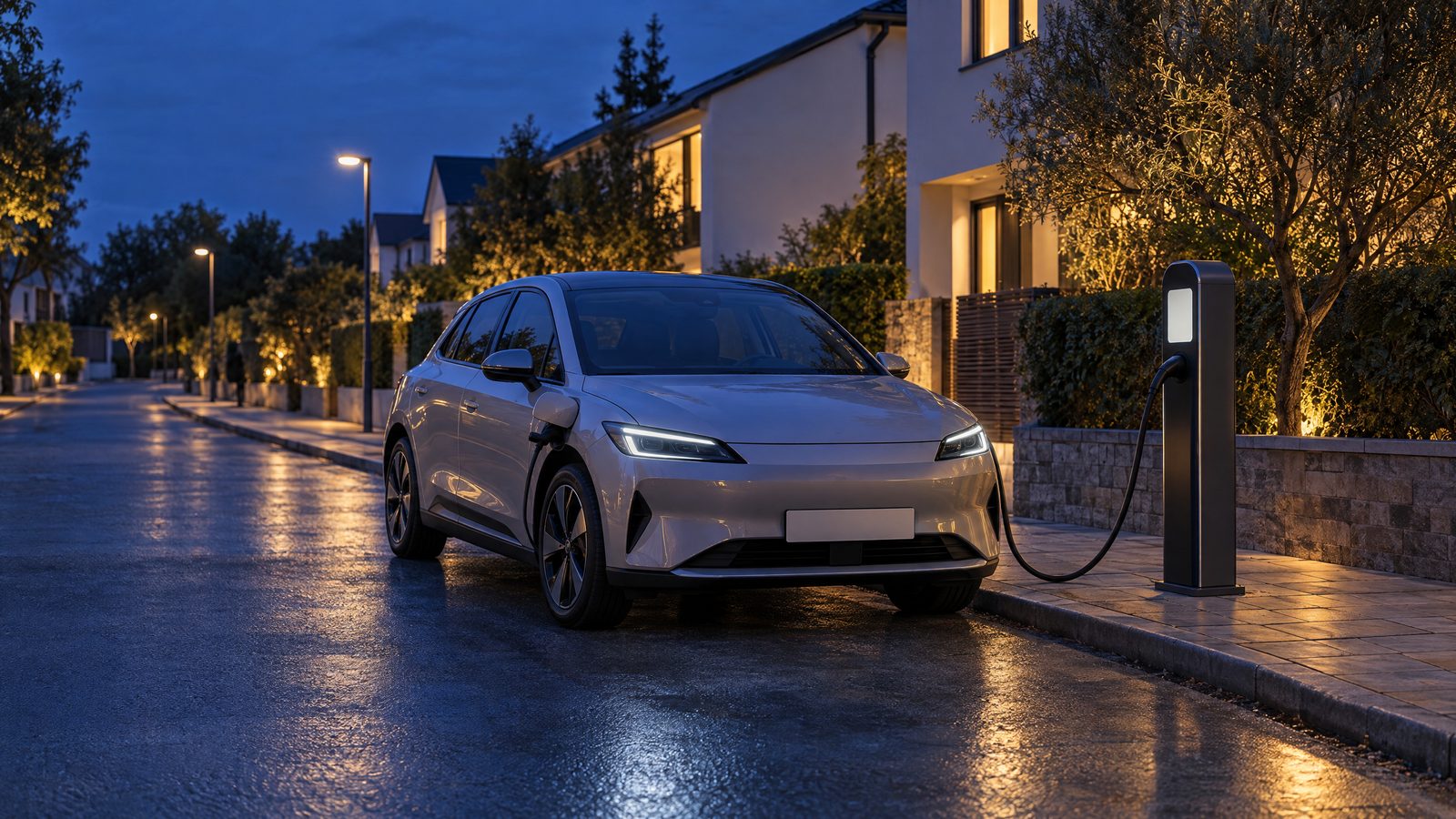

Electric-vehicle drivers who rely on local public chargers are due to receive help with charging costs under a £100 million package announced in the Budget.
The funding is planned to begin in spring 2027 and run for two years. It is intended to reduce the cost of using lower-powered public charge points near people’s homes, particularly those on residential streets where cars may be left for several hours or overnight.
For London drivers without a driveway, the announcement addresses a practical part of the transition to electric motoring. Charging at home is often cheaper, but that option is not available to everyone. People who park on the street or live in flats can be more dependent on public infrastructure, and their charging choices can be shaped by the location, speed and price of nearby points.
Support is planned, not yet available
The £100 million is an announced measure rather than a discount that is already in place. The policy is scheduled to start in spring 2027, and the details of how the money will reduce individual charging costs has not yet been set out. Drivers should not assume that every public charger, every operator or every journey will be covered.
The focus is on lower-powered chargers in local areas, rather than the higher-powered units commonly used for short stops at motorway services or dedicated charging hubs. These slower points are designed for longer stays and can be particularly useful where a vehicle is parked close to home overnight.
On the present plan, the support is expected to save the average driver who does not have home charging and uses on-street charging about £150 a year. That is an estimate attached to the policy, not a guaranteed saving for every motorist. The eventual impact will depend on the scheme’s design, individual charging habits and the chargers available in a person’s area.
A proposal to use domestic tariffs away from home
Alongside the temporary funding, an industry-led taskforce is expected to explore whether drivers could use a cheaper domestic electricity tariff at some local public charge points. The idea is often described as tariff porting.
It remains a proposal for investigation, not a new entitlement. Bringing a household tariff to a public charger would involve technical, commercial and consumer-protection questions. It would also need a way to identify the driver, link their energy arrangement to the charging session and settle payments between the organisations involved.
The taskforce is intended to examine those issues before any system is introduced. Further details are due at a later stage, so it is not yet clear which chargers could take part, which drivers might qualify or when a tariff-porting arrangement could begin.
Why local charging costs matter in London
London has a large and growing charging network, but access is not the same in every neighbourhood. A resident with off-street parking may be able to charge from a home supply, while another household on the same road may rely on public equipment. That difference can affect both convenience and the cost of running an electric vehicle.
The new package is aimed at narrowing part of that gap for drivers who cannot routinely charge at home. It does not remove the need for more local infrastructure, dependable equipment or clear pricing. It also does not change the practical question of whether a suitable charge point is available near a driver’s home.
For drivers considering an electric vehicle, the announcement offers a future policy signal rather than an immediate change to their bills. Anyone making a purchase decision before spring 2027 will still need to check the chargers near their home, the prices they currently pay and whether they have a realistic place to charge overnight.
The longer-term test will be whether the funding reaches the people who depend most on local public charging and whether the proposed tariff work can produce a workable system. Until the operating rules are published, the headline commitment should be read as planned support, with important details still to come.







