
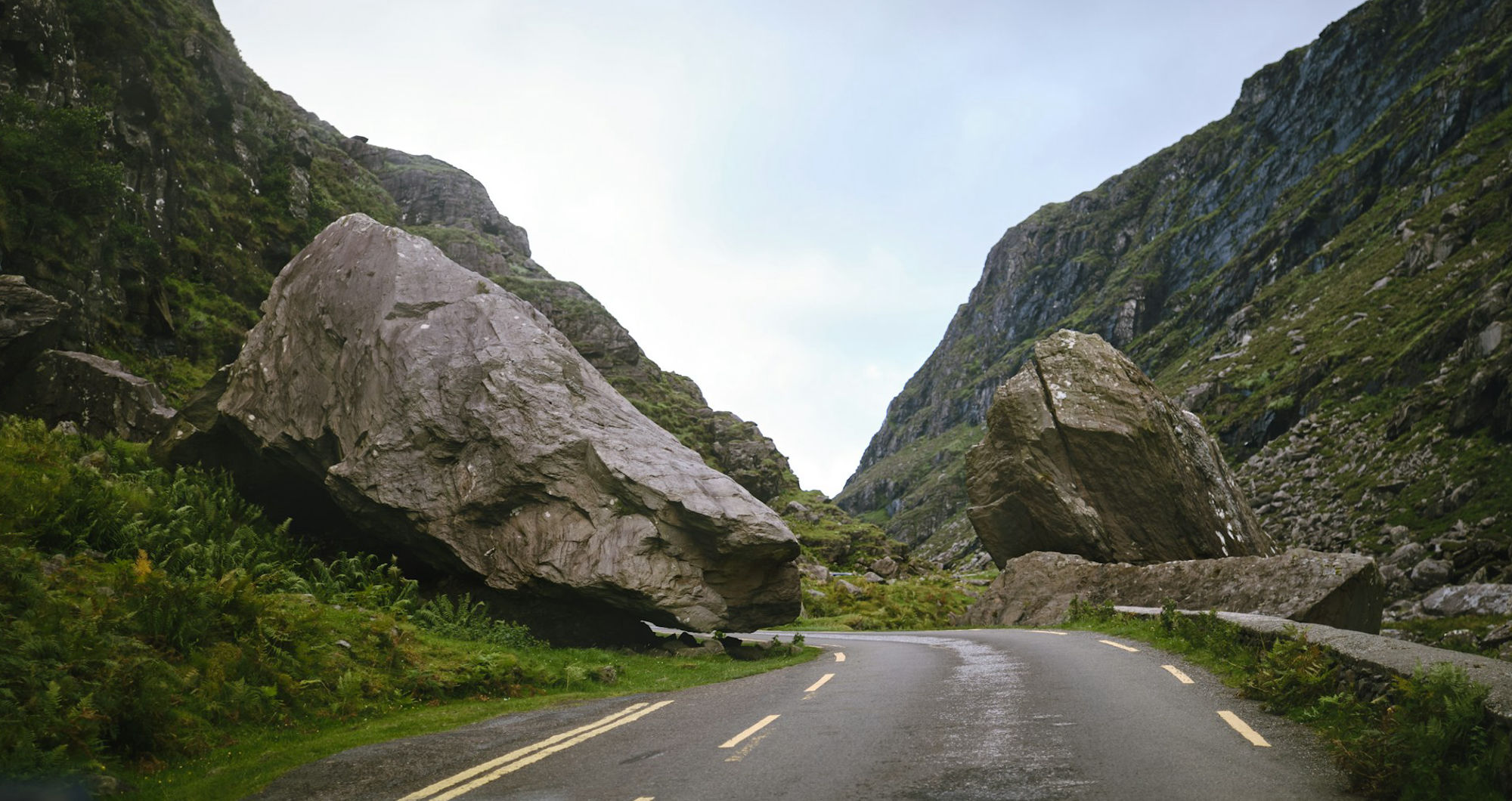

The usual mistake with the Ring Road is treating 1,332 km as a distance to get through instead of a road to drive. Spread over seven days it comes to a little under 200 km a day, which sounds relaxed until you count the waterfalls and the slow stretches behind a tour bus. The plan below works because it keeps the long drives in the middle of the week and tells you where to stop for the night before you’re tired.
Pickup and the loop
Keflavík Airport sits about 40 km from Reykjavík, and the rental desks are in the arrivals hall, so you can be on the road within an hour of landing. Don’t head straight for the capital on day one if you’ve flown overnight. Collect the car and buy groceries, then get used to the controls on the quiet stretch before the city traffic starts.
Outside the larger towns, Route 1 has just one lane each way, so there’s little room for impatience. Rural paved sections run at 90 km/h and gravel at 70 km/h, while towns drop to 50 km/h. Those limits are set for good conditions, so treat them as a ceiling.
Drive the loop counterclockwise, starting with the south coast, which has the most to see in the shortest distance and lets you settle into the road before the remote east.
South coast to the lagoon
Days one and two belong to the south coast. Leave Reykjavík on the first morning and stop often: the waterfalls on this stretch sit right beside the highway, and the black-sand beaches need little more than a short walk from the car park. Sleep in a farm guesthouse along the coast both nights rather than racing east. The famous waterfall you can walk behind is worth it. The crowded selfie spots at the main beach mostly aren’t, so give them twenty minutes and move on.
Day three is Jökulsárlón, a glacial lagoon near Höfn that plunges to 190 m at its deepest. It earns its reputation. Arrive at opening time, ahead of the tour coaches, then cross to the beach where chunks of ice lie stranded on the black sand.
This is also bridge country. Route 1 has about 30 single-lane bridges, and many of them are in the southeast. Slow down well before the sign and check the far end; if another car reached the bridge first, wait for it to clear. It feels awkward the first time and routine by the fifth. Spend the night in Höfn.
East fjords and gravel
Day four is the slowest driving of the week, and the most rewarding, as the road winds in and out of the fjords with small fishing villages tucked at the head of each inlet.
Watch for a sign reading “malbik endar.” It means the pavement ends and gravel begins. Ease off before you reach it, not on it, because loose stones and a sudden change in grip are how beginners lose control. Keep to 70 km/h or below and steer gently, leaving space behind other cars so their stones don’t crack your windscreen.
Stay the night in one of the fjord villages. Pushing on to Mývatn the same day turns a pretty drive into a grind.
Mývatn and the north
Day five is for Mývatn, near Akureyri, where pseudo-craters dot the lakeshore and the lava pillars of Dimmuborgir rise out of the birch scrub. The short trails at Dimmuborgir take an hour or two and feel like walking through a collapsed city. The crater rims are an easy climb with wide views over the lake. A comfortable car from the best car rental in Iceland suits a day like this well, with plenty of short hops between car parks and a heater waiting after each windy walk. Sleep near the lake.
Day six swings west through Akureyri, the north’s largest town and a good place for lunch and a proper coffee. Keep heading west in the afternoon and stop for the night somewhere past the halfway point to Reykjavík. That way the final day stays short.
The drive home
Day seven runs back to Reykjavík and on to Keflavík. Give yourself a slow morning, with an afternoon in the capital if your flight allows.
Fill the tank before the last stretch. Rental companies usually charge far more to refuel the car than the pump does, and that final top-up is the easiest money you’ll save all week.







