
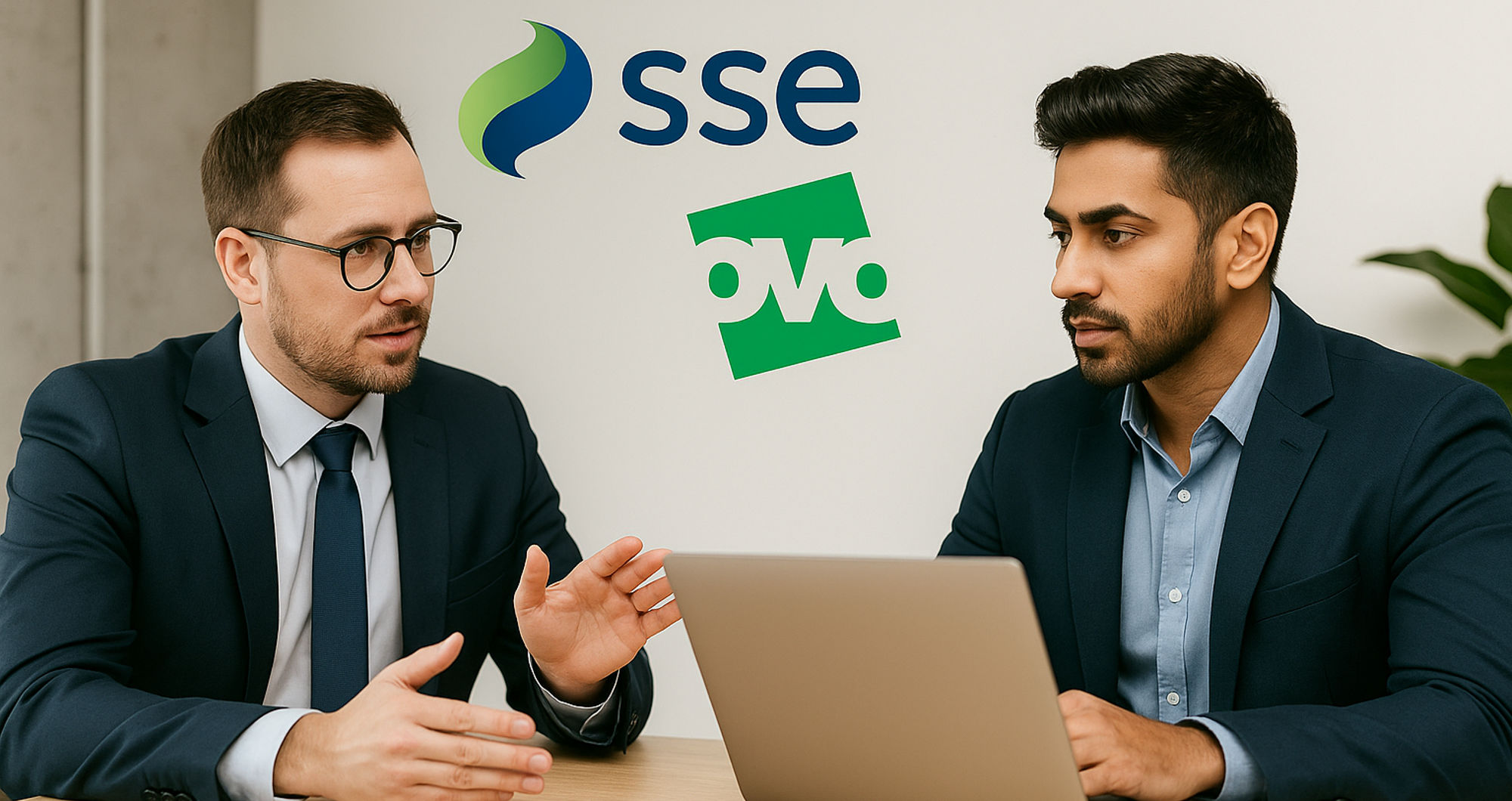

When OVO Energy acquired SSE’s household supply business in 2020, it marked one of the most significant shake-ups in the UK retail energy market since deregulation. Five years on, the merger still offers lessons about competition, consolidation, and consumer confidence in a sector where stability and choice must constantly be balanced.
SSE Energy had long been a familiar name among the “Big Six” suppliers — companies that once dominated the UK’s domestic market. But with OVO’s acquisition, that landscape changed permanently. Today, many former SSE customers receive service under the OVO brand, while the SSE name continues in a limited capacity for some regional and legacy accounts.
“The SSE–OVO transition is a textbook example of how market consolidation can deliver both security and uncertainty,” said Shay Ramani, spokesperson for Free Price Compare.
“On one hand, customers benefit from the backing of a larger, financially stable group. On the other, it raises important questions about the level of choice left in the market.”
From Six to Fewer: The Changing Shape of the Energy Market
Before the energy crisis of 2021–22, the UK had over 70 licensed suppliers, ranging from household names to small start-ups. When wholesale prices soared, many independents collapsed, leaving millions of customers transferred to larger, better-capitalised firms.
This consolidation trend wasn’t new — the SSE-OVO deal had already signalled a move toward fewer but more resilient players. The goal was to combine OVO’s technology-driven approach with SSE’s customer base and operational scale.
Industry analysts say the outcome has been mixed. Larger suppliers have improved stability and investment in renewable projects, but reduced competition can limit innovation in pricing and service.
For consumers, the message remains clear: regularly review tariffs and service quality. Tools that help households compare SSE Energy prices ensure customers can see whether staying with a legacy supplier still represents value.
Customer Continuity and Brand Transition

After the merger, OVO retained the SSE brand for some time, especially in Scotland and Northern Ireland, where customer familiarity was high. Gradually, many SSE customers have migrated to OVO systems and billing platforms, though the transition has been designed to minimise disruption.
For households still seeing the SSE logo on their bills, the key difference is behind the scenes — tariff management, technology systems, and customer service functions are now part of the wider OVO infrastructure.
Ramani noted:
“The SSE brand continues to hold trust with many long-standing customers. But it’s important to remember that operationally, it’s now part of OVO Energy. Knowing who actually provides your power helps ensure you understand how prices and service models are set.”
Customers comparing SSE Energy tariffs can assess them alongside other national suppliers to determine whether loyalty remains the best option or whether newer, more flexible plans could offer better value.
The Broader Trend Toward Consolidation
The OVO–SSE merger illustrates a broader pattern across the UK energy market. Following Ofgem’s tightened capital requirements, fewer new entrants have emerged, and many existing brands now operate under parent groups.
While this has improved financial resilience, it also makes it harder for consumers to see the true extent of competition. What appear to be distinct suppliers on price comparison tables may share ownership or back-office systems.
Ramani explained:
“The challenge for regulators and comparison sites alike is to make the market transparent. Consumers should be able to see not just the tariff, but the company structure behind it.”
That’s why platforms that allow households to compare energy tariffs have become increasingly valuable — not only for saving money but for understanding who’s really supplying their energy.
Looking Ahead: Balancing Stability and Innovation
As of 2025, OVO Energy remains one of the UK’s largest energy suppliers, serving millions of homes and continuing to invest in renewables and smart-grid technologies. The SSE–OVO merger has largely achieved its goal of creating a stable, customer-centric energy group, though the market continues to evolve.
For consumers, the lesson is not about choosing between large and small suppliers, but about maintaining awareness and flexibility. Comparing tariffs regularly, checking contract terms, and reviewing energy-saving options can make a measurable difference to household costs — regardless of who owns the brand on the bill.
Ramani concluded:
“The UK energy market has changed dramatically, but customer choice still exists — it just takes more awareness to find it. Comparison tools give households that clarity, even in a landscape dominated by fewer, bigger players.”







