When organisations started to use AI tools, the enthusiasm was palpable. Everyone was excited to see how they could “revolutionise the way we work.” But that came with a rush to deploy a single solution across the board; an approach that, more often than not, led to disappointment.
Generative AI tools like Microsoft Copilot, ChatGPT, Perplexity Pro, and Google Gemini are incredibly powerful but they’re not interchangeable. Each is built for a different purpose, and no single platform can meet the diverse needs of every business team.
The truth is, businesses need a tailored strategy that aligns each AI tool to specific workflows, security needs and team goals. This starts by understanding that real value comes from matching the right tool to the right workflow, not deploying one platform across the organisation.
Start with the work, not the technology
The pace of AI development has been staggering. Tools that were just emerging 18 months ago are now enterprise-ready and vendors are promising 10x productivity boosts and seamless integration. Flashy demos can make any tool look like the answer to everything but in practice, adoption depends on fit, training and trust.
The temptation to treat AI as a one-size-fits-all solution is understandable, especially under pressure from boardrooms to show quick wins. However, this approach can create more friction than value.
IT leaders must ask what business problem they are trying to solve rather than deploying different tools. Businesses must map their most pressing workflows and choose the AI that fits, not the other way around. Even the best AI models only work when matched with the right use case.
Once organisations have clarity on how work happens day to day, the right tool becomes obvious therefore, the decision becomes focused about “which tool aligns with this workflow, these goals, and these data requirements.” These are the workflows where AI can have a tangible impact.

Image by fauxels on Pexels
Adoption requires capability, not just access
Even the most advanced AI platform will not transform an organisation unless people feel confident using it. Successful AI adoption is not a technical rollout but rather a capability-building programme. Employees need to understand when to use AI and clarity on how the organisation expects data to be handled. This will give them the reassurance that the tools provided are both safe and supported by the business.
Businesses must be able to provide relevant examples such as workflows that mirror their own roles, to understand how AI enhances rather than disrupts their work. Without training, communication and ongoing support, AI tools are quietly abandoned. Not because employees are resistant to change, but because the expectations are unclear and the risk of “getting it wrong” feels high.
Security must be designed in, not added on
Security, confidentiality and compliance cannot be retrofitted once a platform is already in use; they need to be foundational.
Each tool differs significantly in how it handles data, user authentication and regulatory alignment. For example, enterprise versions of Copilot and ChatGPT guarantee that user data is not used to train underlying models which is a critical requirement in many industries. Public or freemium versions of Perplexity or Gemini may not offer the same assurances.
Authentication and identity management are equally critical. Business-ready platforms provide single sign-on and role-based permissions while other models were built for individual users and lack the governance layer required for business environments. Combined with audit trails and administrative controls, businesses will strengthen their oversight over AI tools.
The final step would be setting clear internal policies that define what data can be uploaded, how prompts are stored, and who is accountable for outputs; vital governance and security conversations that every company needs.
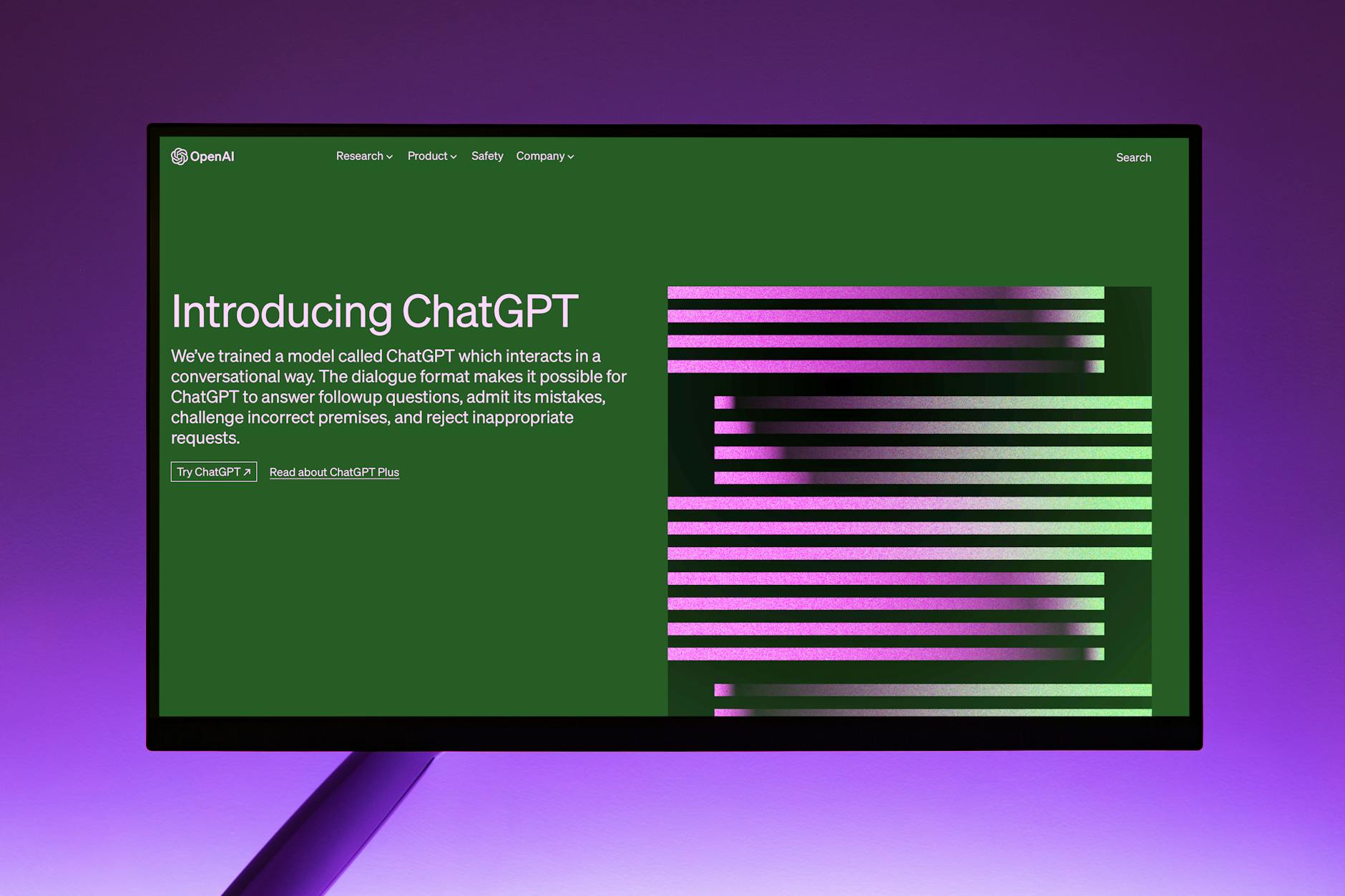
Image by Andrew Neel on Pexels
Start small and scale up
The organisations that see meaningful business impact from AI don’t roll it out everywhere at once; they start small. We’ve worked with organisations that made smart decisions on paper but overlooked their internal culture, infrastructure or data realities. The misconception comes from equating scaling to giving more people access when in reality, it requires structured roll-out and continuous learning.
This begins by mapping what each team actually needs from AI whether that’s automating documentation, answering customer queries, or generating creative content. From here, businesses can identify a small number of high-impact but low-risk workflows to pilot AI with first.
This allows success metrics to be defined early and feedback loops become real-time insight into better practices. As pilots mature, businesses can reinforce the guardrails and co-create usage policies with IT and legal. Once value is proven, adoption expands with momentum and internal credibility.
Getting the right tool for the right job
The real challenge comes from matching the right tool to your organisation’s unique needs, workflows and risk profile. When AI is matched thoughtfully to the needs of the team, it becomes a strategic capability rather than a scattered set of experiments.
If your organisation is beginning to explore how to implement one or more of these tools, IT leaders must outline a practical decision framework, answer key questions and considerations to guide your selection process and ensure measurable, long-term value.