
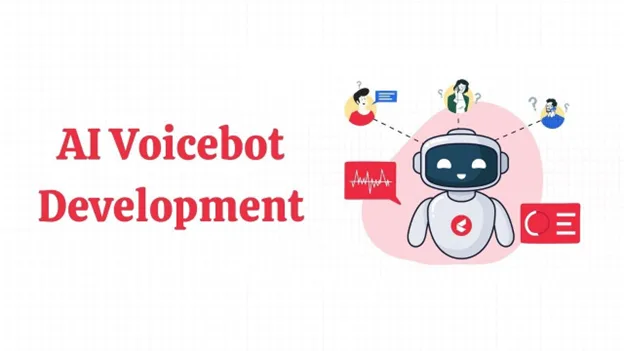
Artificial Intelligence (AI) has transformed how businesses interact with customers, and AI voicebots are at the forefront of this change. These intelligent systems use speech recognition, natural language processing, and machine learning to understand and respond to human speech. From customer service automation to personalised voice interactions, AI voicebots are revolutionising communication across industries. This article explores the key components, benefits, and future of AI voicebot development.
AI voicebots are advanced conversational AI systems that use speech-based interactions to assist users. Unlike traditional chatbots, which rely on text input, voicebots process spoken language, making interactions more natural and engaging. They are widely used in industries like banking, healthcare, and retail for customer support, virtual assistants, and more. With continuous improvements in AI, voicebots are becoming smarter and more human-like in conversations.
What Is an AI Voicebot?
An AI voicebot is an AI-powered virtual assistant that can recognise, understand, and respond to spoken language. These bots use technologies like Automatic Speech Recognition (ASR), Natural Language Processing (NLP), and Text-to-Speech (TTS) engines to facilitate smooth voice-based interactions. They are integrated into various platforms such as mobile apps, websites, and smart devices to provide seamless communication experiences.
Difference Between Chatbots and Voicebots
The following table highlights the key differences between chatbots and voicebots:
| Feature | Chatbot | Voicebot |
| Input Mode | Text-based | Speech-based |
| Processing | Reads and interprets text | Recognises and processes speech |
| User Interaction | Typing responses | Speaking responses |
| Use Cases | Customer support via text | Virtual assistants, call centres |
| Accessibility | Requires reading and typing | Hands-free interaction |
Key Components of an AI Voicebot
1. Automatic Speech Recognition (ASR)
ASR technology enables voicebots to convert spoken words into text, allowing them to understand user commands accurately.
2. Natural Language Processing (NLP)
NLP helps voicebots comprehend the meaning behind spoken words, enabling them to process intent and provide relevant responses.
3. Text-to-Speech (TTS) Engine
The TTS engine converts text responses into natural-sounding speech, making interactions more human-like and engaging.
4. Dialogue Management System
This component structures conversations, ensuring smooth and logical interactions between the user and the voicebot.
5. Machine Learning and AI Training Models
Machine learning helps voicebots improve over time by analysing past interactions and adapting to user behavior and preferences.
Key Features of AI Voicebot Development
1. Multilingual Support
AI voicebots can communicate in multiple languages, enhancing their usability for global audiences.
2. Personalised User Experience
Advanced AI algorithms allow voicebots to tailor responses based on user history and preferences.
3. Contextual Understanding and Memory Retention
AI voicebots can remember past interactions, improving continuity and relevance in conversations.
4. Seamless Omnichannel Integration
They can be integrated into various platforms, such as mobile apps, websites, and messaging services.
5. Real-Time Analytics and Reporting
Voicebots provide insights into user interactions, helping businesses refine their services and customer experiences.
Benefits of AI Voicebots for Businesses
1. Improved Customer Support Efficiency
AI voicebots handle multiple queries simultaneously, reducing response times and improving customer service quality.
2. Reduced Operational Costs
By automating repetitive tasks, businesses save on labor costs while maintaining high service standards.
3. 24/7 Availability for Users
Unlike human agents, AI voicebots operate round the clock, ensuring customers receive assistance anytime.
4. Increased Customer Satisfaction and Engagement
Quick and accurate responses enhance the overall user experience, fostering customer loyalty.
5. Scalability for Handling Large Query Volumes
AI voicebots can efficiently manage increasing customer inquiries without compromising quality.
AI Voicebot Development Process
1. Requirement Analysis and Use Case Definition
Businesses identify their needs and determine how AI voicebots can improve their customer interactions.
2. Voicebot Architecture and Framework Selection
Developers choose the appropriate AI technologies and frameworks based on the project’s requirements.
3. AI Training and NLP Model Development
The AI voicebot is trained with relevant datasets to enhance its understanding of speech and intent.
4. Integration With Existing Systems
Voicebots are integrated into customer support platforms, mobile apps, and other business systems.
5. Testing, Deployment, and Continuous Improvement
The voicebot undergoes rigorous testing before deployment, followed by continuous monitoring and updates.
Challenges in AI Voicebot Development
1. Handling Complex Voice Queries and Accents
AI must be trained to recognise different speech patterns and accents to improve accuracy.
2. Maintaining Data Security and Privacy
Businesses must ensure secure data handling to protect user information from cyber threats.
3. Avoiding Misinterpretation of User Intent
AI models need constant improvements to minimise errors in speech interpretation.
4. Integrating With Legacy Business Systems
Seamless integration with existing IT infrastructure can be challenging and may require customisation.
Industries Leveraging AI Voicebots
1. E-Commerce and Retail
Voicebots assist customers with shopping recommendations and order tracking.
2. Healthcare and Telemedicine
They help in appointment scheduling, patient inquiries, and medical assistance.
3. Banking and Financial Services
Voicebots enable secure transactions, account inquiries, and fraud detection.
4. Travel and Hospitality
AI voice assistants provide booking assistance, itinerary updates, and customer support.
5. Education and E-Learning
Voicebots offer interactive learning experiences and virtual tutoring.
Future Trends in AI Voicebot Development
The future of AI voicebot development is driven by advancements in artificial intelligence, machine learning, and natural language processing. One major trend is the integration of Emotional Intelligence (EQ AI), allowing voicebots to recognise and respond to human emotions, making interactions more natural and engaging. Another key trend is hyper-personalisation, where AI voicebots leverage big data and predictive analytics to deliver customized responses based on user behavior and preferences.
Additionally, IoT integration is expanding, enabling AI voicebots to control smart home devices, automobiles, and industrial systems seamlessly. The rise of multimodal AI—combining text, voice, and visual inputs—will further enhance user experiences. As AI continues to evolve, voicebots will become more intelligent, adaptive, and essential for businesses across industries.
How Moon Technolabs Can Help in AI Voicebot Development?
Moon Technolabs is a leading provider of AI-powered voicebot solutions tailored for various industries. Their expertise in NLP, machine learning, and speech recognition enables businesses to develop advanced conversational AI systems. With custom development, seamless integration, and AI-driven enhancements, Moon Technolabs ensures businesses stay ahead in digital communication.
Conclusion
AI voicebots are reshaping customer interactions by offering intelligent, efficient, and personalized voice communication. Businesses that adopt AI voicebot technology can enhance customer engagement, streamline operations, and improve service delivery. As AI continues to evolve, the future of voicebots promises even greater capabilities and seamless human-like interactions.
FAQs
1. What Is the Difference Between an AI Voicebot and a Chatbot?
AI voicebots use speech recognition, whereas chatbots rely on text-based interactions.
2. How Does an AI Voicebot Improve Customer Service?
It provides quick, accurate, and automated responses, reducing wait times and improving user experience.
3. What Technologies Are Used in AI Voicebot Development?
Key technologies include ASR, NLP, TTS, machine learning, and deep learning algorithms.
4. How Secure Are AI Voicebots in Handling Customer Data?
With proper encryption and compliance measures, AI voicebots ensure secure data handling.
5. How Can Businesses Implement AI Voicebots Effectively?
Businesses should analyse their needs, integrate AI with existing systems, and continuously optimise performance.
Feature Image by Alexandra_Koch from Pixabay