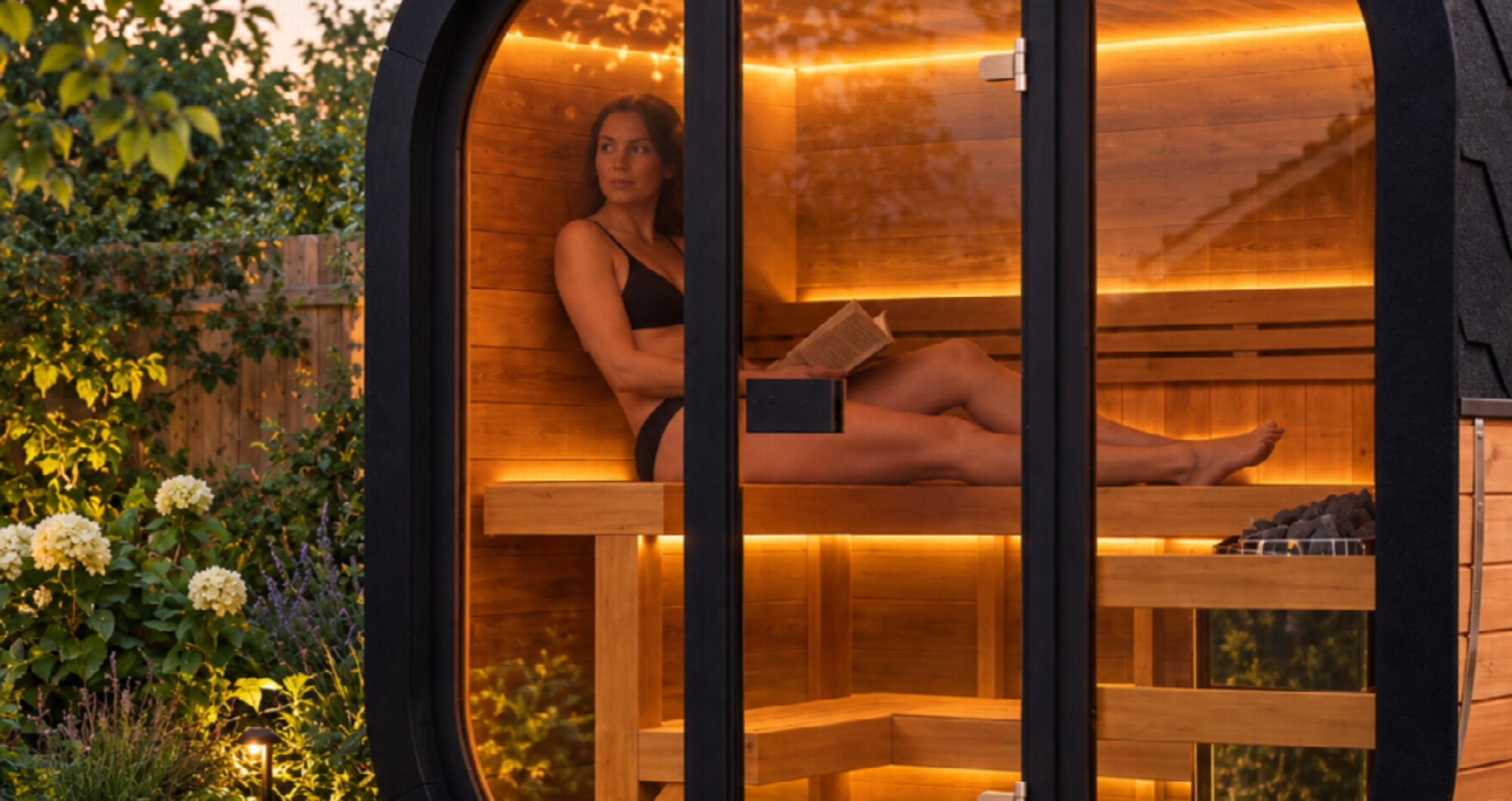

Garden saunas have gone from Scandinavian holiday novelty to a fixture of British back gardens, helped along by London’s booming community sauna scene. But a cabin costing several thousand pounds has to survive rain, soggy lawns and long grey winters, all year, every year. Before you commit, it pays to know what the British climate really does to a garden sauna, what one costs to run, and who actually gets their money’s worth.
What Regular Sauna Use Actually Gives You
The strongest case for owning a sauna rests on one thing: frequency. The most widely cited long-term study, a Finnish cohort published in JAMA Internal Medicine, followed 2,315 middle-aged men for a median of around 20 years. Men who used a sauna four to seven times a week had roughly 40% lower all-cause mortality than those who went once a week and less than half the risk of sudden cardiac death.
That study is observational, so it shows an association rather than proof that the heat did the work. Healthier people who are less stressed may simply sauna more often. Still, it points to the factor that matters most for anyone weighing up a purchase. The benefits regular users report, from deeper sleep to looser muscles after training, come from frequent sessions, not the occasional spa day.
That’s where a garden sauna changes the maths. A 20-minute session is easy to fit in when the cabin sits a few steps from your back door, and much harder to justify when it means a bus ride and a booking slot. If you know you’d go three or four times a week, owning one starts to look sensible. If you’d use it a couple of times a month, a pay-per-session venue will almost always work out cheaper.
What Rain, Damp and Grey Winters Do to a Garden Sauna
Britain isn’t especially cold by Nordic standards, and that’s the misunderstanding that catches buyers out. A decent heater will push a cabin to 80°C on a January evening in Croydon just as it would in Lapland, even if it takes a little longer to get there. The real enemy here is moisture. Rain falls year-round rather than in one defined season, ground stays wet for weeks at a time, and timber that never fully dries out eventually rots.
Damp attacks a garden sauna in three places. Water pools around the base and soaks up into the bottom boards. Warm, steamy air from each session meets cooler timber and condenses inside the walls. Wind-driven rain finds any weak spot in the roof covering and door seals.
These are the same problems that hit British homes every winter, and the fix is the same discipline: inspect the base after the colder months, look for dark staining on the lower boards, and clear leaves and debris from the roof before the wet weather sets in.
Material choice matters as much as maintenance. Untreated spruce, the cheapest sauna timber, readily absorbs moisture, which is why budget kits tend to grey, swell and split in a wet British garden. Manufacturers designing for year-round outdoor use in northern Europe, Polar Recovery among them, use thermally treated Finnish wood in solid 45mm walls for precisely this reason. Thermally modified timber is heat-treated to drive out much of its moisture, leaving it more stable and slower to absorb water.
Whatever the timber, three habits are more important than anything else for extending a garden sauna’s lifespan in the UK:
- Raise it off the ground on a level concrete pad, paving slabs or a framed base so air can move underneath and water drains away
- Treat the wood inside and out with a breathable, sauna-safe oil, never standard exterior paint, which traps moisture in the boards
- Leave the door or vent open for a while after each session so the residual heat drives moisture out of the timber
There’s an upside the brochures rarely mention, too. The British climate makes a sauna more enjoyable, not less. Drizzly evenings between October and March are exactly when stepping into dry 80°C heat feels best, and the cold-plunge part of the ritual costs nothing when it’s 6°C outside.
What a Garden Sauna Costs to Buy, Install and Run
The purchase price is the number everyone fixates on, but the full bill has several parts. As a rough guide for a two-to-five-person electric cabin:
| Cost | Typical range |
| Sauna cabin (flat-pack or kit) | £3,000-£8,000 |
| Bespoke or premium build | £10,000 and up |
| Professional assembly | £1,000-£2,000 |
| Base (slabs or concrete pad) | £300-£1,000 |
| Electrical connection | £500-£1,500, depending on distance from the house |
Running costs are more modest than many people expect. The average electricity unit rate under the energy price cap rose to about 26.3p per kWh in October 2026, according to House of Commons Library research on UK energy prices. A typical 6kW heater runs flat out while it warms the cabin, then cycles on and off to hold temperature, so a full session usually uses somewhere between 4 and 7kWh. That works out at roughly £1.05 to £1.85 a session, or about £160 to £290 a year at three sessions a week. Expect the warm-up to take longer and cost a little more on a raw winter night.
Set that against the alternative. London’s community saunas commonly charge somewhere around £10 to £17 a session, so a couple going twice a week each could easily spend well over £2,000 a year. On those numbers, a garden sauna costing £7,000 to £9,000 all-in pays for itself in roughly three to four years, and every session after that costs pennies. A single user going once a week would take far longer to break even.
Electric, Wood-Fired or Infrared?
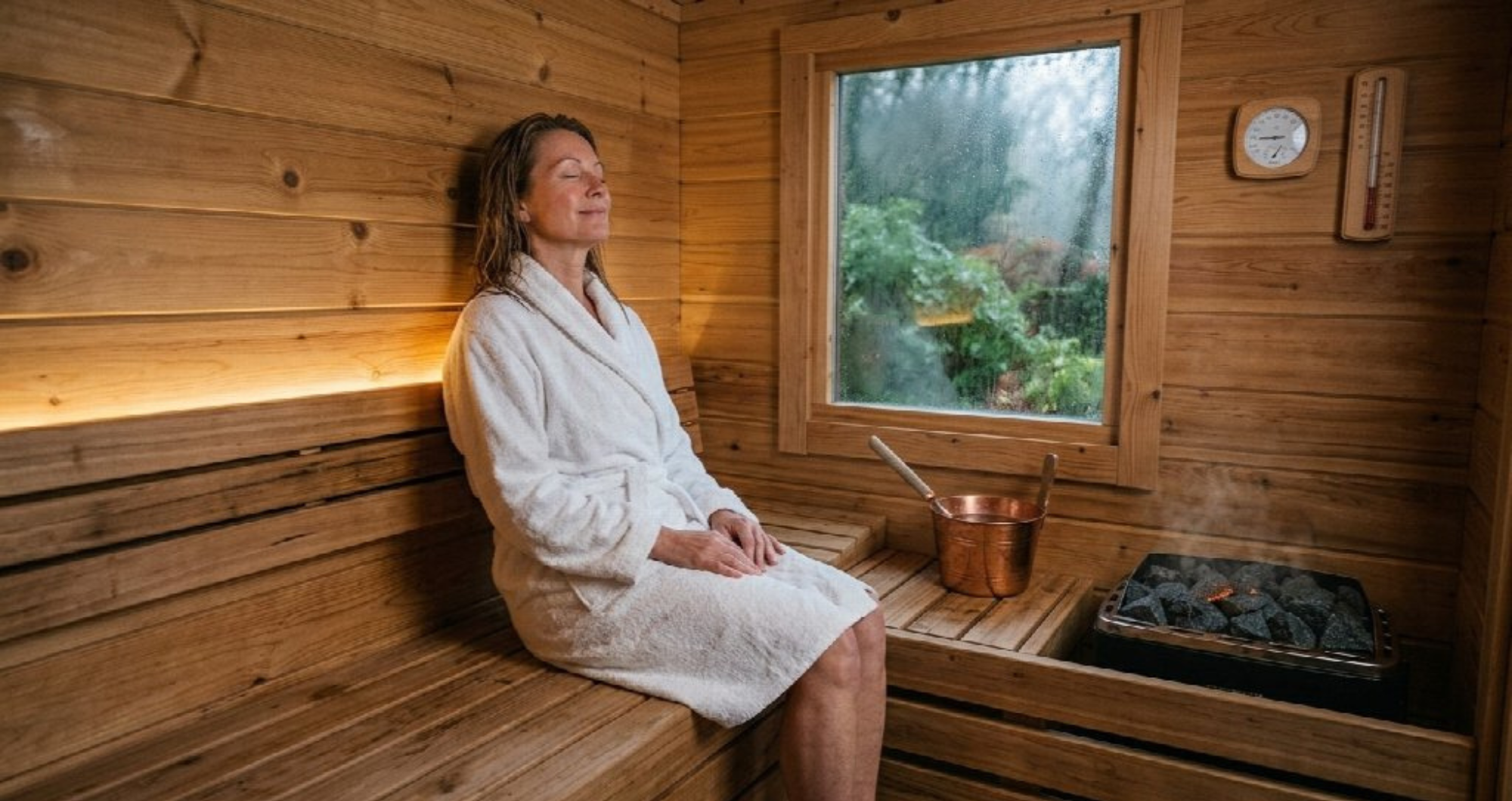
The heating type affects running costs, siting, and how well the setup copes with British conditions.
| Type | Typical temperature | Cost per session | Best for | Watch out for |
| Traditional electric | 70-90°C, with steam | Around £1-£2 | Most households | Needs a dedicated circuit from the house |
| Wood-fired | 70-100°C, with steam | Cost of firewood | Large gardens, no mains power nearby | Smoke near neighbours and local smoke control rules |
| Infrared | 45-60°C, dry | Around 40p-65p | Quick, lower-cost sessions | Many cabins are designed for indoor use and need a sheltered spot |
Traditional electric is the default choice in the UK for good reason: it delivers the classic sauna experience, heats predictably in cold weather, and needs nothing more than a button press. Wood-fired stoves suit those with space at the bottom of a long garden, but much of London sits within smoke control areas, so check the rules with your council before buying one. Infrared cabins are cheaper to run, but the gentler heat isn’t a like-for-like substitute, and many models need a weatherproof shelter or garden room to survive outdoors.
Whichever heater you choose, the cabin around it needs the same yearly attention. Folding it into a seasonal maintenance checklist for London properties means the sauna gets checked for damp in spring and readied for wet weather in autumn, alongside the gutters and the house itself.
Planning Permission, Electrics and Other Practicalities
Most garden saunas in England don’t need planning permission. Under Class E of the national permitted development rules, buildings put up for purposes incidental to enjoying your home, a category that covers sheds, summerhouses and sauna cabins alike, can go up without an application, provided they meet a few conditions:
- They must not extend beyond the front wall of the house
- They must be single-storey, with a maximum eaves height of 2.5 metres and an overall height of 4 metres with a dual-pitched roof, or 3 metres otherwise
- Anything within 2 metres of a boundary is limited to 2.5 metres in total height
- Outbuildings and extensions together can’t cover more than half the land around the original house
The exceptions matter. Listed buildings need permission for any outbuilding. Conservation areas and other designated land carry extra limits. Flats and maisonettes do not have these permitted development rights at all. Wales follows a slightly different policy, and Scotland has its own system. Small detached outbuildings under 15 square metres with no sleeping accommodation generally fall outside building regulations as well.
Electrics are the area where you should not take shortcuts. A 6kW heater typically needs its own dedicated 32-amp circuit, wired by a registered electrician to the BS 7671 wiring standard. A new outdoor circuit counts as notifiable work under Part P in England, so make sure your electrician certifies it. Get a quote before you order the sauna, since a long cable run to the bottom of the garden can add noticeably to the total.
Think about the neighbours, too. Siting the cabin away from shared fences reduces steam, light and noise from late-evening sessions, and with wood-fired models, smoke drifting over the fence is the most common source of complaints.
Who a Garden Sauna Suits, and Who Should Skip It
A garden sauna makes the most sense for households that will use it often and stay put for years. Couples or families sharing one cabin bring the cost per session down quickly. It also suits people who train regularly and want heat for recovery: plenty of Londoners are already staying in shape without a gym, and a sauna at the end of the garden fits that same home-based routine.
It’s harder to justify for renters, anyone in a flat, people with tiny gardens where the 2-metre boundary rule forces an awkward position, and anyone who honestly expects to use it once or twice a month. In those cases, a community sauna or spa membership delivers the same experience without the upkeep.
Don’t buy one as a property investment, either. There’s no reliable UK data to show that a garden sauna increases sale prices. A well-built cabin will appeal to some buyers and leave others cold, so treat it as a lifestyle purchase that pays you back through use, not at resale.
Frequently Asked Questions
Can you use a garden sauna in winter in the UK?
Yes, and winter is when many owners use theirs regularly. A properly built electric or wood-fired sauna reaches full temperature in British winter conditions, though warm-up times are longer on cold, windy nights. The key is keeping the cabin dry between sessions rather than worrying about the cold.
How long does a garden sauna last in British weather?
A well-built cabin on a raised, well-drained base, treated regularly with a breathable oil, can last well over a decade. Cheap untreated spruce kits sitting directly on damp ground can show rot within a few winters. Base, timber choice and ventilation after use make the most significant difference.
Do garden saunas need planning permission?
Usually not in England. Sauna cabins fall under the same permitted development rules as sheds and summerhouses, so most are fine if they sit behind the house, stay within height limits and don’t cover more than half the garden. Listed buildings, conservation areas and flats are the main exceptions.
How much does it cost to run a garden sauna in the UK?
A traditional 6kW electric sauna typically costs around £1 to £2 per session at current price cap rates. Using it three times a week works out at roughly £160 to £290 a year. Infrared models cost less per session, and wood-fired saunas cost whatever your firewood does.
Is thermowood better than spruce for an outdoor sauna?
For a British garden, generally yes. Thermally modified timber has much of its moisture driven out during treatment, so it’s more stable and slower to absorb water than untreated spruce. That makes it less likely to swell, warp or rot in a damp climate.
Does a garden sauna need its own electrical circuit?
Most electric saunas do. A 6kW heater usually needs a dedicated 32-amp supply, installed by a registered electrician and certified under Part P in England. Budget for these expenses before buying, especially if the sauna will sit far from the house.
How often should you use a sauna to see benefits?
Research suggests more often is better. The largest long-term study linked four to seven sessions a week with the strongest associations with heart health and lower mortality, compared with once a week. Anyone with a heart condition, low blood pressure or who is pregnant should check with their GP first.
Is an infrared sauna suitable for outdoor use in the UK?
Only if it’s built for outdoor use or properly sheltered. Many infrared cabins are designed for indoor rooms and need protection from rain and damp ground when placed outside. Outdoor-rated infrared models exist, but check the specification and warranty terms carefully.
Does a garden sauna add value to a house?
There’s no reliable UK evidence that it does. A quality cabin may appeal to wellness-minded buyers, but others may see it as something to remove. It’s best treated as a lifestyle purchase rather than an investment.
Is a garden sauna cheaper than a sauna membership?
It can be, if you use it often. A couple going twice a week each to a London community sauna could spend over £2,000 a year, so a mid-range garden sauna can pay for itself in three to four years. For occasional users, paying per session stays cheaper.
What base does a garden sauna need?
A firm, level surface that keeps the timber off wet ground. Concrete pads, paving slabs and properly framed bases all work, as long as water drains away rather than pooling around the cabin. Avoid sloping ground and spots where puddles form after heavy rain.
The Verdict for British Gardens
The British climate isn’t the obstacle many buyers fear. Cold winters suit saunas perfectly; it’s damp that shortens their life, and that’s a solvable problem with the right timber, a raised base and good habits after each session. A garden sauna is worth it if you’ll use it several times a week, can site and wire it properly, and plan to stay in your home long enough to enjoy the payback. If that doesn’t sound like you, London’s community saunas will meet your needs for far less.