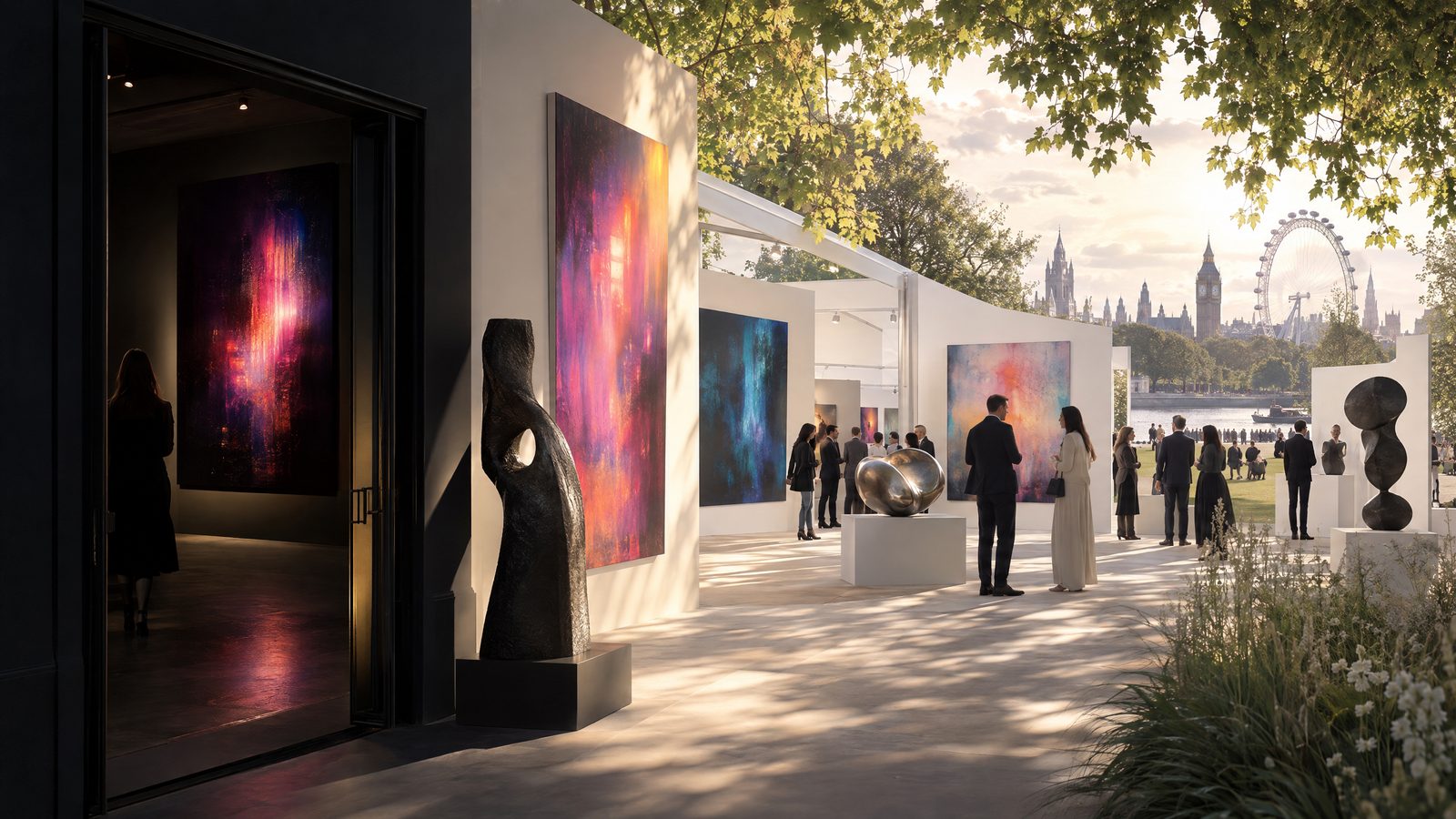

Artists once represented by a London gallery that closed abruptly have returned to Frieze London with new dealers, new work and, in some cases, immediate sales. The fair has become an early test of how artists are rebuilding professional relationships after the collapse of Stephen Friedman Gallery.
New pairings arrive at the fair
Denzil Forrester’s large paintings of nightclub scenes flank the entrance to Thaddaeus Ropac’s stand. The gallery introduced the artist as a new signing, and two paintings sold within the fair’s first hour for £175,000 each. Both went to collectors encountering his work for the first time, according to the gallery’s account of the sales.
At Victoria Miro’s booth, two still-lifes by Clare Woods marked another new relationship. Her works sold in the first hours of the fair. Woods’s first solo exhibition with the gallery is planned for February 2027, extending the partnership beyond the brief encounter of a fair stand. The gallery’s own fair presentation confirms that new paintings by Woods were included.
Other former Friedman artists are making comparable transitions. Josh Lilley’s presentation includes four sculptures by Holly Hendry, whose representation by the gallery was announced at the start of the week. Sarah Ball, represented by Pilar Corrias since September, is showing new paintings in that gallery’s viewing room. These are not simply familiar works circulating under new labels: the fair offers a first public opportunity to see several artists’ work within their new gallery relationships.
A changed landscape after the closure
Stephen Friedman Gallery closed in February after entering administration. Before its collapse, it represented 39 artists and estates. The closure left artists to decide whether to seek new representation, continue with other existing galleries or work without a UK gallery partner. The creditor total reported at the time was £7.8 million, including more than £800,000 owed to artists; those figures describe the gallery’s reported liabilities, not a measure of artists’ individual losses or any recovery.
Forrester’s move to Ropac illustrates how a transition can be both commercial and personal. He has said the former gallery did a great deal for him, while describing himself as being in the right place now. The new representation also gives his paintings a high-profile London debut with the dealer and a planned exhibition next June. The two fair sales are a striking start, but do not by themselves establish a broader market trend or guarantee future prices.
Woods described her experience of the closure as difficult, while welcoming the start of a new chapter with Victoria Miro. The gallery’s president said the relationship followed several years of attention to her work. Her pictures had already been shown in London and New York, and her new affiliation builds on that established practice rather than introducing an unknown artist to collectors.
Not every artist is changing galleries
The post-closure picture is not a single wave of signings. Caroline Walker’s paintings appear at the fair through Grimm Gallery and Ingleby Gallery, partners with whom she had already shown for years. Other artists, including Andreas Eriksson and Claire Barclay, appear to have no UK representation at present. Some former roster members have declined to discuss gallery relationships, wary that the business story could eclipse their work.
That range matters because commercial representation is not interchangeable with an artist’s practice or career. A gallery can provide exhibition space, sales, advice and access to collectors, but the end of one relationship does not automatically mean that an artist has lost every professional connection. Existing galleries, new dealers and institutional exhibitions can all form part of what follows.
Frieze London, held in Regent’s Park from 14 to 18 October, brings those different paths into view at one moment. For artists newly paired with dealers, a strong stand and early sales offer visibility; for others, continued relationships or independent work may be the more relevant measure. The fair documents a transition under way, rather than proving that the disruption has been resolved.