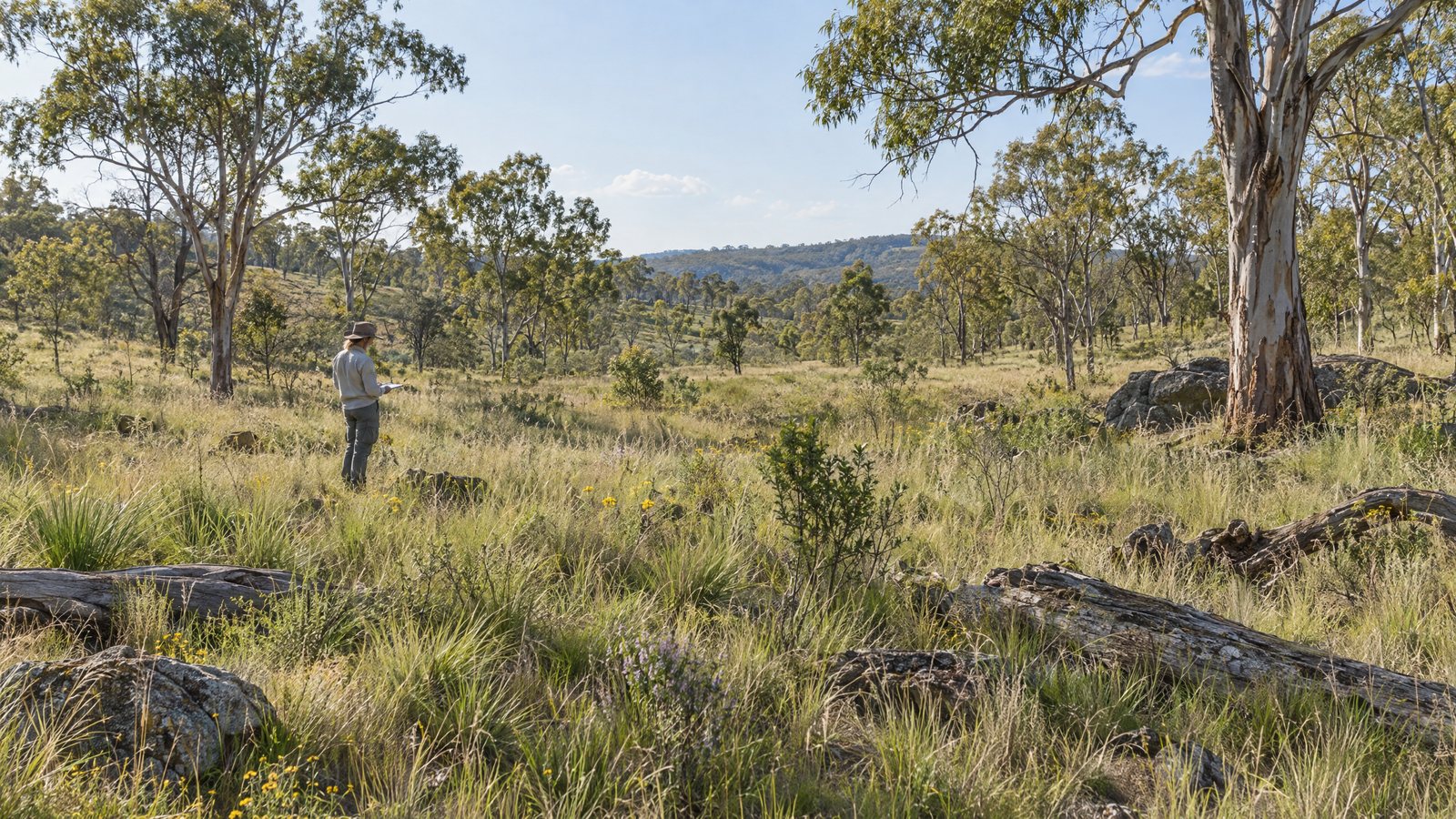

Australia has opened a second route for registering land-based biodiversity projects, with its Enhancing Native Vegetation method taking effect on 30 October 2026. The method expands the work eligible for consideration under the Nature Repair Market, covering both existing native vegetation and revegetation in areas where remnant vegetation is absent.
The route applies in eligible regions of eastern, southern and south-western Australia. It allows proponents to seek registration for projects that enhance or maintain remnant native vegetation, as well as projects that establish native vegetation on land without those remnants. Eligibility remains dependent on the requirements of the method and the circumstances of each project.
The distinction between maintaining existing vegetation and revegetating cleared areas gives the method a broader scope than planting alone. Activities can include weed and pest control, grazing control, environmental planting and facilitated regeneration. These are eligible forms of work, rather than a guarantee that any particular activity or site will qualify.
How projects are assessed
The method uses biodiversity characteristics to assess projects, including ecosystem condition and commitment to protection. Characteristics relating to threatened species and culturally significant entities may also apply. Assessment therefore extends beyond whether native vegetation is present, taking account of the characteristics relevant to the proposed project.
Baseline assessments form part of the process, alongside requirements for qualified people to undertake relevant work. These requirements provide an assessment framework for projects seeking registration. A proposal to manage weeds, change grazing or plant native vegetation does not, by itself, establish that the project meets all the rules.
Registration is also not the end of the regulatory process. Projects are subject to ongoing reporting and audit requirements. Those obligations distinguish entry into the market from the subsequent work of carrying out, assessing and accounting for a project. Registration should not be read as proof that future habitat improvements have already occurred.
Certificates and offsets are separate questions
Projects under the method can be voluntary. There is also a route for offset-capable projects, but these must satisfy additional rules. The distinction matters because participation in the biodiversity market does not automatically make a project suitable for meeting an environmental offset liability.
A biodiversity certificate from an offset-capable project may be considered against relevant offset liabilities. That is a conditional possibility, not automatic acceptance. Whether an individual project can qualify, and whether its certificate can be considered for a particular liability, remain case-specific questions under the applicable requirements.
The new method therefore creates a registration pathway without establishing a blanket equivalence between vegetation work and offsets. Nor does its commencement demonstrate that a registered project will deliver a particular ecological result. The regulatory status of a project, its assessed biodiversity characteristics and any offset use need to be kept distinct.
A second method, not a completed outcome
Four projects were registered under the first Nature Repair Market method, covering 2,656 hectares. Those figures describe registrations and the area they cover; they do not establish completed biodiversity gains across that land. The second method adds another approved route through which eligible proponents can seek to participate.
Eligible biodiversity projects may also be combined with carbon-credit activities. This offers a potential connection between the two types of project, but does not mean every native-vegetation proposal qualifies for both. The possibility of combining activities remains subject to eligibility and the requirements governing the projects concerned.
The practical change is the availability of a new approved method for defined vegetation work. Its operation depends on the sequence of eligibility checks, baseline assessment, registration and continuing oversight. For individual sites, the key questions remain what work qualifies, how biodiversity is assessed and whether any certificate meets the conditions for its intended use.