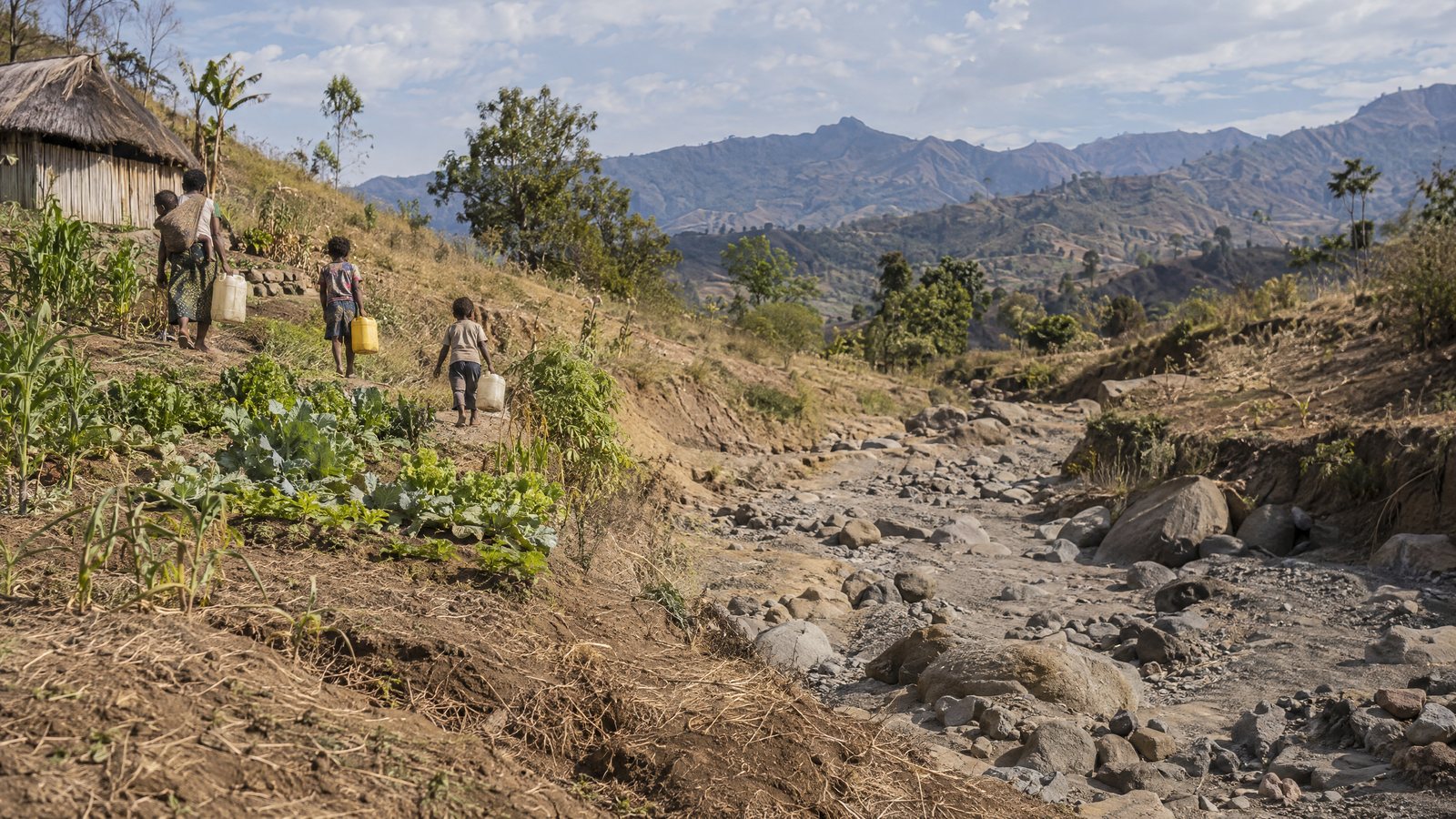

Papua New Guinea’s prime minister has said provincial and district authorities should prepare for a prolonged dry season as El Niño-driven drought affects food supplies, water access and essential services. Cabinet is also considering changes to financial instructions intended to help disaster responses.
Weather officials estimate that as many as 8 million people are affected. That figure should be treated as an estimate, rather than a confirmed count, and does not establish that everyone included is experiencing the same level of hardship.
The effects described include food and water scarcity, damaged gardens, reduced hydropower output and disruption at schools and health facilities. Morobe, Enga and Port Moresby are among the places where impacts have been described, although the available information does not provide a uniform measure of conditions across those locations.
Preparing beyond the immediate shortages
The prime minister’s direction puts provincial and district preparedness at the centre of planning for a dry season that could persist. It is a call to prepare for prolonged conditions, not confirmation of how long the drought will last or how severe it will become.
The combination of pressures makes the response broader than the provision of food alone. Damaged gardens concern food availability, while water scarcity presents a separate challenge. Reduced hydropower adds pressure on electricity supplies alongside the disruption already described at schools and health facilities.
These are distinct but overlapping concerns for national coordination and local preparedness. Planning for the dry season must account for both household needs and the services on which communities depend. The available details do not establish the extent of disruption at each facility or the number of people unable to use particular services.
Health-service disruption is especially sensitive in assessing the drought’s effects. The information available describes interruptions, but does not establish their duration, identify a nationwide level of service loss or support conclusions about associated deaths or illness.
Similarly, accounts of food and water shortages indicate serious pressures without providing an independently verified picture of every affected community. The weather officials’ population estimate gives a sense of the potential scale, but is not a substitute for detailed assessments of local needs.
Financing remains under consideration
Cabinet is considering changes to financial instructions to assist disaster responses. The proposal concerns the arrangements for responding to disasters; it should not be understood as a completed change or as confirmation that additional money has already reached provincial and district authorities.
The preparedness direction and the financing discussions address different parts of the response. One concerns what subnational authorities should prepare for; the other concerns government financial arrangements. Neither, on the supplied details, establishes a formal national emergency declaration.
Australia is providing food, other supplies and logistical support for Papua New Guinea’s drought response. Separately, AUD26 million from existing programmes has been directed towards broader El Niño impacts.
That funding figure is not identified as a new allocation exclusively for Papua New Guinea. It should therefore be kept distinct from the food, supplies and logistical assistance described for the country, rather than presented as a dedicated drought package of that value.
The immediate picture is of several pressures developing together: scarce food and water, damaged gardens, reduced electricity generation and interrupted services. The government’s stated emphasis is now on preparing provincial and district authorities for a prolonged dry season while examining financing arrangements.
The scale and unevenness of those pressures remain important uncertainties. The estimate from weather officials points to potentially widespread effects, while the available accounts underline the need to distinguish national planning from the conditions experienced in individual communities.