
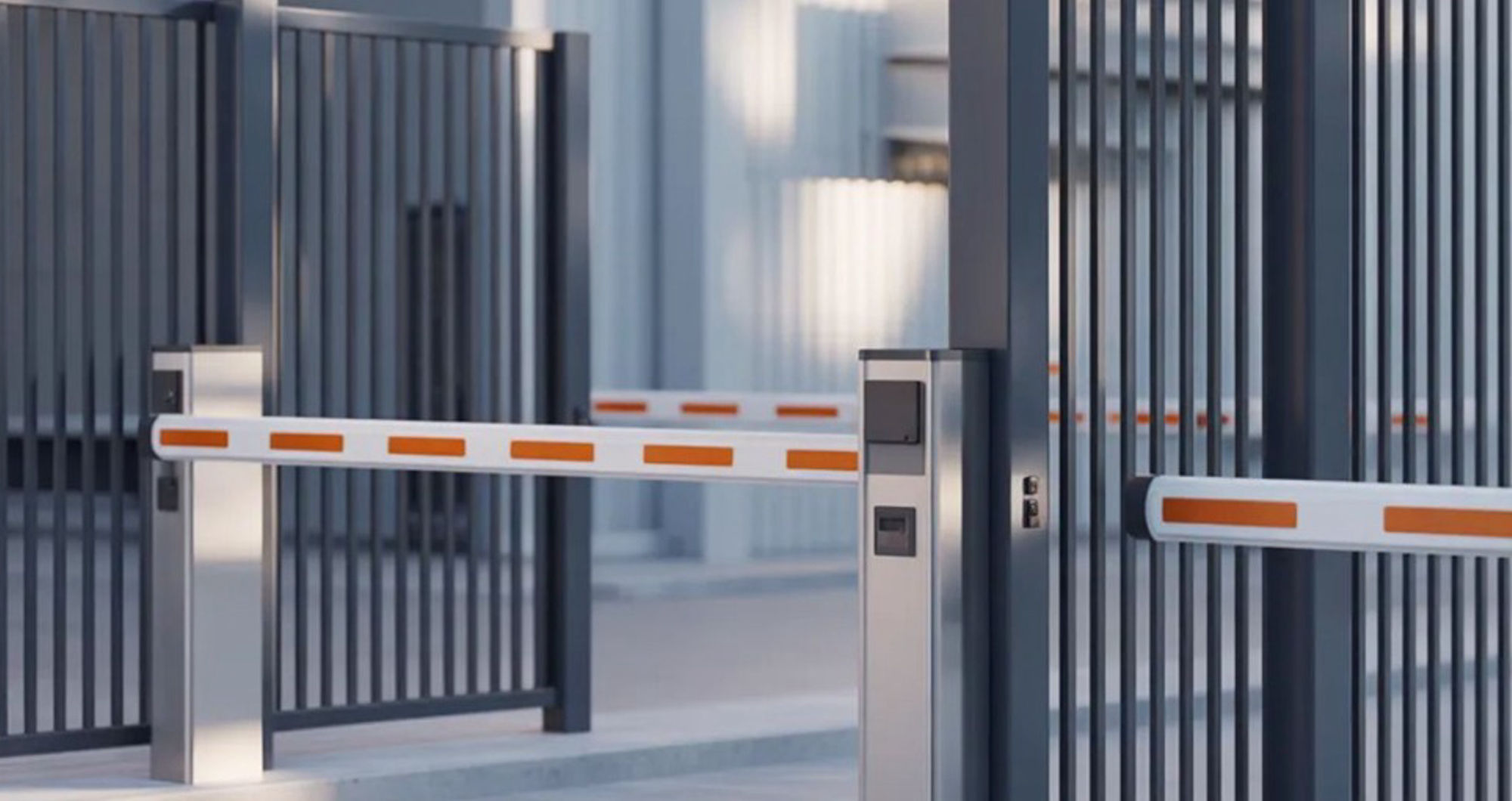

A barrier gate is a basic access control device used to regulate the entry and exit of vehicles and pedestrians, enhancing security and traffic control in car parks, commercial buildings, industrial estates, and residential areas. The new generation barrier gates may be linked to automatic control or used manually, and offer versatile performance to suit most situations.
Barrier gates can be used to secure a car park, provide easy entry to a site for workers, and maintain a guarded perimeter, among other benefits, improving safety and efficiency. As access control technologies developed, barrier gates became an important element of any efficient security infrastructure.
This guide will break down the numerous variations of barrier gates, their mechanisms, and provide easy-to-understand advice on solutions for specific sites.
What is a Barrier Gate?
A barrier gate is a physical structure, typically consisting of a horizontal arm mounted on a vertical post, that flips up or down to allow or block access to vehicles or pedestrians. These systems are used to control entrances where traffic regulation is required, such as car parks, gated communities, business premises, and industrial zones. They are designed to combine simplicity, reliability, and durability.
Key Components of a Barrier Gate
Barrier gate systems are different, yet the majority of them consist of:
- Gate Arm: This is the horizontal beam that lifts up or down to either limit or grant access.
- Control Unit: An electrical or manual unit that controls the arm.
- Safety Sensors: It detects vehicles to ensure the arm does not fall on moving traffic.
- Access Controls: Can be keypads, card readers, remote controls, or automatic sensors.
- Installation of Posts: Attach the barrier firmly to the ground.
Types of Barrier Gates
There are barrier gates which may be classified as follows according to operation and usage:
Manual Barrier Gates
They are hand-operated and suitable for low-traffic or inaccessible areas. They are very simple, hence low maintenance and low costs.
Automatic Barrier Gates
To operate automatically, powered barrier systems are driven by electricity or hydraulics. They are usually combined with remote controls, sensors, or ticketing machines to achieve efficient flow.
Pedestrian Barrier Gates
Foot traffic management is designed to be managed using turnstiles or smaller gates, permitting controlled pedestrian access.
Barrier Gates mounted on Vehicles
Strong systems designed mainly for vehicle traffic may include access control systems such as intercoms, RFID readers, or vehicle counters.
Common Uses of Barrier Gates
Barrier gates have numerous applications in multiple settings:
- Parks: Effective exit and entry control.
- Commercial Sites: Staff and visitor-controlled access.
- Industrial Complexes: Controls the flow of heavy vehicles.
- Residential Communities: Increases security and privacy.
- Public Venues: Controls the inflow of crowds at events.
Wider security infrastructure, such as fencing, automated gates, and perimeter protection, also consists of barrier gates.
Benefits of Installing a Barrier Gate
Having a quality barrier gate has many merits:
Enhanced Security
Barrier gates allow only authorised vehicles or people in, and only when someone is authorised to access the premises.
Traffic Management
They assist in controlling traffic in busy areas, reducing congestion, and enhancing safety.
Remotely Controlled and Monitored
Access control systems can be used with automatic barrier gates so as to operate remotely.
Durability
Quality barrier gates are designed to withstand day-to-day operations and exposure to the weather.
Customisation
Both arm lengths and colours are available, as is integration with CCTV or intercom systems.
Choosing the Right Barrier Gate System
When choosing the most appropriate barrier gate, it is necessary to take into account:
- Traffic Volume: Auto systems are suitable for high-traffic sites, whereas manual systems are suitable for low-traffic areas.
- Site Layout: Provide adequate space for installation and movement.
- Security Requirement: Determine whether integrated access control is required.
- Balance: Advantages compared to the long-term benefits.
- Compliance: Barrier solutions must be used in line with safety standards and building regulations.
Installation and Maintenance Hints
Installation and maintenance. Reliability and longevity require proper installation and maintenance:
Site Preparation
Design a flat, level base for mounting the barrier in a place with good visibility.
Professional Fitting
The use of automatic systems may require professional installation, particularly when they are combined with sensors or panels.
Routine Checks
Regular inspection of moving parts and cleaning of sensors will help avoid malfunction.
Seasonal Care
Make sure the components are shielded from the UK climate, including moisture and temperature changes.
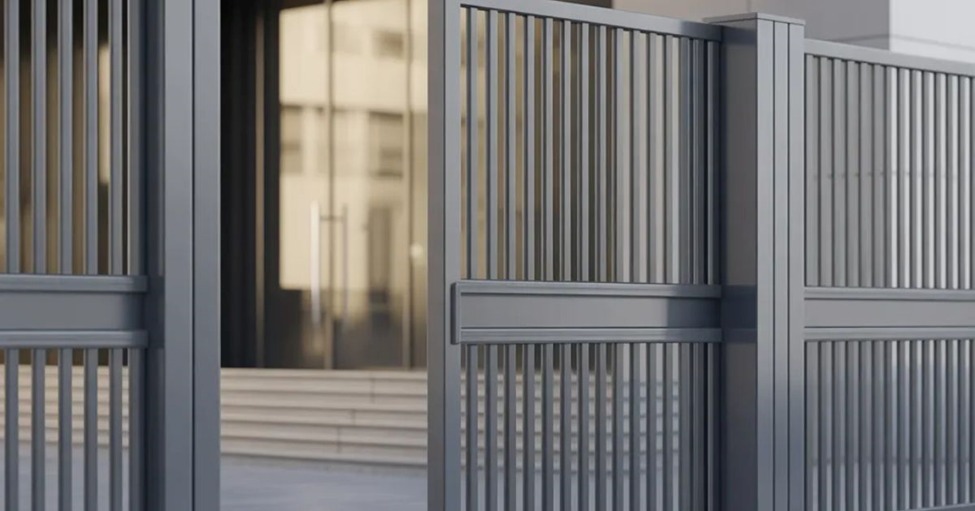
Barrier Gate vs Swing Gate: What’s the Difference
The two systems have access control, but they have different purposes:
- Best in Vehicle entry regulation, quick operation, and traffic control: Barrier Gate.
- Swing Gate: This is usually larger, more structural, and appropriate for formal entrances or perimeter boundaries.
Barrier gates can be used, especially where the main objective is to regulate vehicle passage rather than to establish a physical boundary.
Integrating Barrier Gates with Other Security Solutions
Barrier gates are compatible with a larger access control ecosystem:
- CCTV Cameras: To monitor the points of entry and exit.
- Intercom Systems: To check the visitors.
- RFID or Card Readers: To automate access by an authorised person.
- Alarm Systems: Sound alerts to unauthorised attempts.
Barrier Gates Frequently Asked Questions.
What are the types of barrier gates applicable to all sites?
Yes, barrier gates can be customised for commercial, industrial, or home applications, with the relevant specifications.
How much time does it take to install?
Manual systems can be completed in a few hours, and automated systems can vary depending on the site’s equipment and complexity.
Are the barrier gates durable enough to withstand extreme weather conditions?
The quality gates are made of tough materials that withstand weather conditions such as rain and temperature changes.
Conclusion: Final Thoughts on Barrier Gates
Barrier gates are important in contemporary access control systems, which have struck a balance among security, efficiency, and convenience. Bearing in mind that you are either dealing with a car park or a site entrance, selecting an appropriate barrier gate is a critical decision that affects daily operations and overall safety. The variety of manual and automatic models available on the market today, including those from First Fence Ltd, has given us the best opportunity to improve your access control infrastructure.
To perform optimally, always consider your needs in relation to your site’s requirements and invest in a system that addresses your operational and security needs.







