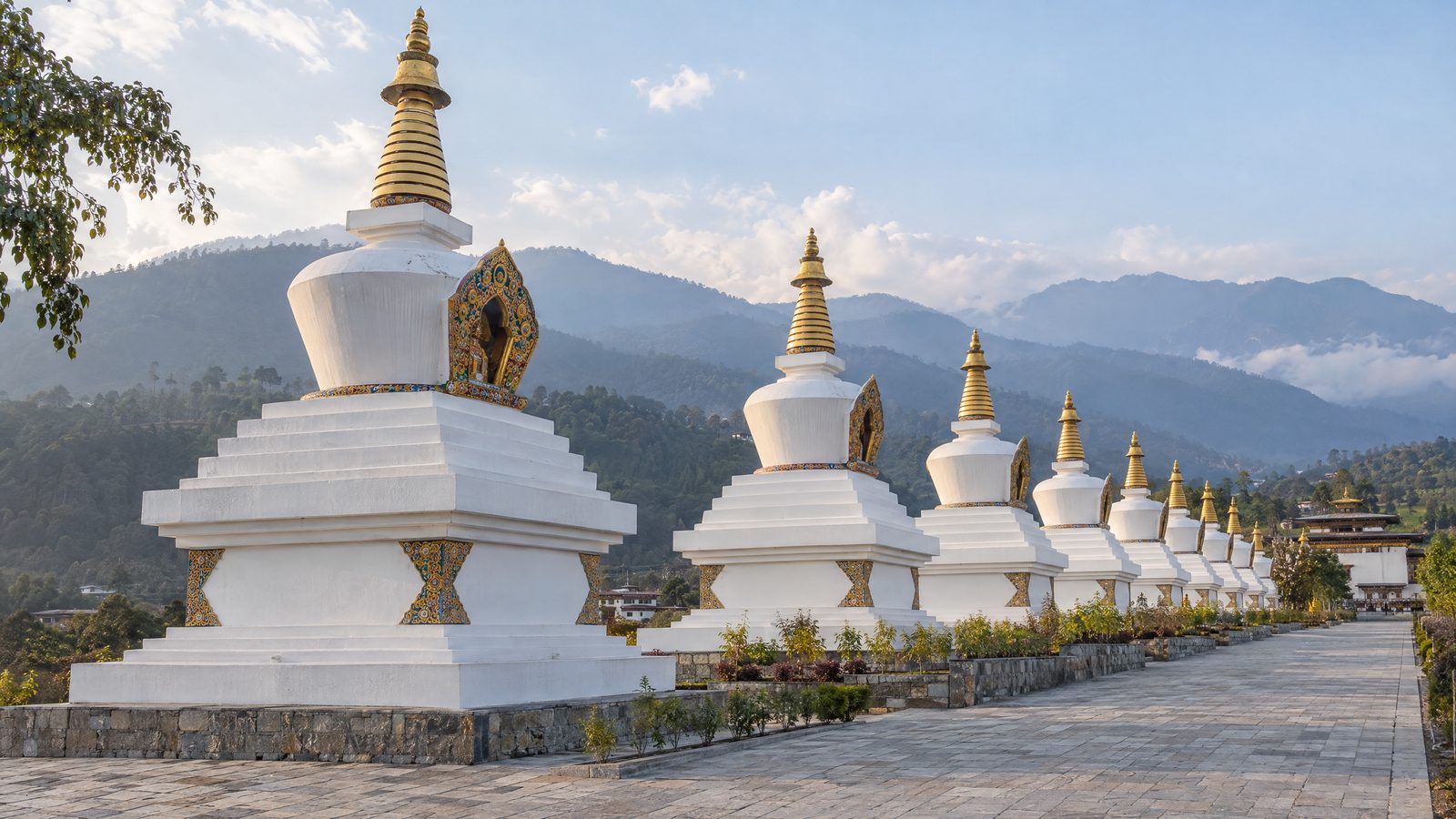

Bhutan completed the raising of 108 stupas in a single day at Gelephu Mindfulness City on Sunday, 1 November. The cultural construction event, known as Project 108, anchors a planned, royal-backed economic-development project in Gelephu, in Sarpang District near the Indian border.
The completion of all 108 structures is the central outcome of the event. Its one-day duration distinguishes the undertaking from the wider city project: the stupa raising has been completed, while Gelephu Mindfulness City remains a planned development. The two are connected, but their stages of progress should not be confused.
Project 108 brings a cultural construction milestone into the setting of Bhutan’s flagship economic-city initiative. The event’s name corresponds to the number of structures raised. The confirmed scale of the completed work is therefore specific: 108 stupas, with the raising carried out within one day.
The location places the event in southern Bhutan’s Gelephu area, close to the border with India. Sarpang District is the setting for both the completed cultural undertaking and the planned city. The city’s royal backing and economic-development purpose form the wider context for the work, rather than a separate outcome of Sunday’s event.
Participation figures require a different degree of certainty from the construction total. Attendance and volunteer numbers are estimates, not independently audited counts. They should therefore be understood as indications of participation rather than verified totals. No precise attendance or volunteer figure is established here.
That distinction matters when describing the scale of Project 108. The number of completed structures and the time taken to raise them provide a clear account of what was achieved. Estimates of the people attending or volunteering do not carry the same status and should not be presented as equally firm measures.
The event can consequently be described as a completed one-day cultural construction undertaking without attaching a definitive crowd size to it. Its connection with Gelephu Mindfulness City is also clear, but completion of the stupas does not establish completion of the city. The broader economic-development project remains planned.
For readers following the development, the immediate milestone is a tangible one: the raising of the structures associated with Project 108 is finished. The account does not establish a wider construction timetable, a date for completion of the city, or additional stages of the economic project. Those are separate questions from the work completed on Sunday.
The cultural event and the economic-city plan thus sit alongside one another in the same location, with different descriptions of their status. Project 108 refers to an undertaking that has reached completion. Gelephu Mindfulness City refers to the planned royal-backed development that it anchors near Bhutan’s border with India.
Keeping those distinctions in view gives a measured picture of the occasion. The construction achievement is defined by a fixed number of structures and a single day of work. The participation picture remains estimated, while the city’s wider purpose is economic development. None of those details needs to be treated as proof of progress beyond the milestone itself.
The completed stupa raising marks a cultural step associated with the planned city. The firm conclusion is narrow but significant to the event: all 108 structures were raised in one day. Attendance and volunteer totals remain estimates, and the status of Gelephu Mindfulness City remains that of a planned development.