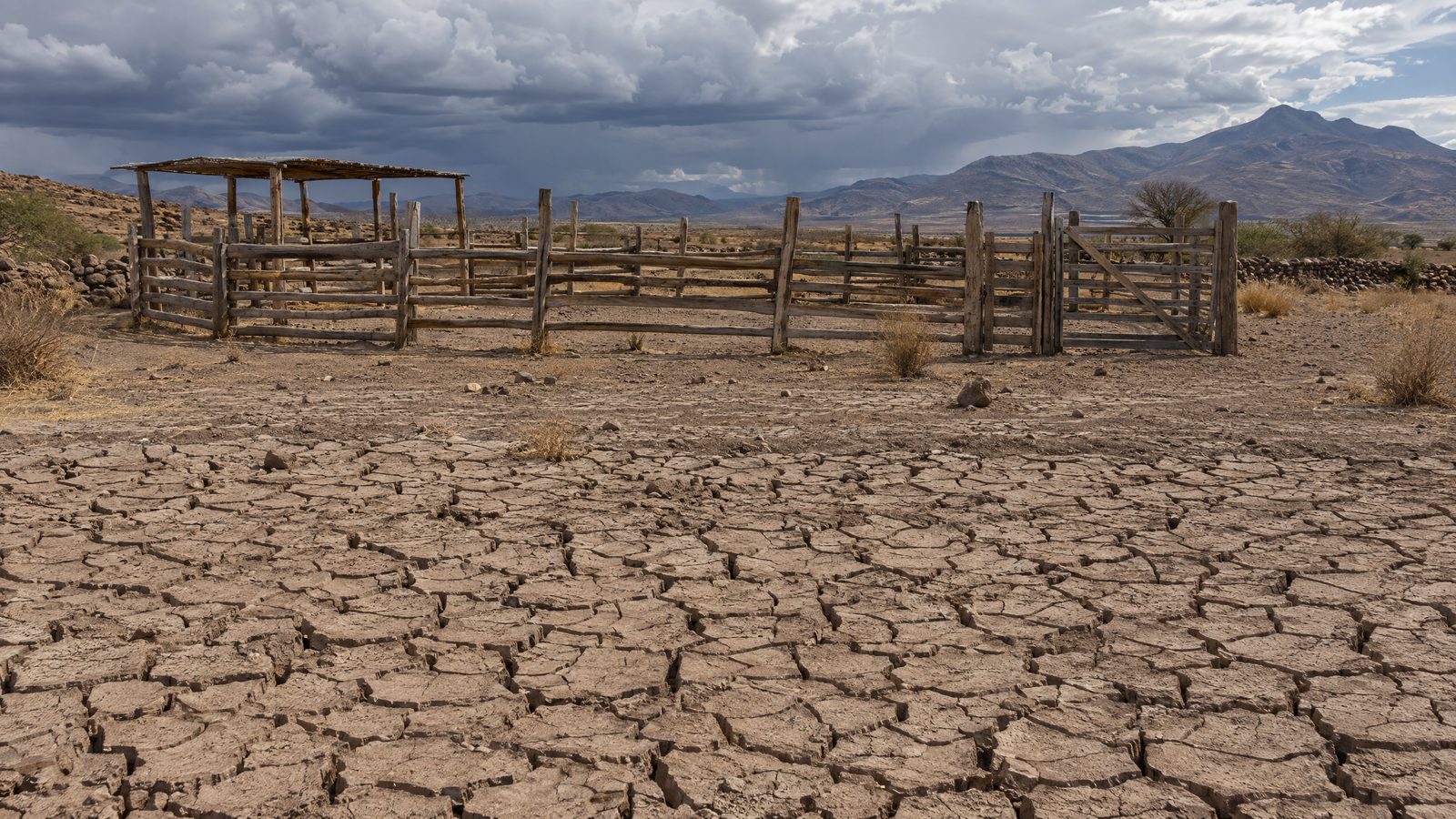

Bolivia has declared a national emergency over drought and flood risks linked to El Niño, enabling additional rescue-team deployment and calling for coordination across national and regional authorities. The decision comes amid drought impacts already affecting tens of thousands of families, while the most severe projected effects remain risks.
The president signed the decree on 31 October 2026. It provides for an emergency response involving national and regional authorities, the armed forces and police. The declaration brings both drought and flood risks within the same national emergency framework, rather than addressing only the damage already attributed to drought.
Officials’ assessment puts the number of families affected by drought at at least 78,000. It also records the deaths of more than 75,000 cattle. These figures describe impacts to date: they are not estimates of how many families or animals could be affected if the projected risks develop.
The wording of those totals matters. The family figure is a minimum, while the cattle toll exceeds 75,000. Neither is presented as an exact final count. The figures establish the reported scale of existing drought impacts without defining the full extent of any future emergency.
The decree enables the deployment of additional rescue teams. That is an authorisation to expand the response, not confirmation that a particular number of teams has already been sent out. No deployment total is specified, and the declaration itself should not be read as a measure of rescue operations already completed.
Coordination is another central element of the decision. The decree calls for national and regional authorities to work alongside the armed forces and police. Its stated scope therefore extends beyond rescue-team deployment, bringing several parts of the emergency response into a shared coordination effort.
There is an important distinction between the drought damage already recorded and the flood danger covered by the declaration. The affected-family and cattle figures relate to drought. They do not establish that flooding has caused equivalent losses, or that the most severe projected flooding has already occurred.
Likewise, the drought toll does not mean that every projected drought effect has materialised. Existing losses and continuing risks can form part of the same emergency, but they are different measures. The decree addresses the risk of further severe effects alongside the impacts that officials have already assessed.
For families counted in the drought assessment, the emergency is not solely a matter of future weather risks: they have already been recorded as affected. However, that family total does not specify the circumstances of each household, and it should not be treated as a count of people rescued or displaced.
The cattle deaths are a separate measure of the drought’s impact. They cannot be combined with the family count into a single total, nor do they indicate how losses are distributed among affected households. Together, the two figures describe different aspects of the damage assessed so far.
The national declaration thus covers both an existing drought emergency and the possibility of more severe drought and flood effects. Its immediate procedural significance is the ability to deploy additional rescue teams and the call for coordinated action. It does not establish that the worst projected conditions are inevitable.
As the response proceeds, the distinction remains clear: Bolivia has authorised additional emergency capacity in the face of El Niño-related risks, while officials have already assessed substantial drought impacts. Future flood and drought consequences remain projections, separate from the family and livestock losses recorded to date.