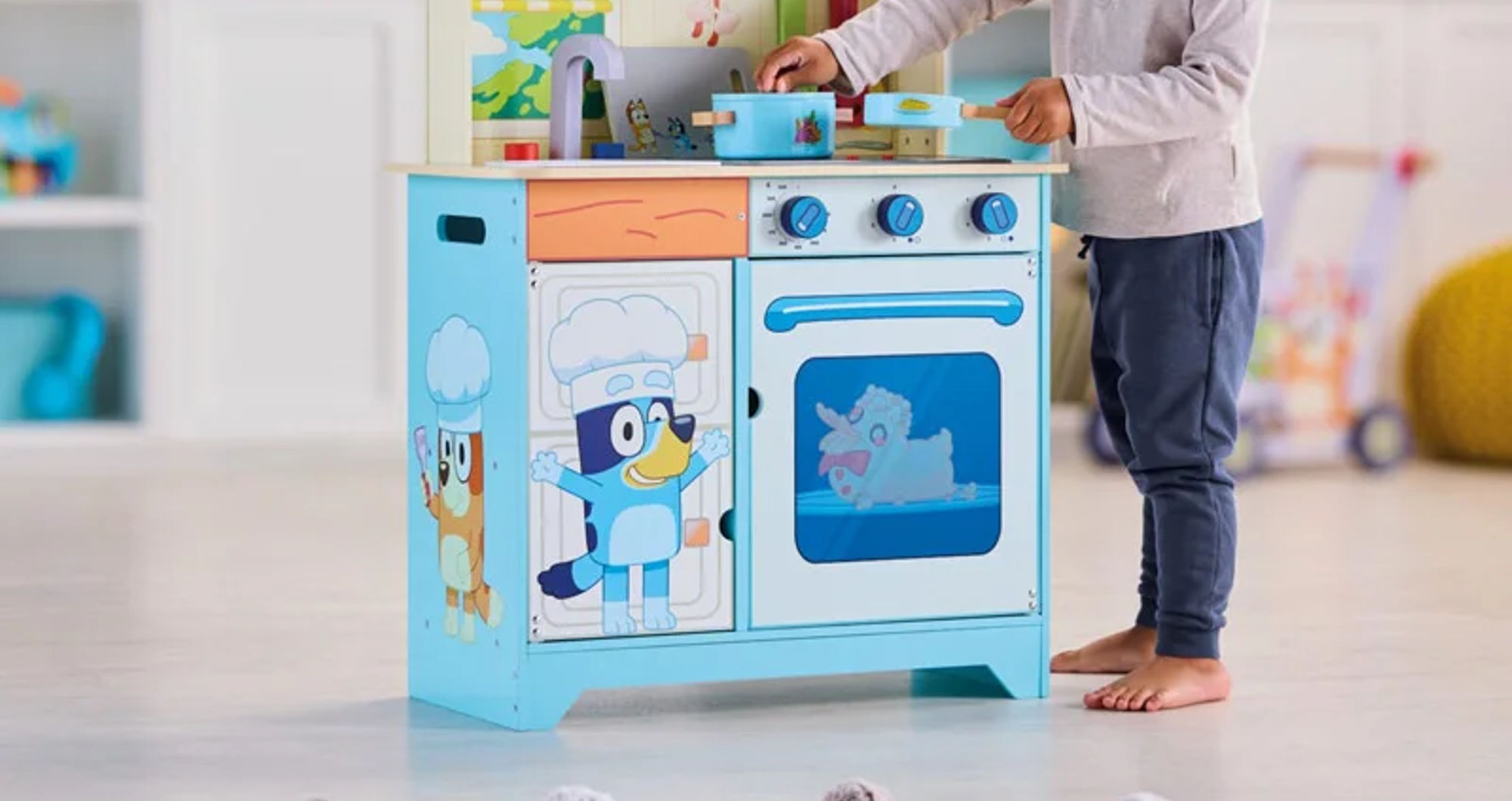

BBC Studios’ content licensing division grew profit nearly two and a half times faster than its parent company last year, and one franchise did most of the work: Bluey.
The division posted a 42% increase in EBITDA, to £165 million ($220.7 million), on stable revenue, according to BBC Commercial’s results for the 2025/26 financial year. That compares with 17% EBITDA growth across BBC Commercial as a whole, which posted £267 million ($357.1 million) in EBITDA on revenue that stayed roughly flat at £2.2 billion ($2.94 billion). Statutory profit after tax rose 9%, to £71 million ($95 million). BBC Commercial said the content division’s outsized growth was driven “largely” by Bluey partnerships and merchandise deals. “2025/26 has been a strong year for BBC Commercial,” said Tom Fussell, the division’s CEO, pointing to a “diversified portfolio” that let growth in some areas offset softer performance in others.
The company returned £377 million ($504.2 million) to the BBC for the year, down slightly from £391 million ($523 million) the year before, keeping it on track toward a five-year target of £1.5 billion ($2.01 billion) in total returns. Inside that figure, the mix shifted: dividends rose to £197 million ($263.5 million) from £161 million ($215.3 million), while content investment fell to £154 million ($206 million) from £200 million ($267.5 million). In other words, BBC Commercial pulled more cash out for shareholders this year and put less back into new production — even as its existing content library, led by Bluey, kept generating a growing share of the profit.
BBC Studios, the largest subsidiary within BBC Commercial, delivered revenue of £2.13 billion ($2.85 billion) and EBITDA growth of 17%, to £263 million ($351.8 million), which the company attributed to a higher-margin sales mix and cost savings from a recent comprehensive cost review. Set against that backdrop, the content division’s 42% growth rate stands out on its own terms: it outpaced not only BBC Commercial’s headline number but the very subsidiary it sits inside.
The numbers behindBluey‘s share of that growth point to something retailers stocking licensed children’s products don’t see often: demand that isn’t fading. The show was the most-streamed title in the U.S. for a second consecutive year, logging more than 45 billion minutes watched on Disney+, and remained the top preschool toy brand in the U.S. market. It first aired in 2018.
That timeline is the part worth sitting with. Licensed preschool properties typically follow a predictable arc: shelf space and sell-through spike around a show’s peak popularity, then decline as the show ages, the core audience outgrows it, or a newer property takes the spot on the shelf. Buyers plan around that curve, front-loading orders early and trimming commitments once a property shows signs of cooling. On BBC Commercial’s own numbers, Bluey‘s merchandise business isn’t following that arc. Seven years after launch, it’s still growing faster than the company that owns it, and faster than the division it belongs to.
Part of that comes down to reach rather than nostalgia. Bluey is now available in more than 140 countries and over 20 language translations, which keeps expanding the pool of new preschoolers discovering the show each year instead of relying on one launch cohort ageing through the toy aisle and out the other side. That matters for planning horizons: a property still picking up new, younger viewers in new markets doesn’t behave like one coasting on an existing fan base. Social engagement backs that up, too — BBC Studios reported social video revenue up 23% year over year, with YouTube watch time nearly doubling to 14.7 billion annual views, ahead of both global streamers and U.K. broadcasters on that measure.
Retailers have already tested specific formats against that demand. Aldi’s limited holiday Bluey toy range sold out quickly enough to draw attention beyond the retailer’s usual customer base — a smaller-scale echo of the same pattern showing up in BBC Commercial’s results. The category extends beyond toys and plush, too: apparel, accessories and homeware built around the show have followed a similar path, with limited or exclusive runs tending to move rather than linger on clearance racks.
None of this guarantees the growth rate holds. BBC Commercial flagged consolidation among industry players, reduced commissioning from traditional broadcasters, and the ongoing shift from linear to on-demand viewing as pressures across its wider business, and said a more supportive regulatory framework — raised in the BBC’s own response to the government’s Charter Review Green Paper — would be needed to sustain growth at scale. Those pressures were described as company-wide, not specific to Bluey, which the results named as one of the properties offsetting softer performance elsewhere. For a retail sector used to licensed kids’ toys losing shelf space within a season or two of a show’s peak, a seven-year-old property still outgrowing its own parent company’s numbers, inside a division outgrowing its own parent subsidiary, is the more unusual story here.